East Sussex · England
Asbestos Removal for Broyle Side
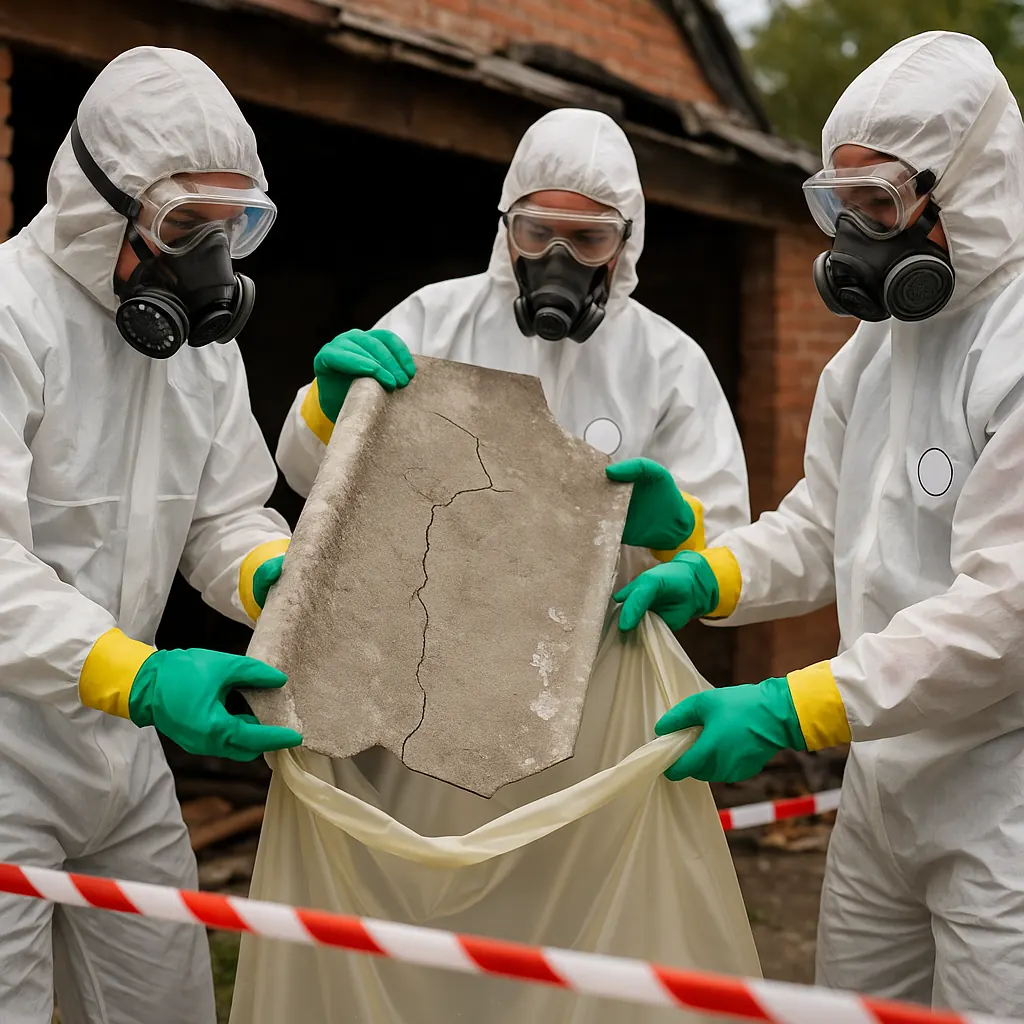
Buildings in Broyle Side built or refurbished before 2000 can contain asbestos. We offer removal of asbestos cement, coatings, tiles, flues and tanks.
- Old sheds and coal bunkers
- Materials found mid-project
- Debris left from a previous job
Asbestos removal for Broyle Side
Asbestos removal in Broyle Side
Asbestos removal starts with knowing what the material is. If nobody has tested it, we take a sample first, because the method depends on the material. Typical jobs include sheds, outbuildings and lean-tos and cement flues and gutters, involving gutters and downpipes, flue pipes and floor tiles.
In a village like Broyle Side, removal often involves barns, stables, outbuildings and farm buildings, where access across fields or yards needs planning. Every job ends with paperwork: a report, results or a consignment note, for your records.
- Location
- Broyle Side (BN8)
- Region
- East Sussex
- Service
- Asbestos removal to HSE guidance
- You receive
- Waste paperwork
- Quotes
- A written quote before work starts
- Telephone
- 07833 053 749
- Updated
- 26 October 2026
The scope of asbestos removal
Worth knowing before you book:
- We don’t remove anything until it’s been identified
- Bad weather can affect outdoor removal
- Replacing what’s removed, such as a roof or ceiling, is typically separate
Not sure what you need? Send us photos and we will tell you honestly before you book.
What we deal with
- Flue pipes
- Floor tiles and adhesive
- Soffits (cement)
- Artex and textured coatings
- Garage and shed roofs
- Water tanks
- Panels and boards
- Asbestos cement sheets
- Bitumen roof felt
- Gutters and downpipes
Nearby places to Broyle Side
More for properties in Broyle Side
DIY and asbestos
Fragile roofs are a serious falls risk, as well as an asbestos risk, so stay off it.
HSE advises the public not to repair or remove asbestos themselves. Higher-risk materials such as lagging, sprayed coatings and most insulating board must only be dealt with by an HSE-licensed contractor.
Common reasons for removal jobs in Broyle Side
Most removal happens because building work would disturb asbestos: anything the work would disturb should be dealt with first.
Get advice if you’re dealing with any of these:
- Cement water tanks in lofts
- Materials found mid-project
- Sheds, outbuildings and lean-tos
- Flue pipes, gutters and downpipes
For non-domestic buildings like Ringmer Community College and Sixth Form, removal is planned with the duty holder and timed for when the area is empty.
What to look for in a quote
- Laboratory analysis by an accredited lab
- That licensed work will be done by an HSE-licensed contractor
- The documents you’ll receive
- What’s excluded, such as making good or a new roof
Responsibilities for owners
Void periods are a good time for asbestos work, when rooms are empty and work can be done without disruption.
If you run a business from older premises in Broyle Side, you’re likely to need an asbestos register and a management plan, and contractors must be told what’s there.
Your questions about asbestos removal in Broyle Side
Do older homes in Broyle Side have asbestos?
If your home in Broyle Side was built or refurbished before 2000, it may, but you can’t tell by looking. Garage roofs, Artex, floor tiles, soffits and flues are typical examples.
How far is Broyle Side from London?
We cover Broyle Side, about 42 miles from central London.
Is asbestos dangerous?
Breathing in asbestos fibres can cause serious diseases, often decades later. The main risk is from disturbing it, so identifying it before work is important.
What happens to the waste?
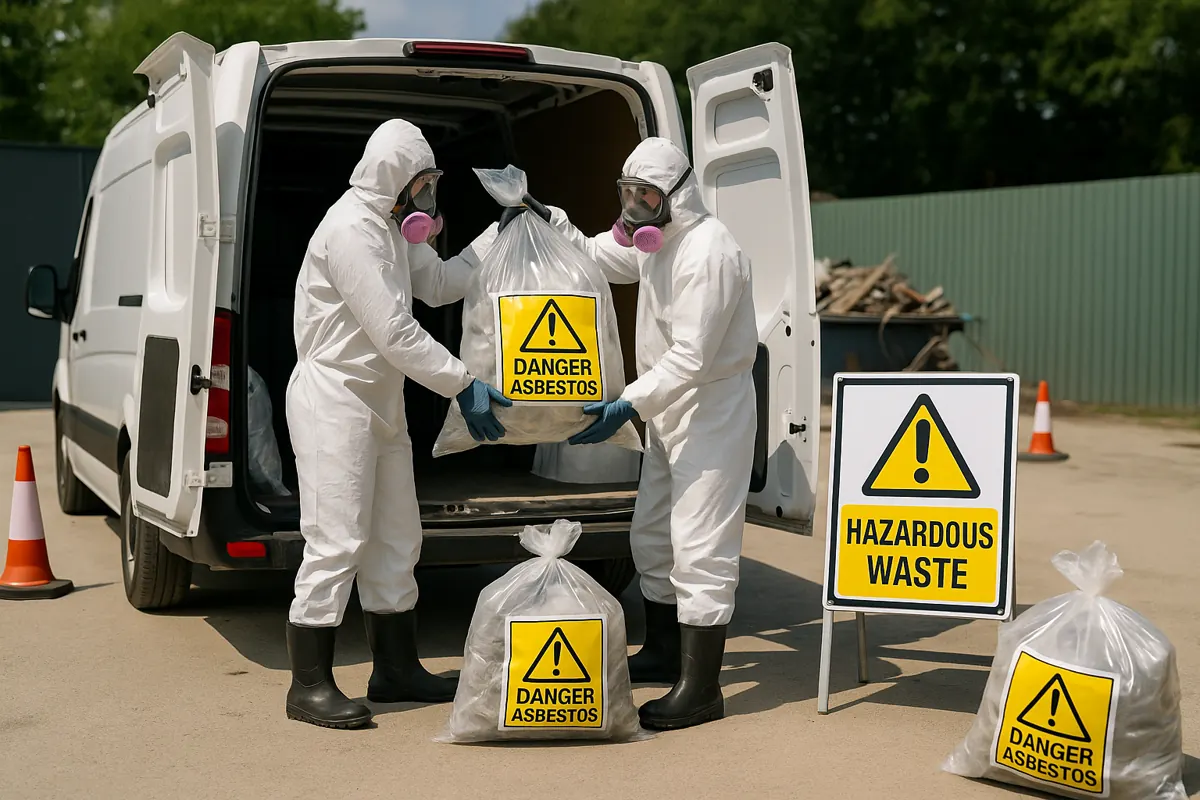
We bag or wrap it, label it and take it to a permitted site by a registered waste carrier, and you receive the consignment note.
What if my house is newer?
Buildings from after 2000 shouldn’t, because of the 1999 ban, although older materials can sometimes be reused or left in extensions.
What’s the difference between a test and a survey?
Testing tells you about particular materials; a survey inspects the whole building or work area and records everything it finds.
Does someone need to be there?
We need access to every area involved in the job.
Can you help with a flat?
Yes. For shared areas, the managing agent or freeholder holds the asbestos information.
Broyle Side properties and asbestos removal
Broyle Side is about 3 miles north-east of Lewes, in East Sussex. Homes, landlords and businesses in Broyle Side contact us for removal jobs. We work in all 289 towns and villages in East Sussex, from the larger towns to small villages. Our area stretches from Broyle Side to Brighton (10 miles away).
For rentals close to Glynde station, removal fits neatly between tenancies. In older properties in Broyle Side, it’s often extensions and refits that contain asbestos, so we test before we plan. Broyle Side is within about 4 miles of the South Downs National Park; removing asbestos from rural buildings there follows the same rules, with access across yards and fields to plan.
We carry out removal jobs all over BN8. We can help with removal jobs on streets such as Broyle Paddock, Ballard Drive and Turnpike Close or the roads around them. Nearby, we also cover Norlington (1 mile west), Upper Wellingham (2 miles west), Rose Hill (2 miles north), Barcombe Mills (2 miles north-west) and Isfield (3 miles north). Further out, we also cover Eastbourne (12 miles south-east), Seaford (9 miles south), Lewes (3 miles south-west), Hailsham (8 miles east), Crowborough (11 miles north) and Uckfield (5 miles north).
Nearby you will also find Lewes Victoria Hospital (4 miles south-west) and Museum of Agricultural Bygones (0.8 miles south-east). Open spaces near Broyle Side include Malling Down and Cliffe Hill.
- Nearby schools include Ringmer Primary and Nursery School (0.7 miles south-west)
- Local pubs include The Green Man pub (within half a mile south-west)
- Parks and local facilities nearby include South Malling Without (2.5 miles south-west)
How we work
Materials are released carefully and removed whole where possible, without breaking, dropping or power tools. Before anything starts, we confirm the areas and materials with you. In winter, the light goes in Broyle Side by about 3:55pm, so outdoor jobs start early.
- Get in touch with the details of the job
- We work out what category the work falls into
- We agree a date and any notification needed
- We set up the work area and remove the material
- We dispose of the waste legally and send the paperwork
Getting ready
- Clear access to the area, loft or garage
- Let us know where we can park
- Dig out previous surveys
Get a quote
Each job is priced individually. To start, call 07833 053 749 or use our quote form.
Read more
After the job
Once the material is removed, the area is cleaned, and you get the consignment note showing where the waste went.
If asbestos stays in the building:
- Make sure pets and children are elsewhere
- Share any survey or test results
- File the consignment note
- Plan any replacement work before the removal date
What to avoid
Ask any contractor how they’ll dispose of the waste.
Do not jet-wash, sand, drill or cut asbestos materials.
How we price asbestos removal
Every quote reflects:
- Access: height, lofts, steps and space
- The quantity or area
- Waste quantity and disposal
- Whether the work is non-licensed, notifiable or licensed
A price that looks too good to be true often is: proper controls, lab analysis and legal waste disposal cost money.
Photos that help
For a quick quote, include:
- Street parking nearby
- Any labels or markings, if you can see them safely
- Approximate dimensions
- A close-up from a safe distance
Photos from a safe distance help: send them through our contact page.
Materials, one by one
Floor tiles
Vinyl and thermoplastic tiles are lifted whole where possible with hand tools and wetting, never with power tools.
Textured coatings
Textured coatings are removed with wet or gel methods, never dry-scraped or sanded. Larger-scale steam or gel removal is notifiable non-licensed work.
- Survey or test first when it isn’t clear what a material is
- Done to the regulations: HSE guidance and CAR 2012
- Paperwork for your records: reports, lab results and consignment notes
- Waste sealed and labelled, then taken to a permitted site