Buckinghamshire · England
Asbestos Removal for Chalkshire
Found something that might be asbestos in Chalkshire? We provide removal of asbestos cement, coatings, tiles, flues and tanks, explained in plain English.
- Old waste on site
- Loft water tanks
- Vinyl and thermoplastic tiles
Asbestos removal for Chalkshire
What we deal with in Chalkshire
Not all asbestos materials are equal: lagging and board release fibres far more readily than cement, so their removal is licensed.
In older properties, we often see:
- Outbuildings with cement roofs
- Floor tiles before a new floor
- Textured coatings
- Old cold water tanks
For rentals close to Little Kimble station, removal fits neatly between tenancies.
What to look for in a quote
- How the work will be done, and the controls used
- If the price includes VAT
- The documents you will receive
- How the waste will be disposed of, and whether you’ll get a consignment note
Asbestos removal for Chalkshire properties
In homes, in Chalkshire as elsewhere, the usual materials are cement products, textured coatings and floor tiles. HSE treats work on these as non-licensed or notifiable non-licensed in most cases, which still means proper controls. Whether it’s old flues and old floor tiles and black adhesive, we deal with water tanks, cement soffits and textured coatings.
In towns and villages like Chalkshire, outbuildings and farm buildings are common removal jobs, where access across fields or yards needs planning. We identify materials before planning removal, because the method depends on what the material is.
- Location
- Chalkshire (HP17)
- Region
- Buckinghamshire
- What we do
- Removal of cement, coatings, tiles, flues and tanks
- Afterwards
- Waste paperwork
- Quotes
- Written quote for your job
- Call
- 07833 053 749
- Page updated
- 26 October 2026
Places near Chalkshire
More for properties in Chalkshire
Chalkshire: your questions answered
Do you cover small places like Chalkshire?
We do: small villages are covered too. Just tell us how to reach the property.
How far is Chalkshire from London?
Chalkshire is about 35 miles from central London, well within our area.
Does asbestos always have to come out?
Not necessarily. If it’s in good condition and nobody will disturb it, leaving it in place and checking it can be the safer choice.
Which asbestos work needs a licence?
Work on higher-risk materials, such as lagging, sprayed coatings and most insulating board, is licensed and must be done by an HSE-licensed contractor. Most asbestos cement and textured coatings are non-licensed or notifiable non-licensed.
Could my home contain asbestos?
Looking will not tell you. Laboratory analysis of a sample gives the answer, especially in buildings from before 2000.
How do I get a quote?
Start with the postcode and a description of the material, with photos if possible. Then fill in the enquiry form or give us a call on 07833 053 749.
Do you need a licence to remove asbestos?
Not always. Most asbestos cement and textured coatings are non-licensed or notifiable non-licensed work; lagging, sprayed coatings and most insulating board are licensed.
Do you cover Chalkshire?
Yes. We cover Chalkshire and the surrounding area as part of Buckinghamshire. Tell us the postcode and what you need.
How we price asbestos removal
Every quote reflects:
- How much waste there is
- Parking and access charges
- Whether the work is non-licensed, notifiable or licensed
- The survey scope
How easy the material is to reach affects the price, so tell us about access.
What to photograph
Before you send photos, a few tips:
- Where we could park
- Any damage, cracks or broken pieces
- A rough size or measurement
- The route in: gates, steps, stairs or the loft hatch
If you have a survey or test result, include it when you send photos through our quote form, or phone 07833 053 749; it helps us quote accurately.
After we’ve finished in Chalkshire
If anything turns up during removal that wasn’t expected, we stop and tell you, because the plan may need to change.
To avoid problems in future:
- Send photos of the material and the access
- Share any survey or test results
- Ensure pets and children are elsewhere
- Move belongings away, but leave the asbestos alone
Don’ts
Do not sweep, vacuum or brush up broken asbestos debris; keep people away and ask for advice.
Ask any contractor how they’ll dispose of the waste.
Materials, one by one
Water tanks and flues
Tanks and flues are disconnected first, then removed with minimal breakage.
Floor tiles
Tiles come up whole where we can, with hand tools, never with power tools.
What we do and don’t cover
We are upfront about what’s included:
- Unidentified materials are tested before removal is planned
- Some jobs must be notified first, so the timing needs planning
- Licensed materials such as lagging, sprayed coatings and most insulating board must be removed by an HSE-licensed contractor
If you are unsure, describe the job and send photos, and we’ll advise before you book.
Common materials
- Gutters and downpipes
- Water tanks
- Asbestos cement sheets
- Panels and boards
- Floor tiles and adhesive
- Soffits (cement)
- Flue pipes
- Garage and shed roofs
- Artex and textured coatings
- Bitumen roof felt
Asbestos removal in Chalkshire: local notes
Chalkshire is about 4 miles south of Aylesbury, in Buckinghamshire. Chalkshire has a mix of older and newer buildings, and anything built or refurbished before 2000 can contain asbestos. Chalkshire is one of 263 towns and villages in Buckinghamshire where we work. Our nearest city page is Oxford, about 19 miles away.
In a school like John Colet School, any removal is agreed with the duty holder and done while the area is out of use. In older properties in Chalkshire, it’s often extensions and refits that contain asbestos, so materials are identified first. Chalkshire is within about 2 miles of the Chilterns National Landscape. Rural removal jobs nearby often mean planning access across yards and fields.
Wherever your property is in HP17, we can help with asbestos removal, from busy streets to quiet lanes. If your property is just outside Chalkshire, we also cover Terrick (1 mile north), Butler's Cross (1 mile south), Nash Lee (1 mile north), Ellesborough (1 mile south-west) and Coombe (1 mile south). Further out, we also cover Aylesbury (4 miles north), High Wycombe (9 miles south), Chesham (8 miles south-east), Marlow (13 miles south), Amersham (10 miles south-east) and Beaconsfield (12 miles south-east).
Well-known places in the area include Little Kimble Motte (1.1 miles south-west) and Stoke Mandeville Hospital (2.7 miles north). The countryside around Chalkshire includes Brush Hill Local Nature Reserve and Coombe Hill.
- Pubs nearby include The Russell Arms (within half a mile south)
DIY and asbestos
Working on a fragile asbestos cement roof is dangerous in itself, quite apart from the asbestos, so never climb onto one.
Found something mid-DIY? Stop: keep people away, do not sweep or vacuum it up, and get advice.
The process
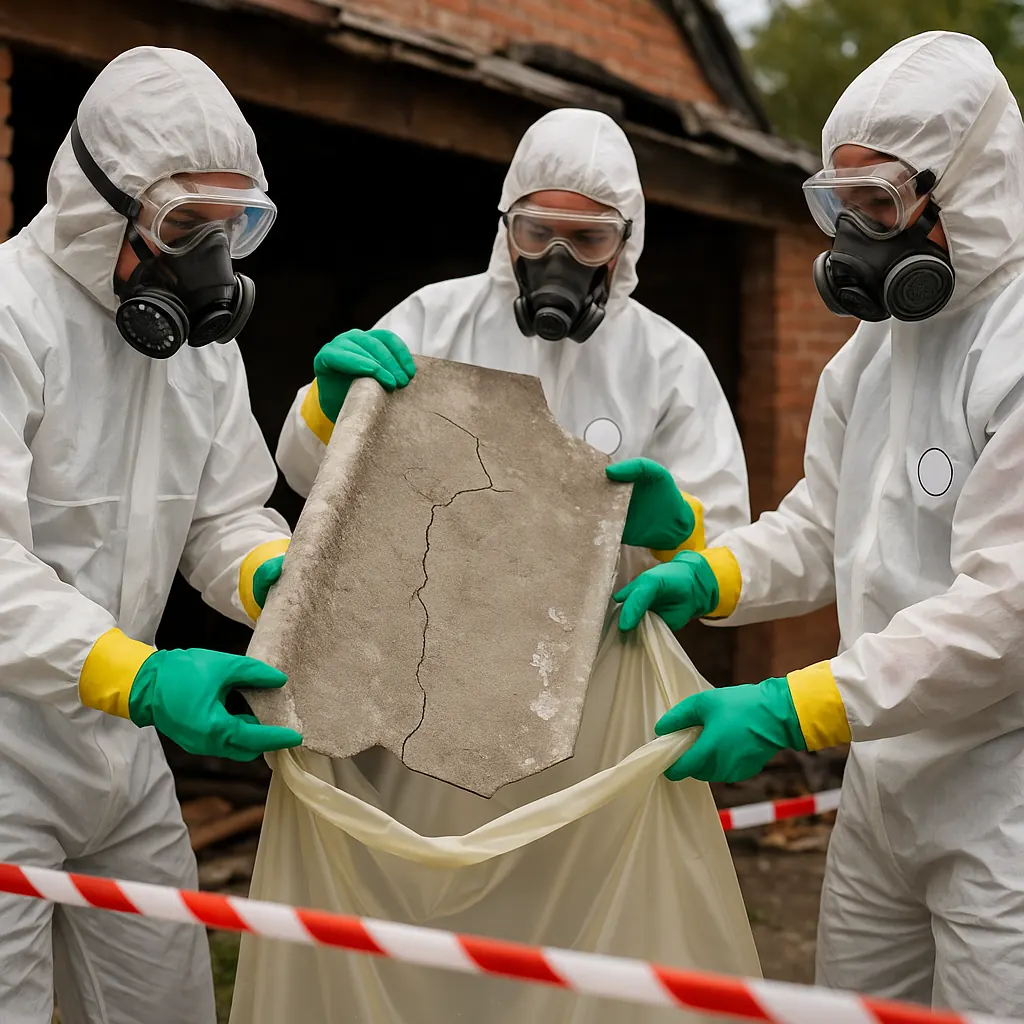
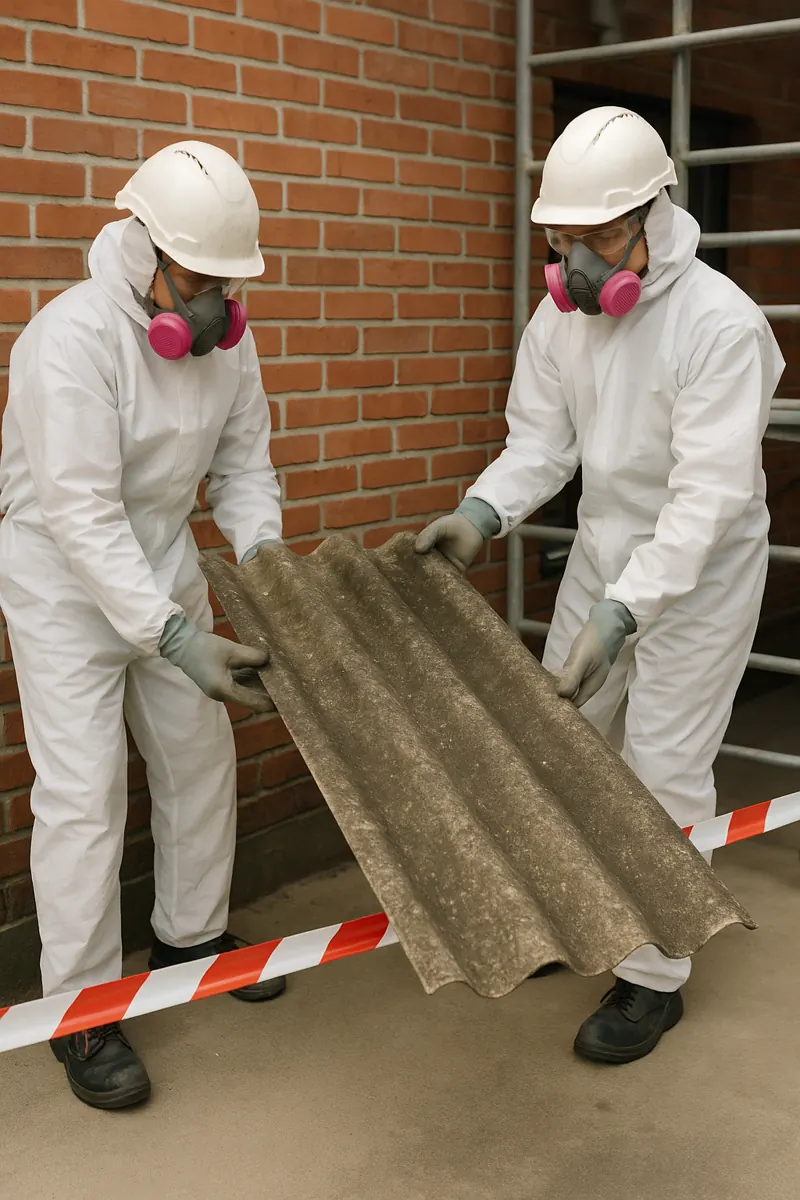
We wear disposable coveralls and suitable respirators, and keep everyone else out of the work area. We keep the work area clear of other people while we work, so please keep children and pets away. We plan outdoor jobs in Chalkshire to finish before dark: in late December it’s dark by about 3:55pm, while in June it stays light until about 9:25pm.
- Describe the material and send pictures
- We test the material if needed
- We plan the method, controls, waste and any notification, and send a quote
- We remove the material with controls to keep fibres down
- We clean up, dispose of the waste legally and send the consignment note
Getting ready
- Move belongings away from the area, without touching the material
- Clear the way to the work area
- Keep children and pets away on the day
How to get a quote
For a quote, call 07833 053 749 or use our quote form. Include the postcode, the material and some photos.
Read more
For businesses and landlords in Chalkshire
If you’re responsible for a non-domestic building or the common parts of flats in Chalkshire, you have a duty to manage asbestos under regulation 4 of the Control of Asbestos Regulations 2012. That means finding it, assessing it, recording it and planning how to manage it.
Before contractors start, they need to know about any asbestos. HSE regularly reminds owners and trades of it.
- Survey or test first when it isn’t clear what a material is
- Planned to HSE guidance and the Control of Asbestos Regulations 2012
- Paperwork for your records: reports, lab results and consignment notes
- Asbestos waste double-bagged or wrapped and taken to a permitted site