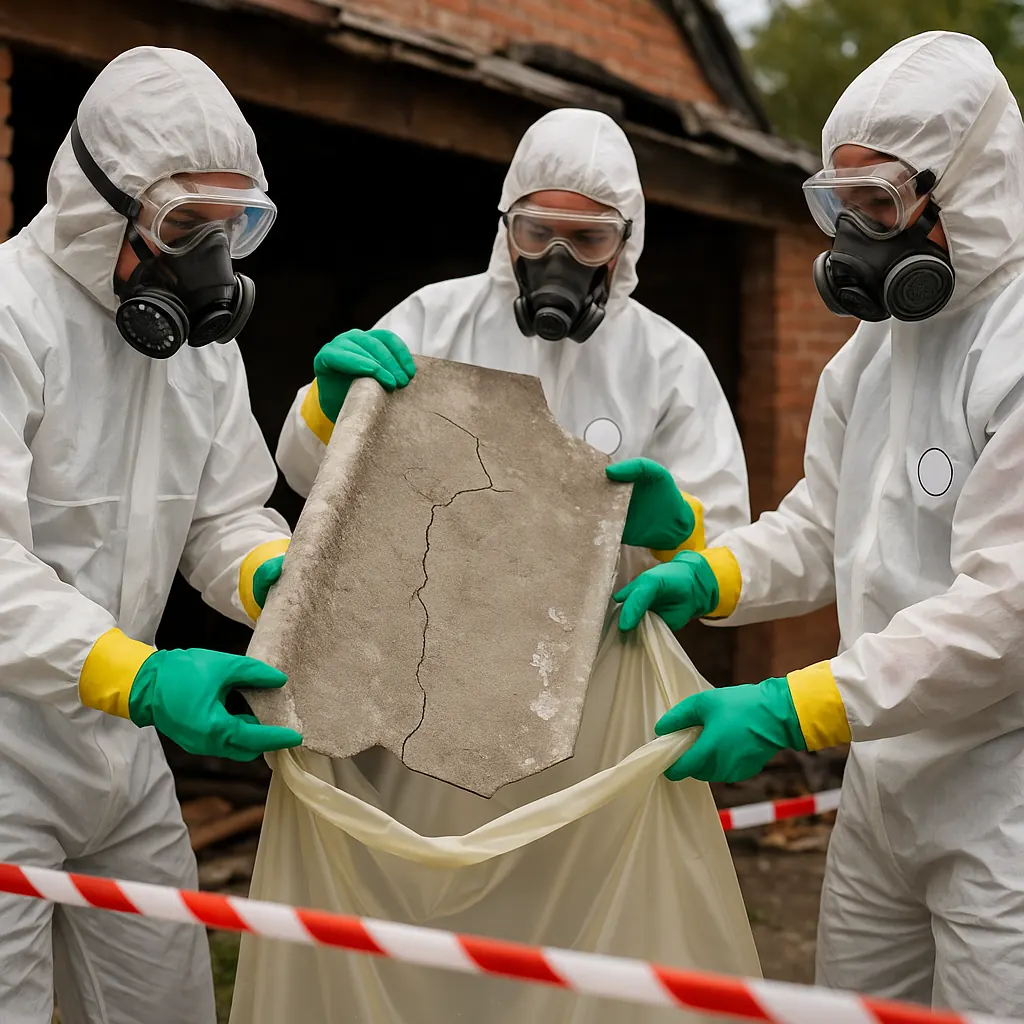
Hampshire · England
Asbestos Removal for Deadwater
Asbestos removal across Deadwater and nearby, for homeowners, landlords and businesses. Planned to HSE guidance, with written results and paperwork.
- Cement flues and gutters
- Textured coatings
- Loft water tanks
Asbestos removal near Deadwater
What we do and do not cover
So you know what to expect:
- Unidentified materials are tested before removal is planned
- Making good is normally a separate job
- Removal in strong wind or heavy rain may need rescheduling
Not sure what you need? Send us photos and we’ll tell you honestly before you book.
Common materials
- Panels and boards
- Asbestos cement sheets
- Soffits (cement)
- Floor tiles and adhesive
- Water tanks
- Bitumen roof felt
- Gutters and downpipes
- Garage and shed roofs
- Flue pipes
- Artex and textured coatings
About our asbestos removal in Deadwater
Asbestos removal in Deadwater covers homes, rental property and workplaces: garage roofs, flues, water tanks, Artex and floor tiles among them. Every job is planned to HSE guidance, with the waste taken to a permitted site. Common materials are cement soffits, gutters and downpipes and textured coatings, and typical jobs are Artex before plastering and garage roof sheets.
In a smaller place like Deadwater, removal is often a garage roof, a shed or an outbuilding, with access through the garden or drive. Clear answers come first: is it asbestos, and what should you do about it.
- Location
- Deadwater (GU35)
- County
- Hampshire
- Covers
- Removal and disposal of asbestos materials
- Afterwards
- Consignment note for the waste
- Price
- Quoted individually, in writing
- Telephone
- 07833 053 749
- Last updated
- 26 October 2026
What happens
Materials are released carefully and removed whole where possible, never broken up, dropped or cut with power tools. The work area is kept clear while we’re working. Outdoor removal in Deadwater is planned to finish in daylight: that means by about 4:00pm in December, or about 9:20pm in June.
- Start with photos, the postcode and any existing reports
- We identify the material and work out whether the job is licensed, notifiable or non-licensed
- We quote in writing, including the waste
- On the agreed date we set up the work area and remove the material carefully
- We clean the area and send the consignment note
How to prepare
- Tell us about parking and access
- Move belongings away from the area, without touching the material
- Have any previous surveys or test results ready
How to get a quote
If you have a survey or test result, include it when you fill in the enquiry form or give us a call on 07833 053 749.
Related guides
Removal jobs in Deadwater
Deadwater is about 1 mile east of Bordon, in Hampshire. Wherever your property is in Deadwater, tell us the postcode and what you need, and we’ll quote. We cover 683 places across Hampshire. We work right across the region, from Deadwater to Guildford (about 15 miles away).
Landlords near Liphook station often time removal for when a property is empty. In a school like Mill Chase Academy, any removal is agreed with the duty holder and done while the area is out of use. Deadwater is within about 6 miles of the Surrey Hills National Landscape. Rural removal jobs nearby often mean planning access across yards and fields.
Anywhere in GU35, we can help with asbestos removal. Local streets include Alma Road, Varna Road and Rowan Road; we cover every one. Neighbouring places we cover include Lindford (1 mile north-east), Bordon (1 mile west), Hollywater (1 mile south), Standford (1 mile south-east) and Pinewood Village (1 mile north-west). Larger places within reach include Basingstoke (15 miles north-west), Farnborough (13 miles north), Fleet (11 miles north), Aldershot (10 miles north-east), Alton (6 miles north-west) and Petersfield (8 miles south-west).
A little further out are Chase Community Hospital (0.7 miles south-west). Within reach you will find Deadwater Valley and Selborne Hill.
- Schools near Deadwater include Weyford Nursery and Primary School (within half a mile north)
Materials, one by one
Textured coatings
We soften coatings and remove them wet, never sanding or dry scraping. Larger-scale steam or gel removal is notifiable non-licensed work.
Insulating board and lagging
Insulating board, lagging and sprayed coatings are licensed work in most cases.
Deadwater: your questions answered
How far is Deadwater from London?
Deadwater is about 42 miles from central London, well within our area.
Could my house in Deadwater contain asbestos?
Any home in Deadwater built or refurbished before 2000 can contain asbestos, but only a test can confirm it. Common places include garage roofs, textured ceilings, floor tiles, soffits and flues.
Should I check for asbestos before buying?
Yes. A pre-purchase survey tells you what’s there before you exchange, with the seller’s permission.
Do you give written quotes?
Yes, every quote is in writing and says what’s included, including whether VAT is included.
Where does the asbestos go?
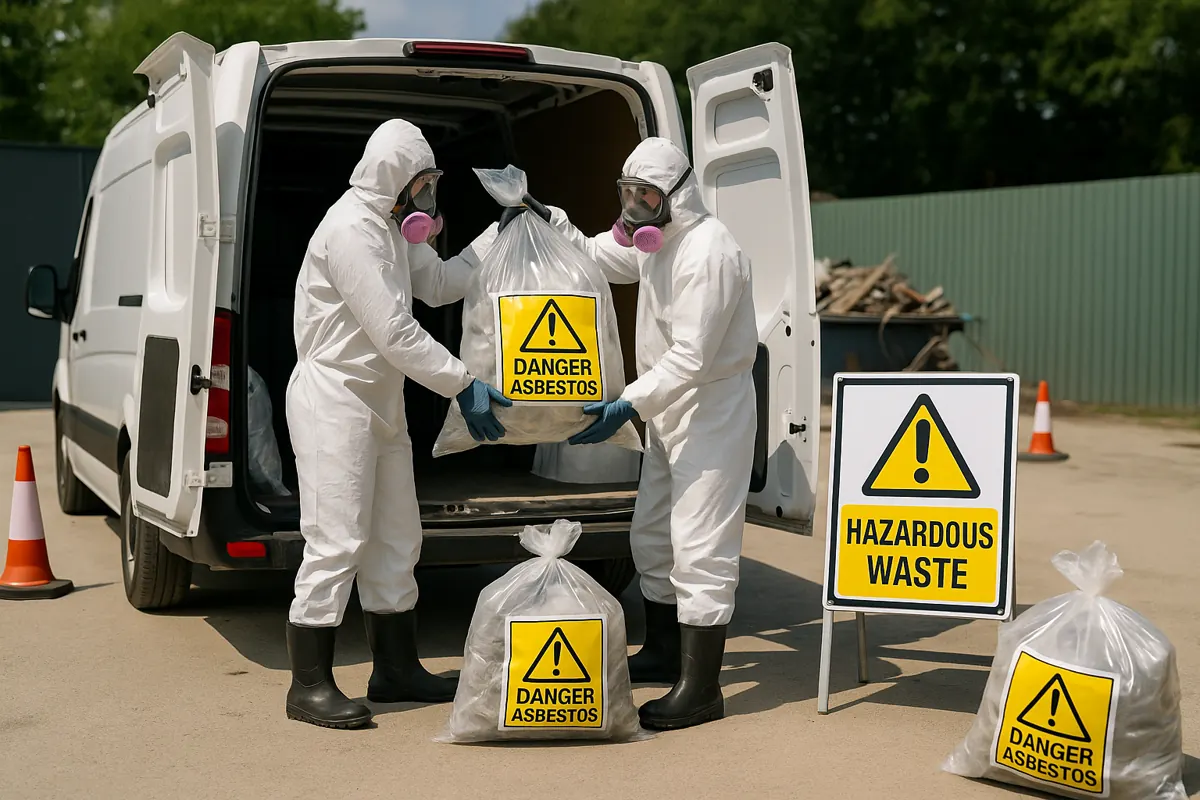
It goes to a permitted site, properly packaged, with a registered carrier, with a consignment note for your records.
Is asbestos removal licensed?
It varies: lagging, sprayed coatings and most insulating board are licensed work, while most asbestos cement and textured coatings are non-licensed or notifiable non-licensed.
Can I stay at home during removal?
For outdoor jobs, you can usually stay put. Indoor work areas are kept closed off until finished.
What if my house is newer?
Asbestos was banned in 1999, so buildings built after 2000 shouldn’t contain it, although older materials can sometimes be reused or left in extensions.
Also near Deadwater
What else we do in Deadwater
Looking after things afterwards
If anything turns up during removal that wasn’t expected, we stop and tell you, because the plan may need to change.
To avoid problems in future:
- Tell us about any previous survey
- Let us know where we can park
- Move belongings away, but leave the asbestos alone
- Let neighbours know if work is near them
Things not to do
Don’t jet-wash, sand, drill or cut asbestos materials.
Don’t put asbestos in household bins or skips.
How we price asbestos removal
What drives the price:
- Licensed or non-licensed
- What the material is and its state
- Location, parking and any London charges
- How much waste there is
Very low prices can mean corners are being cut: controls, protective equipment, laboratory fees and legal disposal all cost money.
What to photograph
A few photos can save a site visit:
- Cracks or breaks
- A close-up from a safe distance
- The route in: gates, steps, stairs or the loft hatch
- A picture of the whole area
Not sure what you need? Ring 07833 053 749, or send the details through our contact page and describe the problem, and we will recommend the right option.
Which option is right?
Removing asbestos before building work avoids stopping the job halfway, rather than halting work when it’s found. Compare what each quote includes, not just the total: the scope, the method, the waste and the paperwork.
What you get
- Houses, flats and business premises
- Lab analysis by an accredited laboratory
- Paperwork you can show your buyer, landlord or builder
- Waste taken to a permitted site with a consignment note
Read our prices page or our cost guide.
What we deal with in Deadwater
Most removal happens because building work would disturb asbestos: whatever the work will touch should come out first.
These are the materials and situations that most often lead to removal jobs:
- Asbestos garages
- Loft water tanks
- Artex before plastering
- Floor tiles before a new floor
In older buildings across Deadwater, asbestos may be in later additions, so we identify materials before planning removal.
What to look for in a quote
- What isn’t included
- How the waste will be disposed of, and whether you will get a consignment note
- What exactly is included: the areas, materials or samples
- Laboratory analysis by an accredited lab
Should you do it yourself?
Found something mid-DIY? Stop: keep people away, do not sweep or vacuum it up, and get advice.
Sanding, drilling, cutting and jet-washing are the worst things you can do to asbestos materials, so avoid them completely.
- Identify it first: we test or survey before planning removal
- Work planned to the Control of Asbestos Regulations 2012 and HSE guidance
- Everything in writing: quotes, reports, results and waste notes
- Waste sealed and labelled, then taken to a permitted site