Surrey · England
Asbestos Removal for Send
Any pre-2000 building in Send may contain asbestos. We offer safe asbestos removal and legal disposal.
- Sheds, outbuildings and lean-tos
- Broken sheets in gardens
- Flue pipes, gutters and downpipes
Asbestos help in Send
Asbestos removal in Send
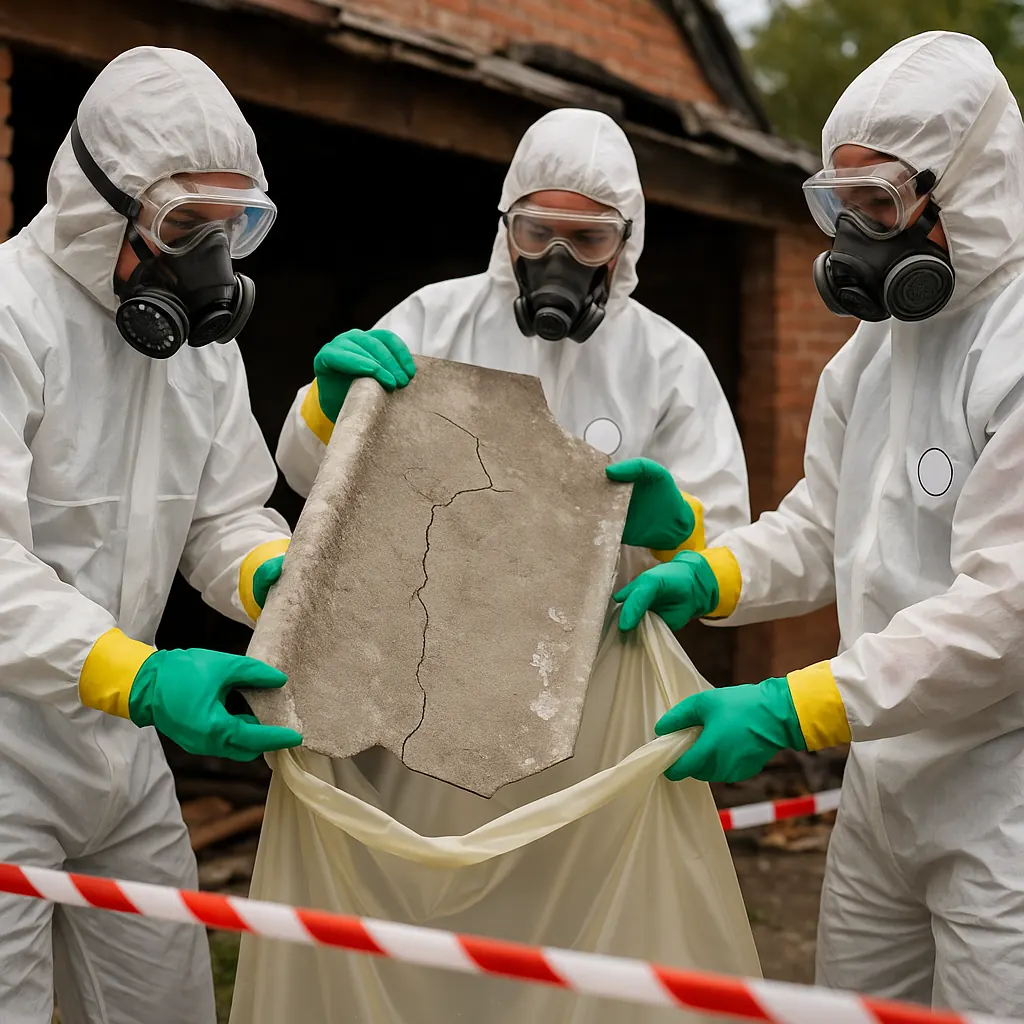
After removal, the work area is cleaned and the waste is double-bagged or wrapped, labelled and taken away, with a consignment note for your records. We often deal with water tanks, floor tiles and cement roof sheets, and typical jobs are cement flues and gutters and asbestos garages.
Homes in Send with bigger gardens may have several outbuildings with cement roofs. We follow HSE guidance and the Control of Asbestos Regulations 2012, whatever the size of the job.
- Location
- Send (GU23)
- Area hub
- Surrey
- What we do
- Removal of cement, coatings, tiles, flues and tanks
- Paperwork
- Consignment note for the waste
- Price
- Quoted individually, in writing
- Telephone
- 07833 053 749
- Last updated
- 26 October 2026
The process
Materials are released carefully and removed whole where possible, without breaking, dropping or power tools. Unexpected finds are discussed with you first before carrying on. Late-December sunset in Send is about 3:55pm, so outdoor jobs start early.
- Tell us what needs removing and send photos
- We test it if needed and plan the job
- You get a written quote, including waste disposal
- We remove it with controls to keep fibres down
- We clean up and send you the waste paperwork
How to prepare
- Leave the suspect material alone until we arrive
- Clear access to the area, loft or garage
- Let neighbours know if the work is near them
Get a quote
Tell us about the material, its location and your plans. Send photos through our quote form, or phone 07833 053 749.
Helpful guides
Asbestos removal in Send: local notes
Send is about 3 miles south-east of Woking, in Surrey. We work across Send and the surrounding area, on everything from houses and flats to workplaces and garages. We cover 395 places across Surrey, from the larger towns to small villages.
Landlords near Clandon station often time removal for when a property is empty. In a school like Send CofE Primary School, any removal is agreed with the duty holder and done while the area is out of use. Parts of the Surrey Hills National Landscape are within about 6 miles of Send. Rural removal jobs nearby often mean planning access across yards and fields.
We cover removal jobs across GU23. Local streets include Sandy Lane, Farm Lane and Sandfields; we cover every one. Close by, we cover Send Marsh (1 mile east), Burntcommon (1 mile east), Sutton Green (1 mile south-west), Mayford (2 miles west) and Pyle Hill (2 miles west). We also cover nearby towns such as Guildford (3 miles south-west), Woking (3 miles north-west), Camberley (9 miles west), Epsom (12 miles east), Farnham (13 miles south-west) and Ewell (13 miles east).
Well-known places in the area include Send and Ripley History Society Museum (1.8 miles east) and Woking Community Hospital (2.1 miles north-west). The countryside around Send includes Boldermere Lake and Papercourt Marshes.
- Schools near Send include St John the Baptist Catholic Comprehensive School (1.5 miles north-west) and St John the Baptist School (1.5 miles north-west)
- Nearby, you will find The New Inn (0.5 miles north-west)
What affects the price in Send
When we quote, we look at:
- What the material is and its state
- The number of samples or the size of the building
- Access: height, lofts, steps and space
- How much waste there is
We do not publish a price list, because jobs vary so much. Our cost guides show published ranges, with dates and sources.
What to photograph
Photos often save us a visit:
- A close-up from a safe distance
- Damaged areas
- Labels, if any
- Where we could park
Share the postcode, a short description and photos: send photos through our quote form, or phone 07833 053 749.
Materials, one by one
Insulating board and lagging
Work on sprayed coatings, and most work on lagging and asbestos insulating board, is licensed.
Asbestos cement
Asbestos cement is the most common material we remove: roofs, gutters, flues and tanks. We wet it and take it down in whole pieces where we can.
What’s included, and what isn’t
A few things to be aware of:
- Notifiable work has to be notified before it starts, so the timing needs planning
- We don’t remove anything until it’s been identified
- Licensed materials such as lagging, sprayed coatings and most insulating board must be removed by an HSE-licensed contractor
If you’re unsure, describe the job and send photos, and we’ll advise before you book.
Materials in Send
- Soffits (cement)
- Garage and shed roofs
- Bitumen roof felt
- Asbestos cement sheets
- Flue pipes
- Floor tiles and adhesive
- Water tanks
- Panels and boards
- Gutters and downpipes
- Artex and textured coatings
Why people call us in Send
Not all asbestos materials are equal: lagging and insulating board release fibres much more easily than asbestos cement, so their removal is licensed.
Typical jobs in Send include:
- Cement water tanks in lofts
- Cement flues and gutters
- Artex before plastering
- Floor tiles before a new floor
In older buildings across Send, asbestos may be in later additions, so we identify materials before planning removal.
Questions to ask before you book
- The documents you’ll receive
- Laboratory analysis by an accredited lab
- How fibres will be kept down
- Whether the work is licensed, notifiable non-licensed or non-licensed
Common questions in Send
Do you work on properties in the Surrey Hills National Landscape?
Yes. The asbestos rules are the same in protected landscapes, though access to rural buildings may need planning.
Do older homes in Send have asbestos?
It depends on its age and history: asbestos products were used until 1999, so pre-2000 homes and extensions in Send may have it. Common places include garage roofs, textured ceilings, floor tiles, soffits and flues.
Is asbestos dangerous?
It can be, if fibres are released and breathed in. Diseases linked to it, such as mesothelioma and asbestosis, can appear many years later, which is why it’s identified before work.
Can asbestos go in my bin?
Never: skips and household bins cannot take asbestos. It has to go to a site that accepts it, with the right paperwork.
Will I get the price in writing?
Every time: you get the scope and price in writing, and whether VAT is included.
Do you work for landlords and businesses?
Yes, as well as homeowners. Send the details.
What does licensed work mean?
Licensed work is work on the materials most likely to release fibres: lagging, sprayed coatings and most asbestos insulating board. Only a contractor holding an HSE licence can do it.
Is damaged asbestos an emergency?
First, keep people away from the damaged material: shut the door if you can and do not sweep it up. Then get in touch and we will advise.
Towns and villages near Send
What else we do in Send
Responsibilities for owners
Duty holders for workplaces and the shared parts of flats in Send must manage asbestos under regulation 4 of the Control of Asbestos Regulations 2012. That means finding it, assessing it, recording it and planning how to manage it.
Landlords of single homes don’t have the same duty to manage as non-domestic duty holders, but contractors still need to know about asbestos before they work.
After the job
File the waste paperwork safely: it shows the asbestos was disposed of legally.
After the job, keep these in mind:
- Move belongings away, but leave the asbestos alone
- Photos of the material and the route in help
- Tell us about parking and access
- Tell neighbours if the work is close to their property
What to avoid
Ask any contractor how they’ll dispose of the waste, and ask for the consignment note.
Deal with asbestos before the builders start.
Doing it yourself?
Power tools, sanding and jet-washing release the most fibres, so avoid them completely.
Home testing kits exist, but you have to disturb the material to use one. HSE advises that samples are best taken by a competent person.
- Nothing removed blind: unknown materials are tested first
- Done to the regulations: HSE guidance and CAR 2012
- Written paperwork: reports, results and waste consignment notes
- Waste sealed and labelled, then taken to a permitted site