Kent · England
Asbestos Removal for Sittingbourne
Any pre-2000 building in Sittingbourne may contain asbestos. We offer planned asbestos removal and legal disposal.
- Floor tiles before a new floor
- Asbestos found during building work
- Old flues
Asbestos removal near Sittingbourne
How asbestos removal works in Sittingbourne
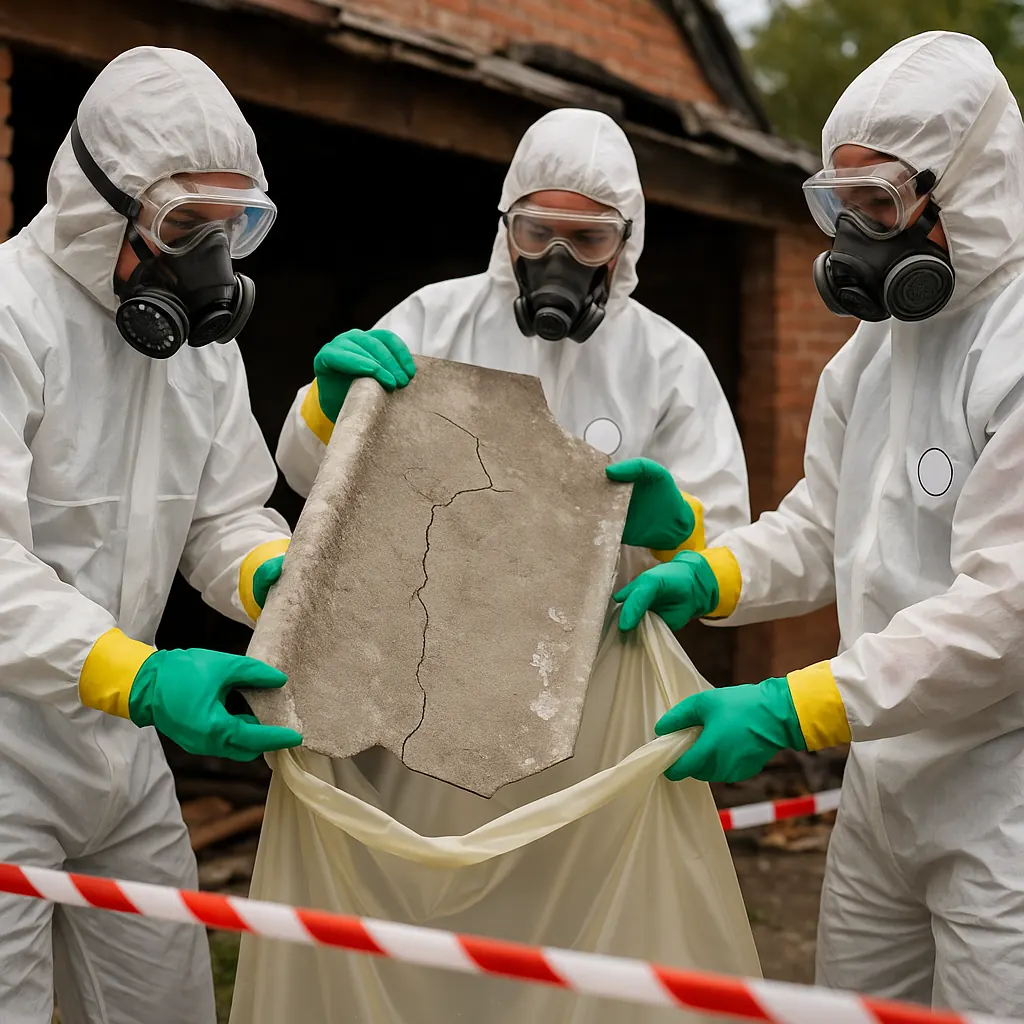
You do not always have to remove asbestos. Material in good condition that won’t be disturbed can often be left and managed, and we’ll say so. Typical jobs include Artex ceilings before renovation and materials found mid-project, involving floor tiles, textured coatings and cement soffits.
In a town like Sittingbourne, removal jobs are often garage roofs, sheds, flues, tanks and textured coatings in homes, often ahead of building work. We follow HSE guidance and the Control of Asbestos Regulations 2012, whatever the size of the job.
- Location
- Sittingbourne (ME10, ME9)
- Area hub
- Kent
- What we do
- Removal of cement, coatings, tiles, flues and tanks
- Afterwards
- Consignment note for the waste
- Price
- Quoted individually, in writing
- Phone
- 07833 053 749
- Page updated
- 26 October 2026
Removal jobs in Sittingbourne
Sittingbourne is about 37 miles east of London, in Kent. Properties in Sittingbourne range from older houses to newer estates and commercial buildings, and anything from before 2000 may contain asbestos. Sittingbourne is one of 922 towns and villages in Kent we cover. Our nearest city page is Canterbury, about 16 miles away.
For properties on main roads such as the A2 and A249, we plan parking and loading in advance. If you let property near Sittingbourne station, void periods between tenants are a practical time for removal. Parts of the Kent Downs National Landscape are within about 7 miles of Sittingbourne; removing asbestos from rural buildings there follows the same rules, with access across yards and fields to plan.
Anywhere in ME10 and ME9, asbestos removal is available, from busy streets to quiet lanes. From High Street, Roman Square and Moonstone Square or a nearby road, the process is the same. Main roads around Sittingbourne include the A2 and A249, so mention parking if the property is on one. If your property is just outside Sittingbourne, we also cover Murston (1 mile east), Milton Regis (1 mile north-east), Kemsley (1 mile north), Howt Green (1 mile north-west) and Heart's Delight (1 mile south-west). Larger places within reach include Maidstone (10 miles south-west), Ashford (15 miles south), Whitstable (13 miles east), Faversham (7 miles east), Minster (6 miles north-east) and Kings Hill (15 miles west). Sittingbourne is one of the larger places we cover in Kent, with homes, rented property and workplaces of every age.
Other landmarks nearby include Court Hall Museum (under half a mile north) and Bayford Court (within half a mile east).
- Nearby schools include Milton Court Primary Academy (0.5 miles north)
- Local pubs include The Golden Hope pub (under half a mile south-west)
- Other local spots include Sittingbourne and Milton Urban District (0.5 miles north)
The scope of asbestos removal
So you know what to expect:
- Some jobs must be notified first, so the timing needs planning
- Licensed materials such as lagging, sprayed coatings and most insulating board must be removed by an HSE-licensed contractor
- Bad weather can affect outdoor removal
If in doubt, ask: we’ll recommend a test, a survey or removal.
Materials in Sittingbourne
- Soffits (cement)
- Panels and boards
- Artex and textured coatings
- Floor tiles and adhesive
- Gutters and downpipes
- Asbestos cement sheets
- Bitumen roof felt
- Water tanks
- Garage and shed roofs
- Flue pipes
How it works
Materials are released carefully and removed whole where possible, never broken up, dropped or cut with power tools. The work area is kept clear while we are working, so arrange for pets and children to be elsewhere. In winter, the light goes in Sittingbourne by about 3:50pm, so outdoor jobs start early.
- Start with photos, the postcode and any existing reports
- We identify the material and work out whether the job is licensed, notifiable or non-licensed
- A written quote follows, covering method, controls and disposal
- On the agreed date we set up the work area and remove the material carefully
- We clean the area and send the consignment note
How to prepare
- Warn neighbours if needed
- Clear access to the area, loft or garage
- Make sure pets and children are elsewhere
How to get a quote
Photos taken from a safe distance are fine: send them through our contact page.
Read more
What it costs
The biggest factors in the price are:
- How much waste there is
- What the material is and its state
- Parking and access charges
- How much there is
Compare what each quote includes, not just the total: scope, method, waste disposal and paperwork.
Photos that help
What to photograph:
- A clear close-up
- How we’d reach it
- Visible markings
- Where we could park
Unsure whether you need a test, a survey or removal? Ring 07833 053 749, or send the details through our contact page, and we will recommend the right option.
FAQs for Sittingbourne
Can you deal with asbestos on rural buildings in the Kent Downs National Landscape?
Yes. The asbestos rules are the same in protected landscapes, though access to rural buildings may need planning.
Do you cover Sittingbourne and the area around Sittingbourne station?
Yes. Sittingbourne station is close to the centre of Sittingbourne, and we cover the whole area.
Can you come if the asbestos is damaged?
First, keep people away from the damaged material: close it off and do not clean it up yourself. Then contact us for advice on the next step.
Can I remove asbestos myself?
HSE advises the public not to try, and higher-risk materials are strictly for licensed contractors.
Does someone need to be there?
We need access to every area in the job, and to be available for questions.
Do I need to move out?
It depends on the job: outdoor work rarely means leaving. For indoor work, the area is closed off and kept clear until we’ve finished.
Is asbestos removal licensed?
It varies: lagging, sprayed coatings and most insulating board are licensed work, while most asbestos cement and textured coatings are non-licensed or notifiable non-licensed.
What should I do if I’ve disturbed asbestos?
Stop work, leave the area and don’t try to clean up. Then ask for advice; if you are worried about your health, speak to your GP.
Choosing the right option
Removing asbestos before building work avoids stopping the job halfway, rather than halting work when it’s found. Grouping jobs together can keep costs down, such as testing several materials at once.
Why choose us
- Accredited laboratory results
- Work planned to HSE guidance and the regulations
- Waste paperwork for every removal
- We identify first and remove only what needs removing
Take a look at how we quote or the cost guide.
Landlords, managing agents and employers
Landlords of single homes do not have the same duty to manage as non-domestic duty holders, but contractors still need to know about asbestos before they work.
Landlords of garage blocks and outbuildings should find out whether the roofs are asbestos cement, before repairs are arranged.
Looking after things afterwards
Unexpected finds are discussed with you before we carry on, because the plan may need to change.
To avoid problems in future:
- Move belongings away, but leave the asbestos alone
- Book the replacement before removal
- Tell neighbours if the work is close to their property
- File the consignment note
What to avoid
Don’t let anyone remove asbestos without asking how the waste will be disposed of.
Asbestos never goes in ordinary bins or skips.
Also near Sittingbourne
What else we do in Sittingbourne
Should you do it yourself?
Power tools, sanding and jet-washing release the most fibres, so avoid them completely.
Found something mid-DIY? Stop: keep people away, do not sweep or vacuum it up, and get advice.
What it might be made of
Water tanks and flues
Gas appliances must be disconnected by a Gas Safe registered engineer before a flue is removed.
Asbestos cement
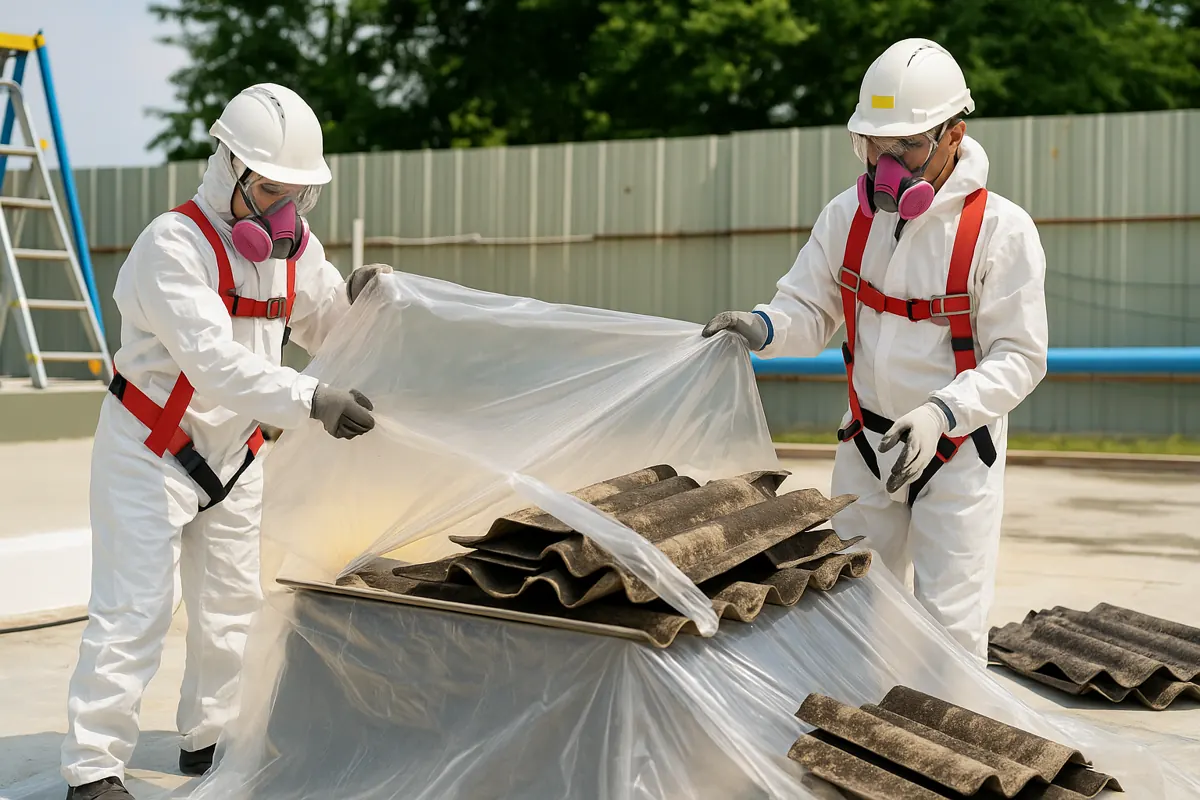
Asbestos cement is the most common material we remove: roof sheets, gutters, downpipes, flues, soffits and water tanks. It’s kept damp and removed whole where possible.
- Identify it first: we test or survey before planning removal
- Work planned to the Control of Asbestos Regulations 2012 and HSE guidance
- Written paperwork: reports, results and waste consignment notes
- Legal disposal at a permitted site, with a consignment note