Hampshire · England
Asbestos Removal for Sprat's Down
Worried about asbestos in Sprat's Down? Our service covers removal of asbestos cement, coatings, tiles, flues and tanks, with clear advice at each step.
- Old floor tiles and black adhesive
- Cement flues and gutters
- Outbuildings with cement roofs
Asbestos help in Sprat's Down
About our asbestos removal in Sprat's Down
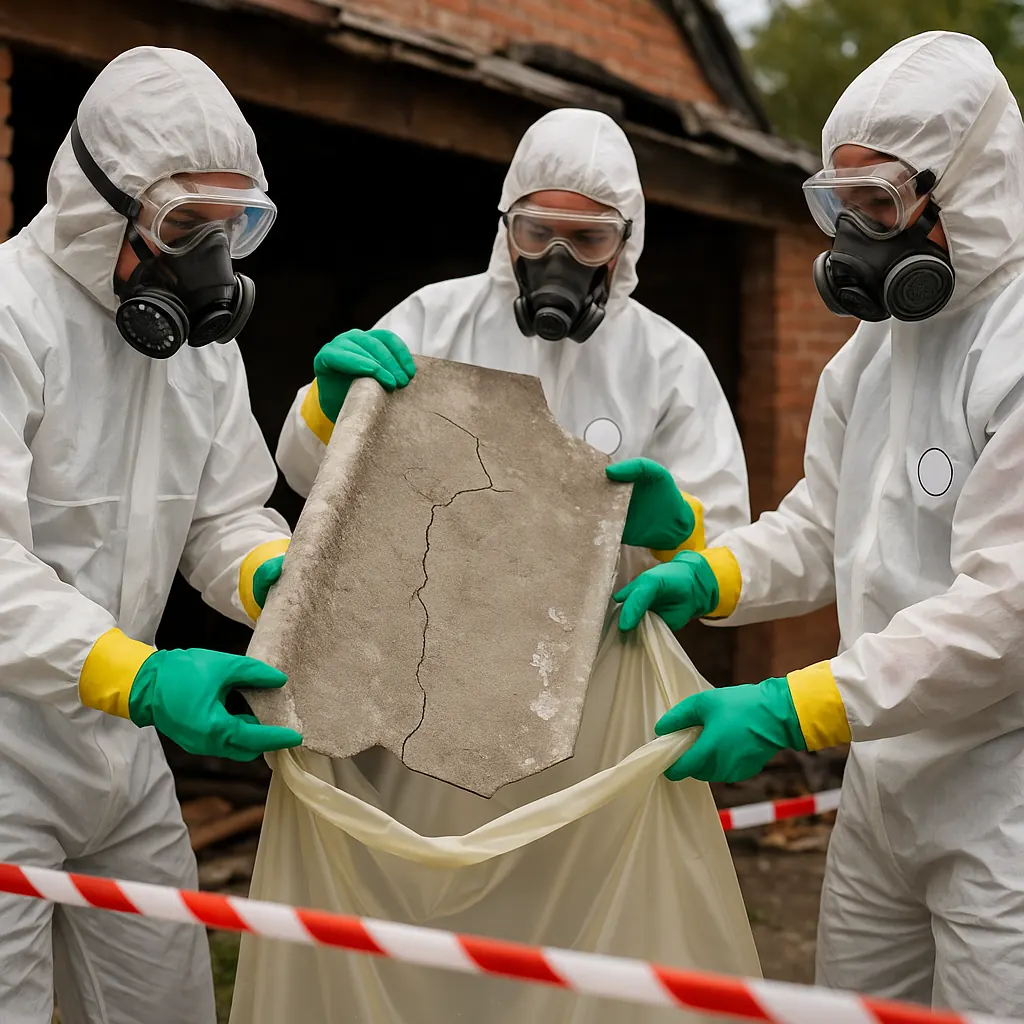
We keep materials damp, remove them whole where possible and never use power tools on them, so fibre release stays as low as possible. Whether it’s finds during refurbishment and old flues, we cover cement roof sheets, floor tiles and water tanks.
In places like Sprat's Down, outbuildings and farm buildings are common removal jobs, where access across fields or yards needs planning. Every job comes with paperwork, which is useful when you sell, let or build.
- Location
- Sprat's Down (SO45)
- Area hub
- Hampshire
- What we do
- Removal of cement, coatings, tiles, flues and tanks
- Afterwards
- Waste consignment note
- Quote
- Written quote for your job
- Call
- 07833 053 749
- Last updated
- 26 October 2026
After the job
Any asbestos left elsewhere should stay on record, so future trades know about it.
Keeping things safe:
- Tell us about parking and access
- Move belongings away, but leave the asbestos alone
- Book the replacement before removal
- Tell neighbours if the work is close to their property
What to avoid
Do not jet-wash, sand, drill or cut asbestos materials.
Don’t let anyone remove asbestos without asking how the waste will be disposed of.
What else we do in Sprat's Down
The process
We unfix materials and take them out in whole pieces where we can, never broken up, dropped or cut with power tools. We wear suitable protective equipment for the job, and keeps dust to a minimum. Outdoor removal in Sprat's Down is planned to finish in daylight: in late December it’s dark by about 4:00pm, while in June it stays light until about 9:20pm.
- Describe the material and send pictures
- If it hasn’t been identified, we sample it first
- We plan the job and send a written quote
- On the day we set up, keep the material damp and remove it whole where we can
- The area is cleaned and the waste goes to a permitted site, with paperwork
How to prepare
- Clear the way to the work area
- Warn neighbours if needed
- Move belongings away from the area, without touching the material
Ask for a quote
Send us the address in Sprat's Down, a description and some photos: use our quote form or call 07833 053 749, and we’ll reply with a quote.
Related guides
What we deal with in Sprat's Down
Refurbishment and demolition are the most common reasons for removal: anything the work would disturb should be dealt with first.
You cannot tell by looking, but these are common reasons people contact us:
- Vinyl and thermoplastic tiles
- Broken sheets in gardens
- Garage roof sheets
- Sheds, outbuildings and lean-tos
For rentals close to Hamble station, removal fits neatly between tenancies.
Before you book anyone
- The documents you’ll receive
- What category of work it is
- What’s excluded, such as making good or a new roof
- How fibres will be kept down
Asbestos removal in Sprat's Down: local notes
Sprat's Down is about 4 miles north of Cowes, in Hampshire. We work across Sprat's Down and the surrounding area, from older terraces and semis to flats, workplaces and outbuildings. Sprat's Down is one of 683 towns and villages in Hampshire where we work. Our nearest city page is Southampton, about 8 miles away.
Older buildings in Sprat's Down, near St George or elsewhere, may have asbestos in later alterations rather than the original fabric, so we identify materials before planning removal. At a school such as Fawley Infant School, removal would be arranged with the duty holder, with the area empty. Sprat's Down is within about 5 miles of the New Forest National Park. Rural removal jobs nearby often mean planning access across yards and fields. Sprat's Down is within about 4 miles of the coast, where exposed sites can be windy, so outdoor removal is planned around the forecast.
This part of Hampshire takes in SO45. For properties just outside Sprat's Down, we cover Calshot (1 mile east), Stonehills (1 mile north), Stanswood (1 mile south), Hillhead (1 mile east) and Ashlett (1 mile north). Further out, we also cover Gosport (8 miles east), Eastleigh (11 miles north), Fareham (7 miles north-east), Totton (10 miles north-west), Chandler's Ford (12 miles north) and Hedge End (7 miles north).
A little further out are Calshot Castle (1.6 miles east) and Sir Max Aitken Museum (3.9 miles south-east). Open spaces near Sprat's Down include Mercury Marshes and Mill Hill.
- Nearby, you’ll find Falcon Hotel (1 mile north)
Limits to be aware of
We are upfront about what’s included:
- Notifiable work has to be notified before it starts, so the timing needs planning
- Unidentified materials are tested before removal is planned
- Removal in strong wind or heavy rain may need rescheduling
Not sure what you need? Send us photos and we’ll tell you honestly.
Common materials
- Flue pipes
- Bitumen roof felt
- Soffits (cement)
- Floor tiles and adhesive
- Garage and shed roofs
- Water tanks
- Asbestos cement sheets
- Gutters and downpipes
- Panels and boards
- Artex and textured coatings
FAQs for Sprat's Down
Do you cover Sprat's Down and the area around Hamble station?
Yes, we cover Sprat's Down and the area towards Hamble station, about 4 miles north.
Do you come out to small villages like Sprat's Down?
We do: small villages are covered too. Just tell us how to reach the property.
Do you need a licence to remove asbestos?
Sometimes: lagging, sprayed coatings and most insulating board are licensed work, while most asbestos cement and textured coatings are non-licensed or notifiable non-licensed.
Is asbestos dangerous?
Breathing in asbestos fibres can cause serious diseases, often decades later. The risk comes mainly from disturbing materials that contain it, so identifying it before work is important.
Will I get the price in writing?
Yes, always.
Do I need to move out?
Outdoor work rarely affects you indoors. Indoor work areas are kept closed off until finished.
Can asbestos be left in place?
Material in good condition that won’t be disturbed can often be left and managed. It should be recorded and checked.
How quickly can you come out?
Dates are agreed once the quote is accepted. Some work has to be notified to the enforcing authority first, which affects timing.
Options to consider in Sprat's Down
Licensed, notifiable non-licensed or non-licensed? It depends on what the material is and what’s being done. See our guide to the three categories. A price that looks too good to be true often is: controls, protective equipment, laboratory fees and legal disposal all cost money.
Why us?
- Homes, rented property and workplaces
- Accredited laboratory results
- Plain-English advice, including when to leave things alone
- Records for your files
See how we quote or the cost guide.
Materials we deal with
Asbestos cement
Asbestos cement is the most common material we remove: roofs, gutters, flues and tanks. We wet it and take it down in whole pieces where we can.
Insulating board and lagging
That work must be done by a contractor holding an HSE licence, with notification 14 days ahead.
Should you do it yourself?
HSE’s advice to the public is not to try to repair or remove asbestos yourself. Higher-risk materials such as lagging, sprayed coatings and most insulating board must only be dealt with by an HSE-licensed contractor.
With a professional job, you get a record: a record that buyers, insurers and builders may want to see.
Duty holders and landlords in Sprat's Down
Letting agents often ask about asbestos before maintenance work. A test or a survey gives everyone a clear answer.
If you run a business from older premises in Sprat's Down, you should have an asbestos register and management plan, and contractors must be told what’s there.
- Survey or test first when it isn’t clear what a material is
- Planned to HSE guidance and the Control of Asbestos Regulations 2012
- Everything in writing: quotes, reports, results and waste notes
- Waste sealed and labelled, then taken to a permitted site