East Sussex · England
Asbestos Surveys in Ripe, East Sussex
Worried about asbestos in Ripe? Our service covers management, refurbishment and demolition, and pre-purchase asbestos surveys, with clear advice at each step.
- Community buildings and halls
- Shared halls, stairs and plant rooms
- Managing asbestos in workplaces and non-domestic premises
Need an asbestos survey in Ripe?
Asbestos survey in Ripe
Any building in Ripe built or refurbished before 2000 can contain asbestos. The way to know for sure is a survey: a surveyor inspects the building, takes small samples of suspect materials and records the results in a report. From buying a property built before 2000 and schools, halls and community buildings, we deal with pipe lagging, floor tiles and boiler cupboard panels and more.
Village properties around Ripe often come with outbuildings, which a survey can include, as cement sheet roofs and cladding were widely used on farm and garden buildings. We start with a clear answer: is it asbestos, and what should you do about it.
- Location
- Ripe (BN8)
- Area hub
- East Sussex
- What we do
- Management, refurbishment and demolition, and pre-purchase surveys
- Paperwork
- A written report with lab results
- Price
- Quoted individually, in writing
- Phone
- 07833 053 749
- Page updated
- 26 October 2026
For landlords, agents and businesses
The duty to manage applies to non-domestic premises and common parts, not to single private homes, but anyone working on the property still needs to know about asbestos.
Duty holders for workplaces and the shared parts of flats in Ripe must manage asbestos under the Control of Asbestos Regulations 2012. In practice: find it, assess it, record it and manage it.
Questions from Ripe
Do you cover Ripe from London?
We cover Ripe, about 45 miles from central London.
Do you cover small places like Ripe?
Yes. We cover villages and hamlets as well as towns. Tell us about access and parking.
Do you work in flats?
Yes. In a block, the shared areas are the responsibility of the managing agent or freeholder, who should hold the asbestos register.
What if my house is newer?
Buildings from after 2000 shouldn’t, because of the 1999 ban, but older parts and reused materials can still contain it.
Can I put asbestos in a skip?
Never: asbestos waste is hazardous and cannot go in skips, bins or recycling. It must go to a permitted site.
Is a survey needed before building work in Ripe?
Yes, for the areas affected: HSG264 says refurbishment and demolition work should be preceded by a refurbishment and demolition survey.
What does licensed work mean?
Higher-risk materials need an HSE-licensed contractor. Cement and textured coatings usually are not licensed.
Does weather affect the work?
Indoor work isn’t affected. Outdoor roof work can be delayed by strong wind or heavy rain.
After the job
Any areas not accessed are listed, so they’re treated as if they contain asbestos until checked.
To avoid problems in future:
- In a block of flats, ask for the register of the shared areas
- Clear access to lofts, garages, cupboards and outbuildings
- Tell us about any areas that are locked or unsafe
- Survey first, then book the trades
Don’ts
Until the survey is done, do not drill, sand, cut or break suspect materials.
Book the survey before the builders, so the results can shape your plans and your budget.
What’s included, and what isn’t
We are upfront about what’s included:
- The survey tells you what’s there; removal is a separate job
- The report describes the building when surveyed; materials can deteriorate, so condition should be checked again over time
- Areas we cannot safely reach are listed in the report, and should be presumed to contain asbestos
If you’re unsure, describe the job and send photos, and we’ll advise before booking.
Common materials
- Soffits and porch canopies
- Artex and textured coatings
- Roofing felt and bitumen
- Garage and shed roofs
- Floor tiles and adhesive
- Water tanks and flues
- Pipe lagging
- Cement sheets and cladding
- Boiler cupboards and panels
- Ceiling tiles
Asbestos surveys in Ripe: local notes
Ripe is about 5 miles west of Hailsham, in East Sussex. Ripe has a mix of older and newer buildings, and anything from before 2000 may contain asbestos. Ripe is one of 289 towns and villages in East Sussex where we work. You can also see our page for Brighton, about 12 miles away.
If you are a landlord near Berwick (Sussex) station, asbestos information should be ready for contractors before maintenance. Parts of the South Downs National Park are within about 5 miles of Ripe, and rural properties there often have outbuildings worth including in a survey.
For surveys in BN8, just send the postcode and a few photos. Local streets include Carriage Mews, Channers Lane and Church Lane; we cover every one. Neighbouring places we cover include Selmeston (2 miles south), Wickstreet (2 miles south-east), Laughton (2 miles north), Golden Cross (2 miles north-east) and Berwick (2 miles south). Within a short drive, we also work in Eastbourne (8 miles south-east), Bexhill-on-Sea (14 miles east), Seaford (7 miles south), Lewes (6 miles west), Hailsham (5 miles east) and Crowborough (13 miles north).
A little further out are Hellingly Hospital Railway (5.1 miles east) and Museum of Agricultural Bygones (3 miles north-west). Open spaces near Ripe include Firle Beacon.
- Local pubs include Lamb Inn (under half a mile north-west)
Weighing up your options
A management survey or a refurbishment and demolition survey? A management survey suits a building in use; a refurbishment and demolition survey looks behind and under surfaces before building work. See our guide to which survey you need. Our quotes are clear about VAT, so you can compare like with like.
Why people choose us
- Condition ratings, not just a list
- Work done to the regulations
- Homes, rented property and workplaces
- Records for your files
Take a look at how we quote and published price ranges.
Places near Ripe
What else we do in Ripe
What it costs
The cost depends on:
- Access: height, lofts, steps and space
- The building’s size and layout
- Location, parking and any London charges
- What the material is and its state
We don’t publish a price list, because jobs vary so much. Our cost guides show published ranges, with dates and sources.
What to photograph
A few photos can save a site visit:
- The access route
- Any labels or markings, if you can see them safely
- A close-up from a safe distance
- Cracks or breaks
If you have a survey or test result, include it when you use our quote form or call 07833 053 749.
Where asbestos turns up
Older buildings have often been altered many times, so asbestos can turn up in later additions as well as original features, which is why surveys look everywhere in scope, not just at the obvious places.
If any of these sound familiar, it’s worth getting advice:
- Buying a property built before 2000
- Workplaces built before 2000
- Planned refurbishment work
- Surveys requested by builders before work
Altering an older house in Ripe, wherever it is? Get the work areas surveyed before anything is opened up.
Before you book anyone
- That the survey follows HSE’s guide HSG264
- What exactly is included: the areas, materials or samples
- The report contents
- Areas included and excluded
Materials we deal with
Textured coatings
Textured coatings such as Artex were used on ceilings and walls, and older ones can contain a small amount of asbestos. Left alone they’re low risk; sanding or dry scraping is the problem.
Asbestos cement
Asbestos cement was used for garage and shed roofs, gutters, downpipes, flues, soffits and water tanks. The fibres are bound in cement, but it releases fibres when broken, cut or abraded.
The process
Each sample is sealed, labelled and recorded with its location, before going to an accredited laboratory. Before we leave, we explain what we did and what comes next.
- Start by telling us about the property and your plans
- We recommend a survey type and quote for the agreed scope
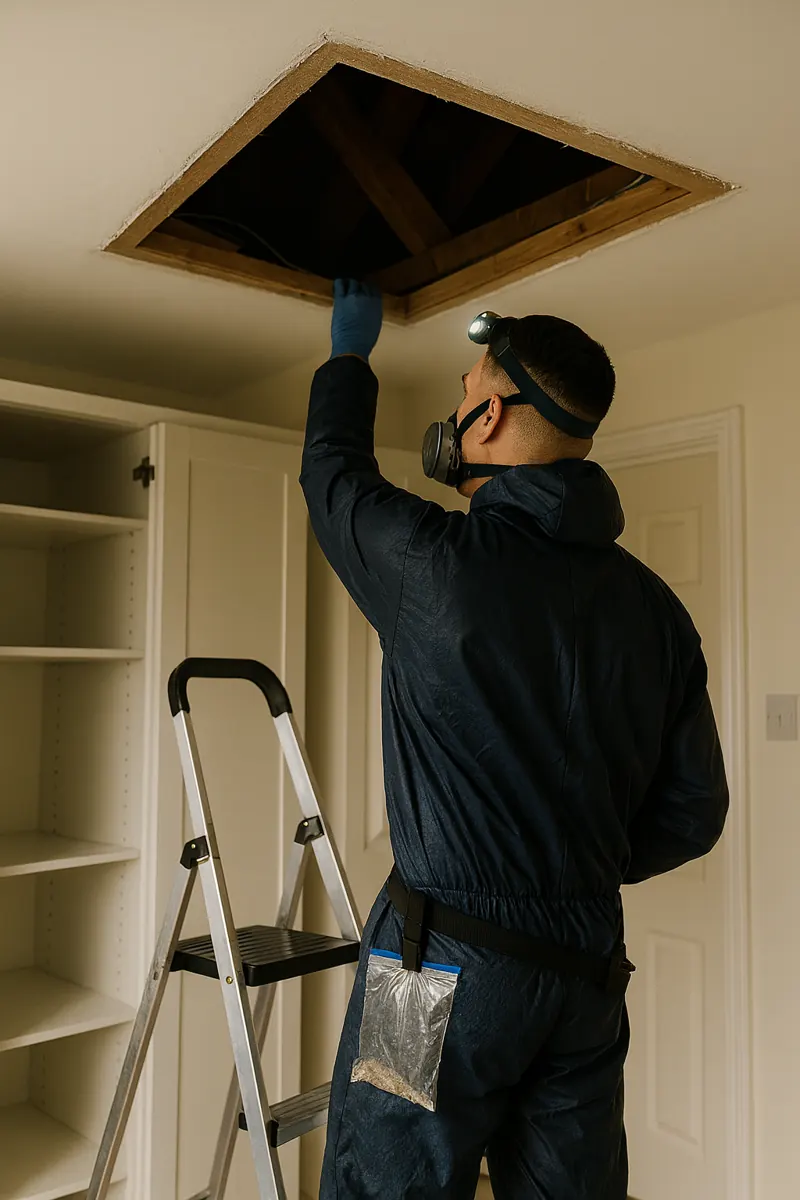
- On the agreed day, the surveyor inspects, photographs and samples
- Samples go to an accredited laboratory for analysis
- We send the report with results and recommendations
Preparing for the visit
- Leave the suspect material alone until we arrive
- Tell us about parking and access
- Tell neighbours if the work is close to their property
Getting a price
Not sure what you need? Fill in the enquiry form or give us a call on 07833 053 749 and describe the problem, and we will advise.
Read more
- Survey or test first when it isn’t clear what a material is
- Done to the regulations: HSE guidance and CAR 2012
- Paperwork for your records: reports, lab results and consignment notes
- Waste sealed and labelled, then taken to a permitted site