Isle of Wight · England
Asbestos Survey for Shalcombe
Found something that might be asbestos in Shalcombe? We provide surveys that find, sample and record asbestos, explained in plain English.
- Surveys requested by builders before work
- Buying a property built before 2000
- Community buildings and halls
Asbestos help in Shalcombe
A closer look at the materials
Pipe lagging
Lagging found in a survey is flagged clearly, and it shouldn’t be disturbed.
Floor tiles and adhesive
Vinyl and thermoplastic floor tiles and black bitumen adhesive can contain asbestos. They’re often found under carpet or laminate.
Asbestos survey in Shalcombe
Not every older building in Shalcombe contains asbestos, and not all asbestos needs removing. A survey tells you which situation you’re in. We often deal with flues, soffits and water tanks, and people generally contact us about community buildings and halls and planned refurbishment work.
In a village like Shalcombe, surveys often include barns, stables, garages and outbuildings as well as the house, since cement sheeting was common on outbuildings. We follow HSE guidance and the Control of Asbestos Regulations 2012, whatever the size of the job.
- Location
- Shalcombe (PO41)
- Region
- Isle of Wight
- What we do
- Surveys for homes, landlords and businesses
- Afterwards
- A written report with lab results
- Price
- Written quote for your job
- Phone
- 07833 053 749
- Updated
- 26 October 2026
What it costs
What drives the price:
- How big the building is
- How many outbuildings are included
- The survey type
- How many samples are needed
Identifying asbestos early is cheaper than stopping work later, when the whole project can be held up.
What to photograph
What to photograph:
- Street parking nearby
- An overall view
- A closer photo of the material, without touching it
- How we’d reach it
Include any existing survey or test when you fill in the enquiry form or give us a call on 07833 053 749; it helps us quote accurately.
Common questions in Shalcombe
Is asbestos common in Shalcombe homes?
It depends on its age and history: asbestos was used until the 1999 ban, so older homes and older alterations in Shalcombe can contain it. Common places include garage roofs, textured ceilings, floor tiles, soffits and flues.
Do you cover small places like Shalcombe?
Yes. We cover villages and hamlets as well as towns. Tell us about access and parking.
What should I do if I’ve disturbed asbestos?
Get everyone out of the area and keep it closed. Do not try to clean up the debris yourself, and ask for advice.
Do you give written quotes?
Yes, always, including whether VAT is included.
Is a home built after 2000 likely to contain asbestos?
Asbestos was banned in 1999, so a home built after 2000 shouldn’t contain it.
What does the survey report include?
Every suspect material in the agreed scope: location, laboratory result, condition, photographs and our recommendation.
Do you survey commercial buildings in Shalcombe?
Yes: offices, shops, warehouses, industrial units, schools and halls as well as homes. Send us the details of the building.
Will the survey damage the property?
A management survey takes small samples, which are sealed afterwards. A refurbishment and demolition survey is intrusive by design, because it has to look inside the fabric of the building.
The scope of an asbestos survey
Every job has limits; these are the usual ones:
- A survey reflects the building on the day; materials can deteriorate, so condition should be checked again over time
- The survey tells you what’s there; removal is a separate job
- Inaccessible areas are recorded, and should be presumed to contain asbestos
If you’re unsure, describe the job and send photos, and we’ll advise before you book.
Materials in Shalcombe
- Cement sheets and cladding
- Boiler cupboards and panels
- Pipe lagging
- Water tanks and flues
- Soffits and porch canopies
- Roofing felt and bitumen
- Garage and shed roofs
- Artex and textured coatings
- Floor tiles and adhesive
- Ceiling tiles
Doing it yourself?
Found something mid-DIY? Stop: leave the area, do not clean it up, and ask for advice.
Home testing kits exist, but you have to disturb the material to use one. HSE advises that samples are best taken by a competent person.
Step by step
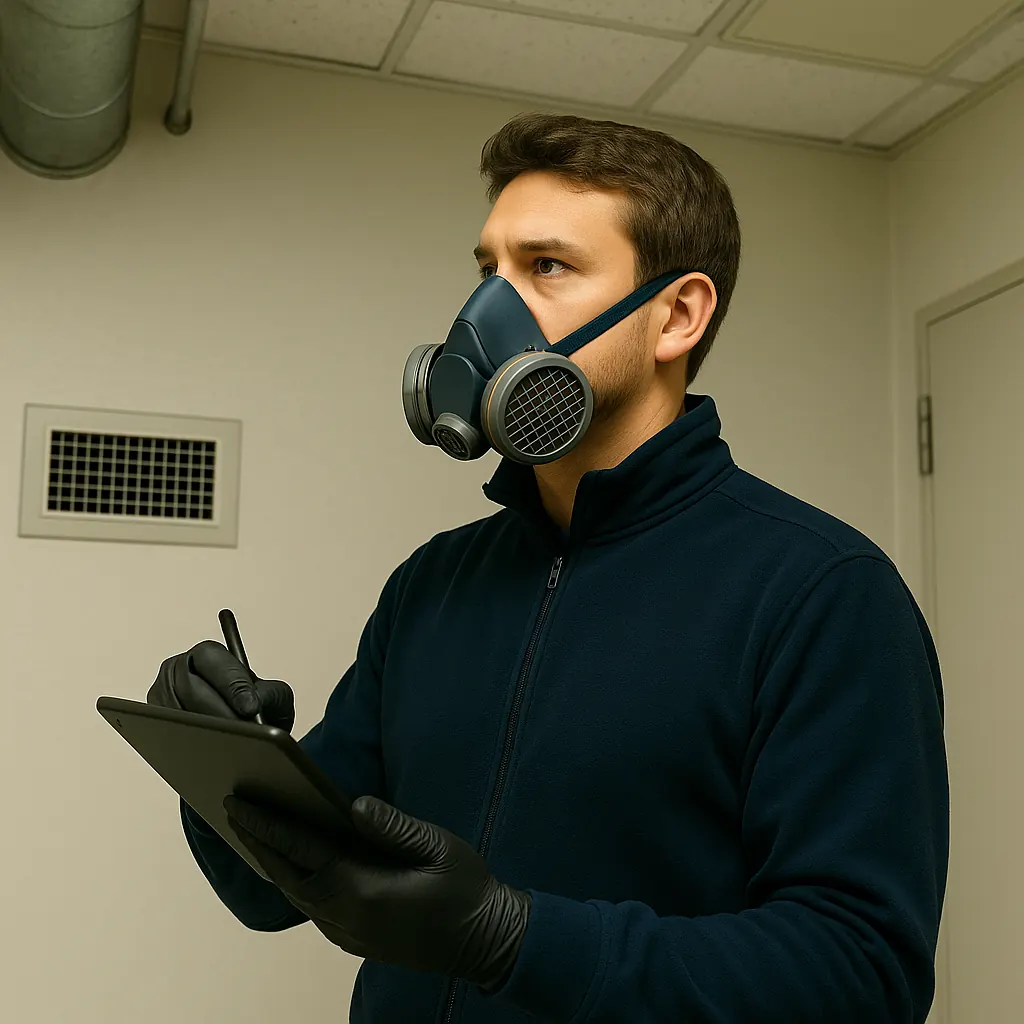
In a refurbishment and demolition survey, we open up the fabric of the building: we look behind panels, under floors and above ceilings in the areas being worked on, so those areas need to be empty. We keep the work area clear of other people while we work, so please keep children and pets away.
- Call or message us with the address and what’s prompting the survey
- We set out the survey type, the areas covered and the price in writing
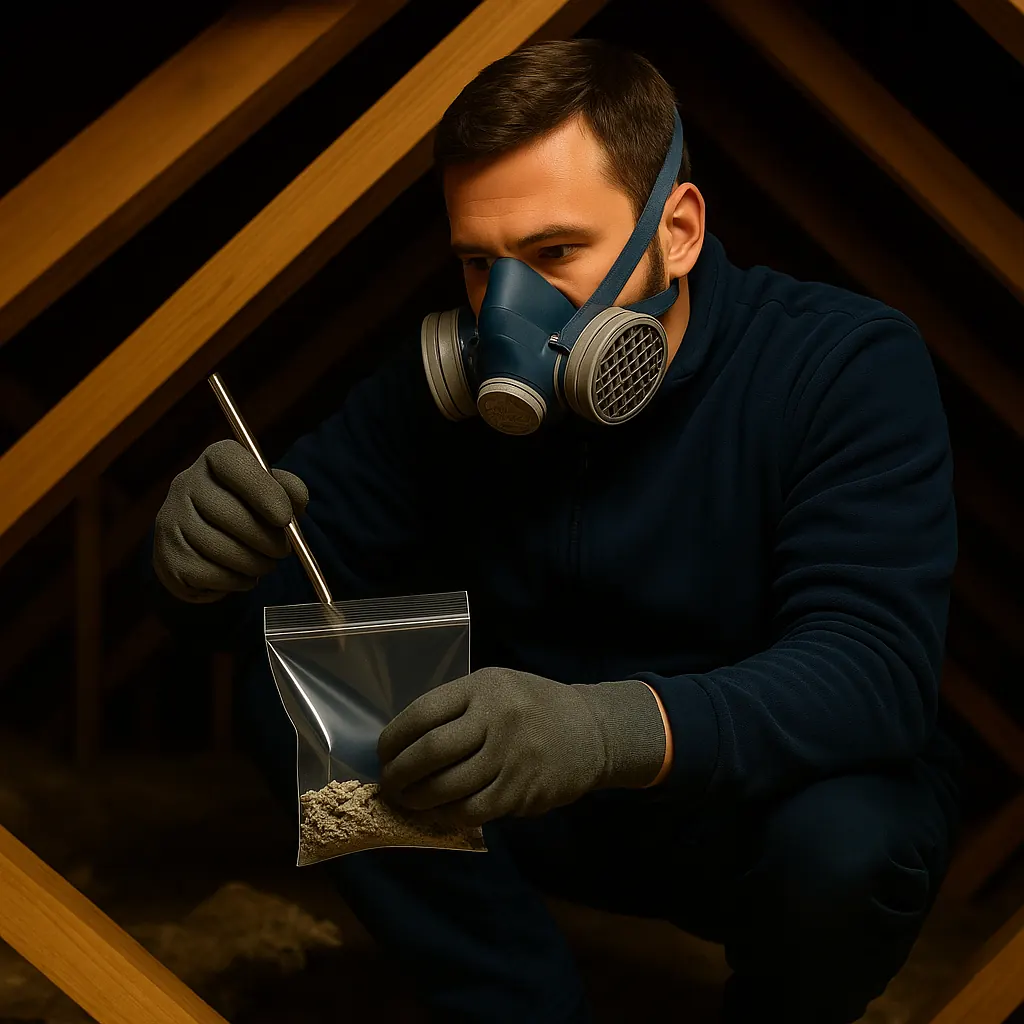
- Our surveyor carries out the inspection and sampling
- Each sample is analysed by an accredited laboratory
- You receive the report, with results and what to do next
How to prepare
- Move things out of the way carefully
- Tell neighbours if the work is close to their property
- Leave the suspect material alone until we arrive
Get a quote
Not sure what you need? Fill in the enquiry form or give us a call on 07833 053 749 and describe the problem, and we will advise.
Helpful guides
Duty holders and landlords in Shalcombe
Contractors working for you need asbestos information before they start. HSE regularly reminds owners and trades of it.
Community buildings count as non-domestic premises, so the duty to manage applies.
Places near Shalcombe
What else we do in Shalcombe
Asbestos surveys in Shalcombe: local notes
Shalcombe is about 6 miles west of Newport, in the Isle of Wight. Homes, landlords and businesses in Shalcombe contact us for surveys about all kinds of jobs. We work in 125 places across the Isle of Wight. We work right across the region, from Shalcombe to Southampton (17 miles away).
The sea is within about 5 miles of Shalcombe, and coastal properties often have porches, canopies and outbuildings that a survey can include.
Wherever your property is in PO41, we can help with an asbestos survey. We also carry out surveys in Dunsbury (1 mile south-west), Hulverstone (1 mile south), Brook (1 mile south-west), Newbridge (1 mile north-east) and Wellow (1 mile north). Within a short drive, we also work in Newport (6 miles east), Ryde (13 miles east), Cowes (8 miles north-east), Sandown (12 miles east), Shanklin (12 miles east) and Ventnor (11 miles south-east). If the property is somewhere remote, tell us early so we can plan the journey.
For somewhere as remote as Shalcombe, early notice helps us plan the trip.
A little further out are Calbourne Water Mill And Rural Museum (1.3 miles north-east) and Yarmouth Castle (3.7 miles north-west). Within reach you will find Westover Down.
After we have finished in Shalcombe
Duty holders use the survey to build an asbestos register and management plan, which should be kept up to date.
Going forward:
- Tell us exactly what work you’re planning, so the scope matches
- Tell us about any areas that are locked or unsafe
- Keep children and pets away from the areas being surveyed
- Have any old surveys or plans ready
Things not to do
Before the survey, leave suspect materials alone.
Until the survey is done, do not drill, sand, cut or break suspect materials.
Typical surveys in Shalcombe
Asbestos was used in British buildings for much of the 20th century, until it was fully banned in 1999. That’s why so many buildings in the Isle of Wight can contain it, from garage roofs and soffits to textured ceilings and floor tiles.
Asbestos can be in plenty of places in buildings from before 2000. Common situations include:
- Refurbishment, rewiring and new kitchens or bathrooms
- Workplaces built before 2000
- Checks on rental property
- Buying a property built before 2000
If you have an older property in Shalcombe, near St. Mary's Church or anywhere else, survey the areas you are working on before work starts.
Comparing quotes
- If the price includes VAT
- What exactly is included: the areas, materials or samples
- Whether they’re insured for asbestos work
- Which areas are covered, and which are not
- Identify it first: we test or survey before planning removal
- Planned to HSE guidance and the Control of Asbestos Regulations 2012
- Written paperwork: reports, results and waste consignment notes
- Waste sealed and labelled, then taken to a permitted site