Greater London · England
Asbestos Testing for Chelsea Harbour
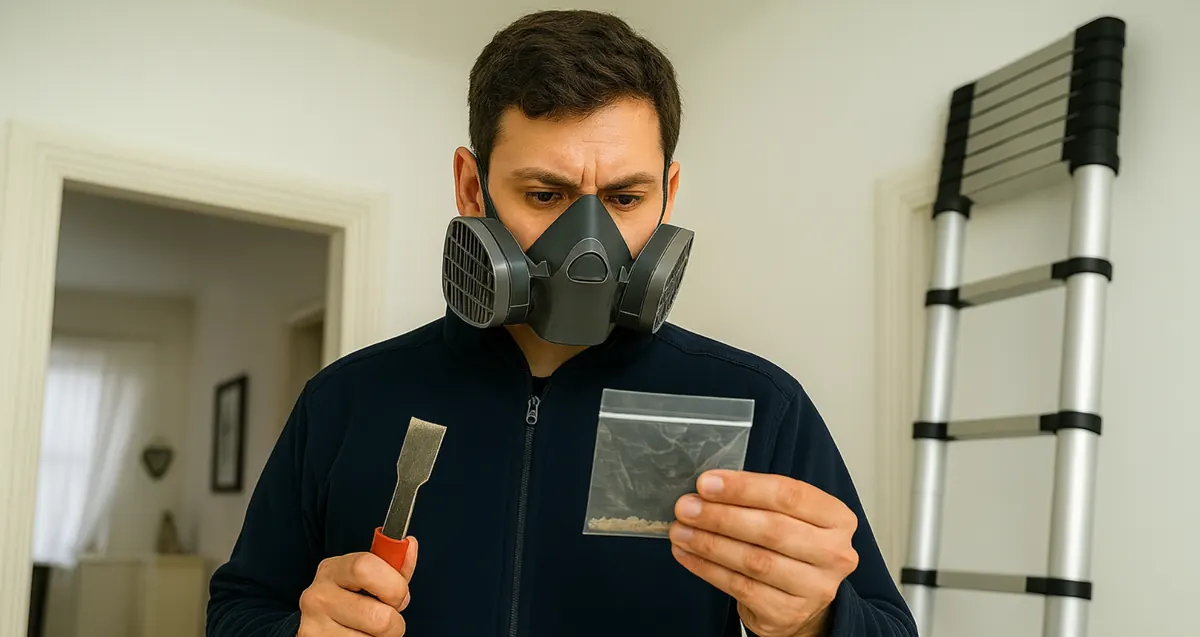
Asbestos testing in Chelsea Harbour: laboratory testing of suspect materials. Send us photos and we’ll tell you what you need.
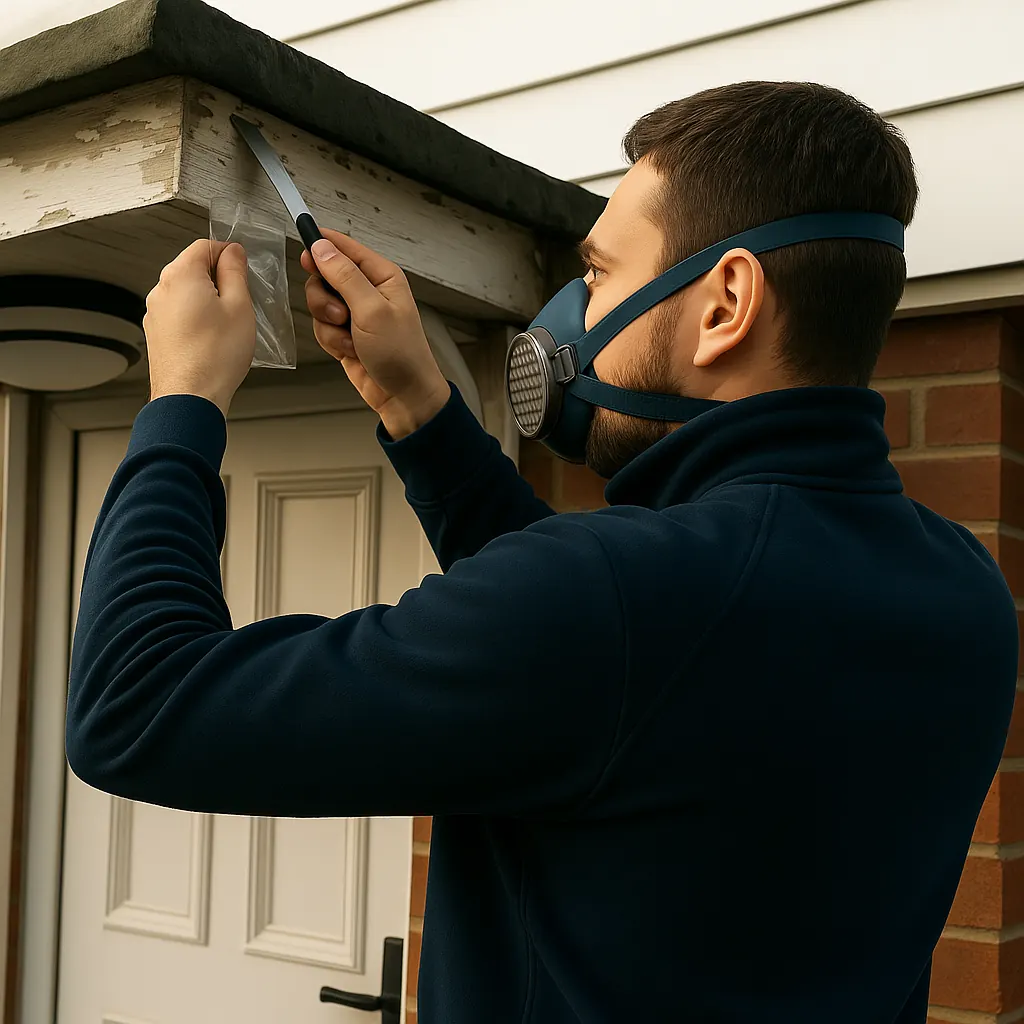
- Soffits and porch canopies before replacement
- Panels behind old heaters
- Textured ceilings before a renovation
Asbestos testing near Chelsea Harbour
What it might be made of
Roof felt and mastics
Some bitumen products contain asbestos.
Floor tiles and adhesive
You may find tiles under carpet or laminate; test before lifting them.
About our asbestos testing in Chelsea Harbour
Asbestos testing tells you whether a specific material contains asbestos We sample suspect materials in Chelsea Harbour and have them analysed by an accredited laboratory, so you know before you drill, sand or remove anything. People often contact us about textured ceilings before a renovation and boards and panels before a kitchen or bathroom refit, including garage roof sheets, black adhesive and textured ceilings.
In places like Chelsea Harbour, we often test a single material in a flat before work, when a full survey would be more than you need. We work to HSE guidance on every job, large or small.
- Area
- Chelsea Harbour (SW6, SW11, SW10)
- Area hub
- Greater London
- Covers
- Samples analysed by an accredited lab
- Paperwork
- A written result for each sample
- Price
- Written quote for your job
- Telephone
- 07833 053 749
- Page updated
- 26 October 2026
Towns and villages near Chelsea Harbour
More for properties in Chelsea Harbour
FAQs for Chelsea Harbour
Do you cover Chelsea Harbour and the area around Imperial Wharf station?
Yes, we cover Chelsea Harbour, including the streets around Imperial Wharf station.
Do older homes in Chelsea Harbour have asbestos?
It depends on its age and history: asbestos products were used until 1999, so pre-2000 homes and extensions in Chelsea Harbour may have it. Common places include garage roofs, textured ceilings, floor tiles, soffits and flues.
Can you test the air for asbestos?
We do not carry out air testing ourselves: clearance testing after licensed removal is carried out by an independent UKAS-accredited analyst. Ask and we’ll explain.
Do you give written quotes?
Yes, always.
Can I put asbestos in a skip?
Never: it’s hazardous waste. When we remove it, it’s taken to a permitted site with a consignment note.
Can you tell if it’s asbestos by looking?
Not reliably by eye: a sample has to be analysed in a laboratory. We sample it with controls and send it to an accredited laboratory.
What does licensed work mean?
It covers the higher-risk materials: lagging, sprayed coatings and most asbestos insulating board. It needs a contractor with an HSE licence.
Can you help a business or landlord?
We do. We work for landlords, managing agents, employers and contractors as well as homeowners.
What’s included, and what isn’t
Some limits to bear in mind:
- Clearance testing is a separate, independent job
- Sampling high or hidden materials may need access equipment
- We can’t confirm asbestos from a photo
If in doubt, ask: we’ll recommend a test, a survey or removal.
Materials we see
- Bitumen adhesive
- Pipe lagging
- Soffit boards
- Garage roof sheets
- Panels behind heaters
- Flue pipes
- Floor tiles
- Water tanks
- Artex and textured ceilings
- Roof felt
Choosing the right option
How many samples? Each different material needs its own sample, and sometimes tiles and adhesive or coatings in different rooms need separate samples. Identifying asbestos early is cheaper than stopping work later, when the whole project can be held up.
Why choose us
- Houses, flats and business premises
- Condition assessed for every material
- Plain-English advice, including when to leave things alone
- Samples analysed by an accredited laboratory
Take a look at how we price jobs and our cost guide.
Landlords, managing agents and employers
Contractors working for you need asbestos information before they start. HSE’s campaigns stress this point to building owners and trades alike.
Before maintenance in a rented home, agents may ask about asbestos. A test or a survey gives everyone a clear answer.
Can I do it myself?
Asbestos waste can’t go in household bins, recycling or skips. It has to go to a site that accepts it, and some councils accept small amounts from residents by arrangement.
Power tools, sanding and jet-washing release the most fibres, so avoid them completely.
Common reasons for tests in Chelsea Harbour
Testing can show a material does not contain asbestos at all, so work can carry on normally.
These are some of the things we deal with in Chelsea Harbour:
- Tiles found under carpet
- Garage and shed roofs before removal or repair
- Results builders ask for before work
- Textured ceilings before a renovation
If you’re a letting agent with homes near Imperial Wharf station, a quick test between tenants is worth considering.
What to look for in a quote
- VAT, clearly stated
- That samples are analysed by an accredited laboratory
- The scope of the job, in writing
- Whether they’re insured for asbestos work
Looking after things afterwards
If asbestos is found, we’ll explain your options: leave and manage it, cover it, or remove it before work.
Some practical advice:
- Send photos of the material and where it is
- Ask us if you are unsure whether you need a test or a survey
- Group several materials into one visit
- If tiles and adhesive are both exposed, mention it
Don’ts
If a material is already damaged, keep people and pets away from it, and don’t sweep or vacuum up debris.
Leave the material alone until the result is back.
Testing around Chelsea Harbour
Chelsea Harbour is about 2 miles south-east of Kensington, in Greater London. Chelsea Harbour is within our Greater London area, whatever the size of the job. We cover 764 places across Greater London, from the larger towns to small villages.
For an older property in Chelsea Harbour, whether near St Mary's Church or not, it’s worth testing suspect materials before work. Schools such as Chelsea Academy should have an asbestos management plan, and staff can ask to see how it works.
We cover tests across the SW6, SW11 and SW10 postcode area and the streets around it. From Ann Lane, York Road and Lots Road or anywhere nearby, the process is the same. Other places close to Chelsea Harbour we cover include Sands End (1 mile south), Walham Green (1 mile north-west), World's End (1 mile north), Little Chelsea (1 mile north) and Parsons Green (1 mile west). Larger places within reach include London (4 miles north-east), City of Westminster (3 miles north-east), Marylebone (3 miles north-east), St Pancras (4 miles north-east), Shoreditch (6 miles north-east) and Walthamstow (10 miles north-east).
Chelsea Harbour is in London, inside the Ultra Low Emission Zone, where parking and loading can be restricted: tell us about parking, permits and access when you ask for a quote.
Well-known places in the area include Chelsea Stadium Tour And Museum (0.6 miles north-west) and Chelsea and Westminster Hospital (0.6 miles north). Open spaces near Chelsea Harbour include WWT London Wetland Centre and Battersea Park Lake.
- Schools near Chelsea Harbour include Heatherley School of Fine Art (within half a mile north-west) and Langford Primary School (less than half a mile south-west)
- Pubs nearby include Lots Road pub (less than half a mile north-west)
- Local facilities include Natural History Museum Library and Archives (1.5 miles north) and Westminster St Margaret and St John (2.6 miles north-east)
Step by step
The sample point is sealed, so it stays safe until the result arrives. If anything unexpected turns up, we stop and talk to you before carrying on.
- Tell us what you want testing and where
- We agree the number of samples and send a quote
- Samples are taken with controls
- The laboratory analyses the samples
- We send the result and explain it
Before we arrive
- Clear belongings, but leave the material alone
- Leave the suspect material alone until we arrive
- Mention any damage before we arrive
How to get a quote
Each job is priced individually. Use our quote form or call 07833 053 749 to get started.
Related guides
- Nothing removed blind: unknown materials are tested first
- Done to the regulations: HSE guidance and CAR 2012
- Paperwork for your records: reports, lab results and consignment notes
- Waste sealed and labelled, then taken to a permitted site