Surrey · England
Asbestos Testing for East Clandon
Asbestos testing in East Clandon, from older homes to workplaces. You get a written quote before anything starts.
- Artex before downlights or rewiring
- Floor tiles and black adhesive
- Soffits and porch canopies before replacement
Need asbestos testing in East Clandon?
Asbestos testing near East Clandon
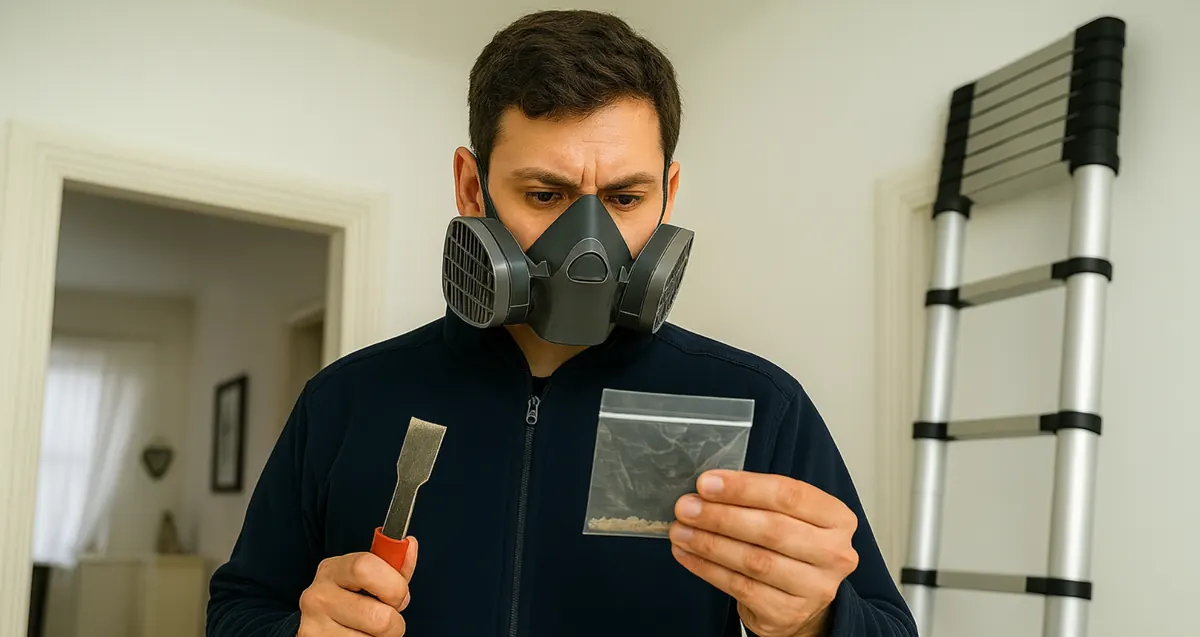
If you’ve already disturbed a material during DIY in East Clandon, stop and keep people away from it. A test will show whether it contains asbestos, and what to do next. Typical materials include black adhesive, garage roof sheets and textured ceilings, and people normally contact us about garage roofs before replacement and something broken during building work.
Village homes in places like East Clandon often mix old and newer materials, so each material needs its own test. Our quotes are written and say what’s included, so there are no surprises.
- Location
- East Clandon (GU4)
- Region
- Surrey
- Service
- Samples analysed by an accredited lab
- Paperwork
- Written laboratory result
- Quote
- A written quote before work starts
- Telephone
- 07833 053 749
- Last updated
- 26 October 2026
Where asbestos turns up
Most exposure happens when someone disturbs a material without knowing it contains asbestos. Testing first avoids that.
These are some of the things we deal with in East Clandon:
- Corrugated roof sheets
- One-off checks in rented property
- Artex before downlights or rewiring
- A material damaged during DIY
At a school like Clandon CofE Aided Primary School, the duty holder keeps asbestos records, which staff and parents can ask about.
Comparing quotes
- What the report or result will contain
- Which areas and materials are covered
- The survey type, as defined in HSG264
- Whether extra samples cost more
The process
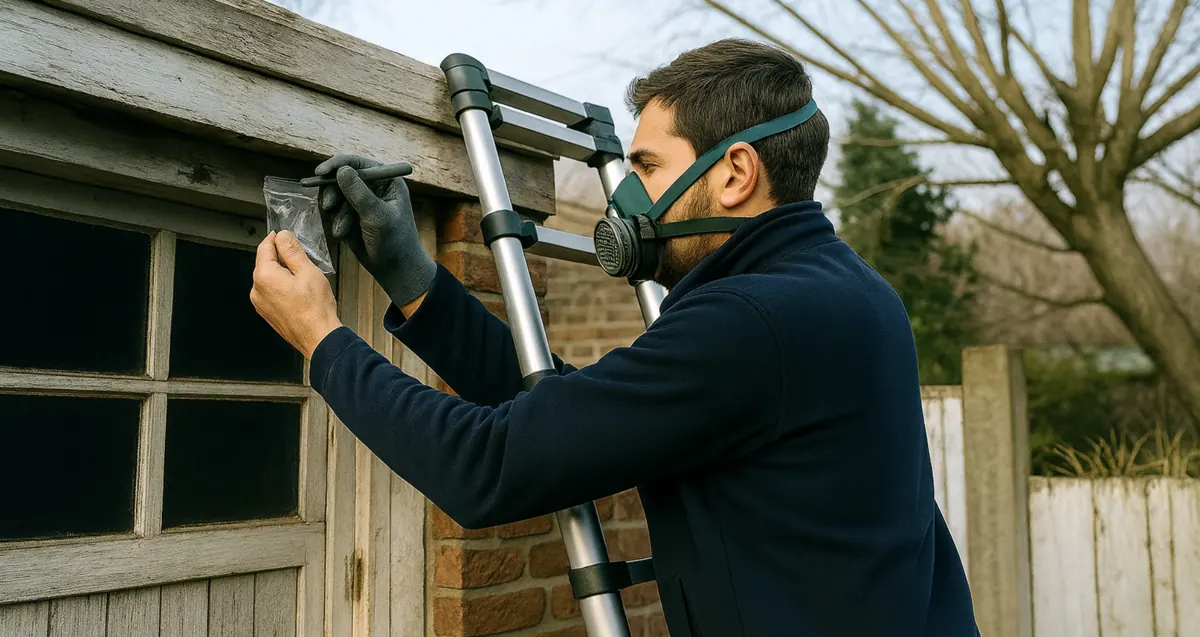
We seal the sample point with a suitable sealant or tape, leaving the material safe while you wait for the result. We keep the work area clear of other people while we work, so children and pets should be kept elsewhere.
- Tell us what you want testing and where
- We agree the number of samples and send a quote
- Samples are taken with controls
- An accredited lab analyses them
- You get the written result and our advice
Preparing for the visit
- Leave the suspect material alone until we arrive
- Keep the area clear of children and pets
- Tell neighbours if the work is close to their property
Ask for a quote
Unsure whether you need a test, a survey or removal? Call 07833 053 749 or use our quote form, and we’ll recommend the right option.
Read more
East Clandon: your questions answered
Do you cover East Clandon and the area around Clandon station?
Yes, we cover East Clandon and the area towards Clandon station, about 1.1 miles north-west.
Can you deal with asbestos on rural buildings in the Surrey Hills National Landscape?
Yes. The asbestos rules are the same in protected landscapes, though access to rural buildings may need planning.
How do I get a quote?
Start with the postcode and a description of the material. Then ring 07833 053 749, or send the details through our contact page.
Do I need to be at home?
Someone needs to give us access to the areas involved, and to be available for questions.
How dangerous is asbestos?
It can be, if fibres are released and breathed in. Diseases linked to it, such as mesothelioma and asbestosis, can appear many years later, which is why it’s identified before work.
Do you cover East Clandon?
Yes, we do: East Clandon is within the area we cover in Surrey. Share the postcode and a short description for a quote.
Do I need a test or a survey?
Testing covers particular materials, while a survey covers everything in scope. For building work, a survey is usually needed.
What if my house is newer?
Asbestos was banned in 1999, so a home built after 2000 shouldn’t contain it.
Should you do it yourself?
If you do find something during DIY, stop: leave the area, do not clean it up, and ask for advice.
Sanding, drilling, cutting and jet-washing are the worst things you can do to asbestos materials, so avoid them completely.
Afterwards
A negative result means the material can be treated as normal, and you can show the result to your builder.
To avoid problems in future:
- If tiles and adhesive are both exposed, mention it
- Leave the material undisturbed until we’ve sampled it
- Ask us if you’re unsure whether you need a test or a survey
- Keep the results for future work or a sale
Things not to do
Take photos from a safe distance, without touching the material.
Leave the material alone until the result is back.
What it costs
The biggest factors in the price are:
- Access to the area
- The survey type
- Roof spaces and outbuildings in scope
- Material and condition
Dealing with asbestos before building work is usually cheaper than finding it mid-job, when the whole project can be held up.
What to photograph
Photos help us understand the job before we visit. Take them from a safe distance without touching the material:
- Where we could park
- The route in: gates, steps, stairs or the loft hatch
- A clear close-up
- An overall view
Share the postcode, a short description and photos: ring 07833 053 749, or send the details through our contact page, and we’ll reply with a quote.
Good to know
Every job has limits; these are the usual ones:
- A result tells you what the material is, not how to remove it
- If the material is in a hard-to-reach place, access may need planning
- Clearance testing is a separate, independent job
If in doubt, ask: we will recommend a test, a survey or removal before booking.
What we deal with
- Water tanks
- Bitumen adhesive
- Floor tiles
- Flue pipes
- Pipe lagging
- Soffit boards
- Garage roof sheets
- Panels behind heaters
- Roof felt
- Artex and textured ceilings
Your options compared
Air testing is different from sample testing. After licensed work, an independent UKAS-accredited analyst carries out clearance testing. What you pay depends on the job itself: the materials involved, how much there is, access and paperwork. Every quote is individual.
What you get
- London, Kent, Surrey, Sussex and beyond
- Honest advice, even when the answer is to leave it
- Accredited laboratory results
- Work done to the regulations
Take a look at how we quote and published price ranges.
Testing around East Clandon
East Clandon is about 4 miles east of Guildford, in Surrey. We work across East Clandon and the surrounding area, from older terraces and semis to flats, workplaces and outbuildings. We work in 395 places across Surrey.
For older homes anywhere in East Clandon, from near Church of St Thomas of Canterbury outwards, test any suspect materials before renovation. If you’re a letting agent with homes near Clandon station, a quick test between tenants is worth considering. East Clandon is within about 3 miles of the Surrey Hills National Landscape, and rural properties nearby often have outbuildings with roofs worth testing.
We cover tests across GU4 and the streets around it. Your property could be on The Street, School Lane and Sawpit Lane or the roads around them, wherever it is in East Clandon. If your property is just outside East Clandon, we also cover West Horsley (2 miles north-east), Albury (2 miles south), Shere (2 miles south), East Horsley (3 miles north-east) and Gomshall (3 miles south-east). Larger places within reach include Guildford (4 miles west), Woking (6 miles north-west), Camberley (12 miles north-west), Epsom (11 miles north-east), Horley (15 miles east) and Redhill (14 miles east).
Nearby you will also find Surrey Infantry Museum (1.4 miles west) and St. Luke’s Hospital (3.5 miles west). Green spaces nearby include St Martha's Hill and Combe Bottom.
- Nearby schools include St Peter's Catholic School (2.4 miles west)
- Pubs nearby include Queens Head Public House (less than half a mile north-west)
Towns and villages near East Clandon
Also in East Clandon
Landlords, managing agents and employers
Schools, halls and community buildings are non-domestic premises, so whoever runs them has a duty to manage asbestos.
If you run a business from older premises in East Clandon, you should have an asbestos register and management plan, and contractors must be told what’s there.
- Identify it first: we test or survey before planning removal
- Planned to HSE guidance and the Control of Asbestos Regulations 2012
- Written paperwork: reports, results and waste consignment notes
- Waste sealed and labelled, then taken to a permitted site