Greater London · England
Asbestos Removal in Cricklewood
Looking for asbestos removal in Cricklewood? We cover Cricklewood and the surrounding area, with plain-English advice and a written quote.
- Old cold water tanks
- Outbuildings with cement roofs
- Asbestos found during building work
Asbestos removal near Cricklewood
How asbestos removal works in Cricklewood
Removal isn’t always the answer. Material in good condition that won’t be disturbed can often be left and managed, and we will tell you honestly when that is the case. Whether it’s cement water tanks in lofts and old flues, we cover water tanks, flue pipes and cement roof sheets.
In places like Cricklewood, outbuildings are often only reachable through a house or lane, so we plan how to get the waste out. Every quote is in writing and spells out what’s covered, so there are no surprises.
- Where
- Cricklewood (NW2, NW6, NW10)
- Region
- Greater London
- Service
- Asbestos removal to HSE guidance
- Paperwork
- Waste consignment note
- Price
- A written quote before work starts
- Phone
- 07833 053 749
- Page updated
- 26 October 2026
Cricklewood: your questions answered
Is asbestos common in Cricklewood homes?
If your home in Cricklewood was built or refurbished before 2000, it may, but only a test can confirm it. Common places include garage roofs, textured ceilings, floor tiles, soffits and flues.
Do you work near Cricklewood station?
Yes. Cricklewood station is close to the centre of Cricklewood, and we cover the whole area.
Which asbestos work needs a licence?
Higher-risk materials need an HSE-licensed contractor. Cement and textured coatings usually aren’t licensed.
Do you test before removing asbestos in Cricklewood?
Unless it’s already been identified, yes: the way it’s removed depends on the material.
Can you come if the asbestos is damaged?
First, keep people away from the damaged material: close it off and do not clean it up yourself. Then get in touch and we will advise.
Is a home built after 2000 likely to contain asbestos?
Buildings from after 2000 shouldn’t, because of the 1999 ban, but older parts and reused materials can still contain it.
Will I get the price in writing?
Yes, always.
Does all asbestos have to be removed?
Material in good condition that will not be disturbed can often be left and managed. Keep a record and check it from time to time.
What we do and don’t cover
The usual limits are:
- Lagging, sprayed coatings and most insulating board are licensed work
- Some jobs must be notified first, which affects the start date
- Making good is normally a separate job
If you are unsure, describe the job and send photos, and we’ll advise.
Materials in Cricklewood
- Soffits (cement)
- Bitumen roof felt
- Garage and shed roofs
- Water tanks
- Artex and textured coatings
- Panels and boards
- Asbestos cement sheets
- Floor tiles and adhesive
- Gutters and downpipes
- Flue pipes
Nearby places to Cricklewood
What else we do in Cricklewood
Can I do it myself?
DIY sampling means disturbing the material yourself. HSE advises that samples are best taken by a competent person.
Never put asbestos in a bin or skip. It must go to a permitted site; check with your council about small amounts.
Why people call us in Cricklewood
Asbestos was used in building products until it was banned in 1999, so pre-2000 buildings across Greater London may contain it.
People normally contact us about one of these:
- Textured coatings
- Materials found mid-project
- Cement flues and gutters
- Garage roofs and whole garages
At a school such as Anson Primary School, removal would be arranged with the duty holder, with the area empty.
Comparing quotes
- Whether the work is licensed, notifiable non-licensed or non-licensed
- For licensed work, a valid HSE licence
- VAT, clearly stated
- Laboratory analysis by an accredited lab
Prices and what affects them
We base our quote on:
- The quantity or area
- How easy it is to reach
- How much waste there is
- The number of samples or the size of the building
Doing several things in one visit can help, such as testing several materials at once.
Helping us quote
Photos help us understand the job before we visit. Take them from a safe distance without touching the material:
- Where we could park
- A wide shot showing where the material is
- Approximate dimensions
- A close-up from a safe distance
Include any existing survey or test when you fill in the enquiry form or give us a call on 07833 053 749.
Removal jobs in Cricklewood
Cricklewood is about 1 mile north-west of Kilburn, in Greater London. Cricklewood has a mix of older and newer buildings, and anything from before 2000 may contain asbestos. We cover all 764 towns and villages across Greater London. Our nearest city page is London, about 7 miles away.
For rentals close to Cricklewood station, removal fits neatly between tenancies. Older buildings in Cricklewood, near St Gabriel's Church or elsewhere, may have asbestos in later alterations rather than the original fabric, so we test before we plan.
Here we cover the NW2, NW6 and NW10 postcode area. That could mean a property on Ivy Road, Walm Lane and Dean Road, wherever it is in Cricklewood. Cricklewood is on the A407, so it’s easy for us to reach. For properties just outside Cricklewood, we cover Brondesbury (1 mile south-east), Willesden (1 mile south-west), Dollis Hill (1 mile north-west), Willesden Green (1 mile south-west) and Neasden (1 mile west). Within a short drive, we also work in London (7 miles south-east), City of Westminster (4 miles south-east), Marylebone (4 miles south-east), Kensington (4 miles south), St Pancras (5 miles south-east) and Shoreditch (6 miles east).
As a London location, Cricklewood is inside the ULEZ, and parking and loading need planning: tell us about parking, permits and access when you ask for a quote.
Other landmarks nearby include Brent Cross Shopping Centre (1.5 miles north) and Brent Museum and Archives (0.7 miles south-west). Within reach you will find Parliament Hill and Westbere Copse.
- Local schools include Hampstead School (0.5 miles east) and Brondesbury College (0.9 miles south)
- Local pubs include The Crown Public House (under half a mile north-east)
- Local facilities include Frognal and Fitzjohns (1.4 miles east)
The process
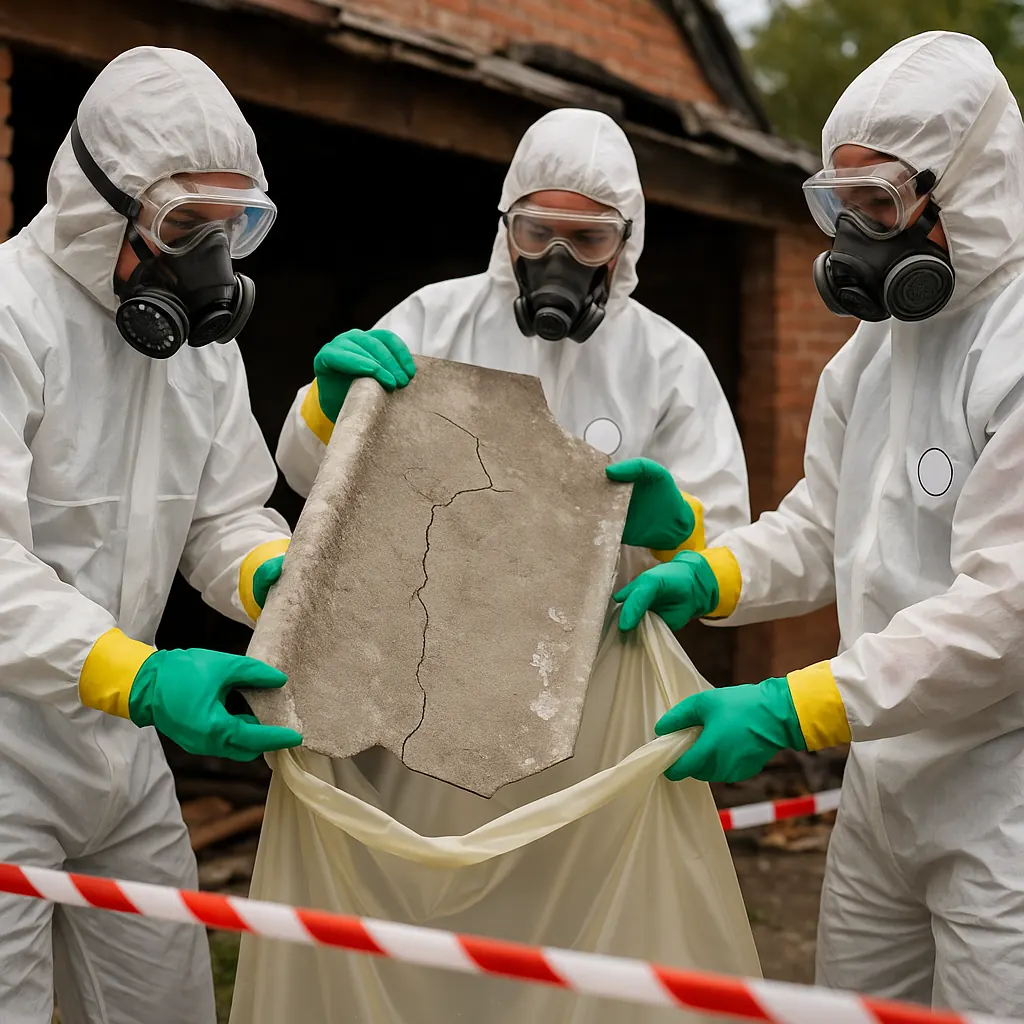
Our team uses disposable coveralls and respiratory protection, and keep everyone else out of the work area. We arrive at the agreed time, check the area and explain what we will do before we start. Outdoor removal in Cricklewood is planned to finish in daylight: that means by about 3:55pm in December, or about 9:20pm in June.
- Get in touch with the details of the job
- We check whether it’s licensed, notifiable or non-licensed work
- We agree a date and any notification needed
- On the day we set up, remove and bag the material
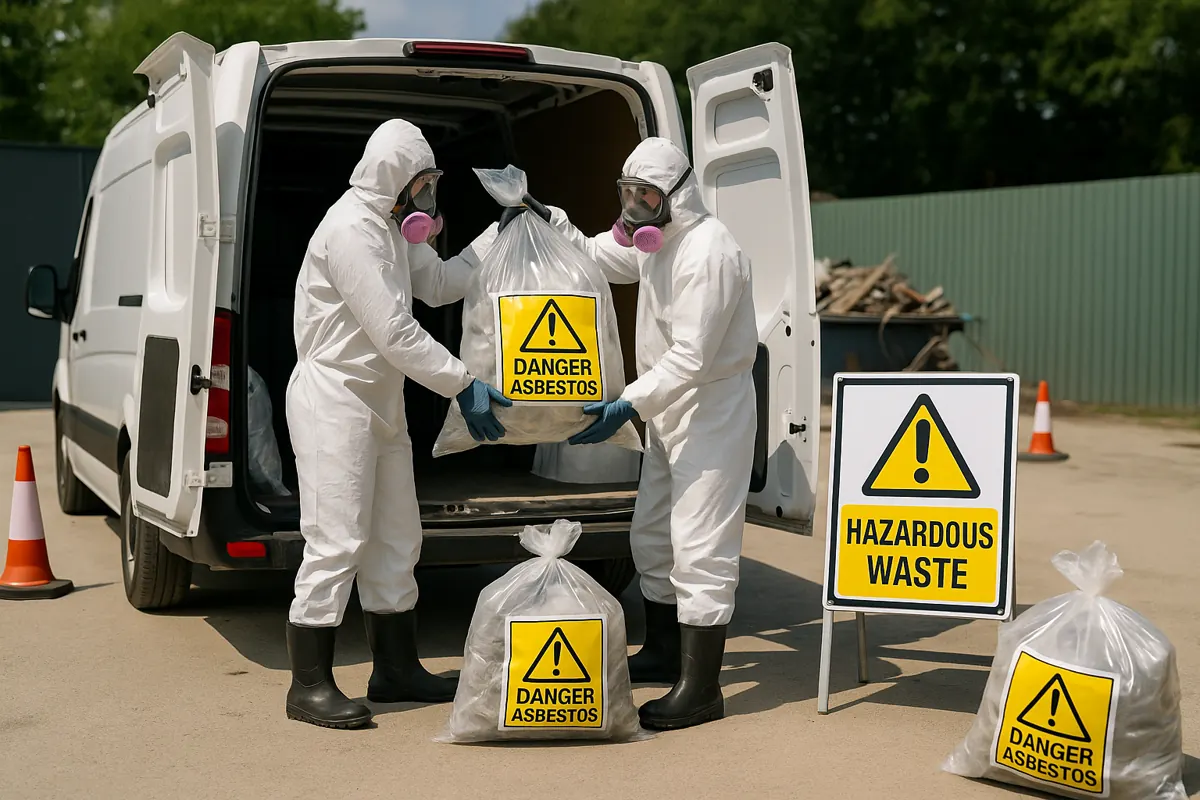
- The waste goes to a permitted site with a consignment note
How to prepare
- Have any previous surveys or test results ready
- Keep the area clear of children and pets
- Mention any parking restrictions
Get a quote
Each job is priced individually. Use our quote form or call 07833 053 749 to get started.
Related guides
What happens next
Keep the consignment note with your property records: it shows the asbestos was disposed of legally.
Staying safe afterwards:
- Let neighbours know if work is near them
- Send photos of the material and the access
- Plan any replacement work before the removal date
- Keep children and pets away on the day
Things not to do
Ask any contractor how they’ll dispose of the waste, and ask for the consignment note.
Do not sweep, vacuum or brush up broken asbestos debris; keep people away and ask for advice.
Landlords, managing agents and employers
Landlords of garage blocks and outbuildings should find out whether the roofs are asbestos cement, before anyone carries out repairs.
For managing agents and freeholders in Cricklewood, the asbestos register for common parts should be kept up to date and shared with contractors.
What it might be made of
Asbestos cement
Breaking or cutting cement releases fibres, so we unfix and lower it rather than breaking it.
Insulating board and lagging
Insulating board, lagging and sprayed coatings are licensed work in most cases.
- Identify it first: we test or survey before planning removal
- Done to the regulations: HSE guidance and CAR 2012
- Paperwork for your records: reports, lab results and consignment notes
- Waste sealed and labelled, then taken to a permitted site