Oxfordshire · England
Asbestos Removal Services in Donnington, Oxfordshire
Asbestos removal in Donnington and across Oxfordshire: removal of asbestos cement, coatings, tiles, flues and tanks.
- Outbuildings with cement roofs
- Asbestos found during building work
- Debris left from a previous job
Asbestos removal near Donnington
Asbestos removal for Donnington properties
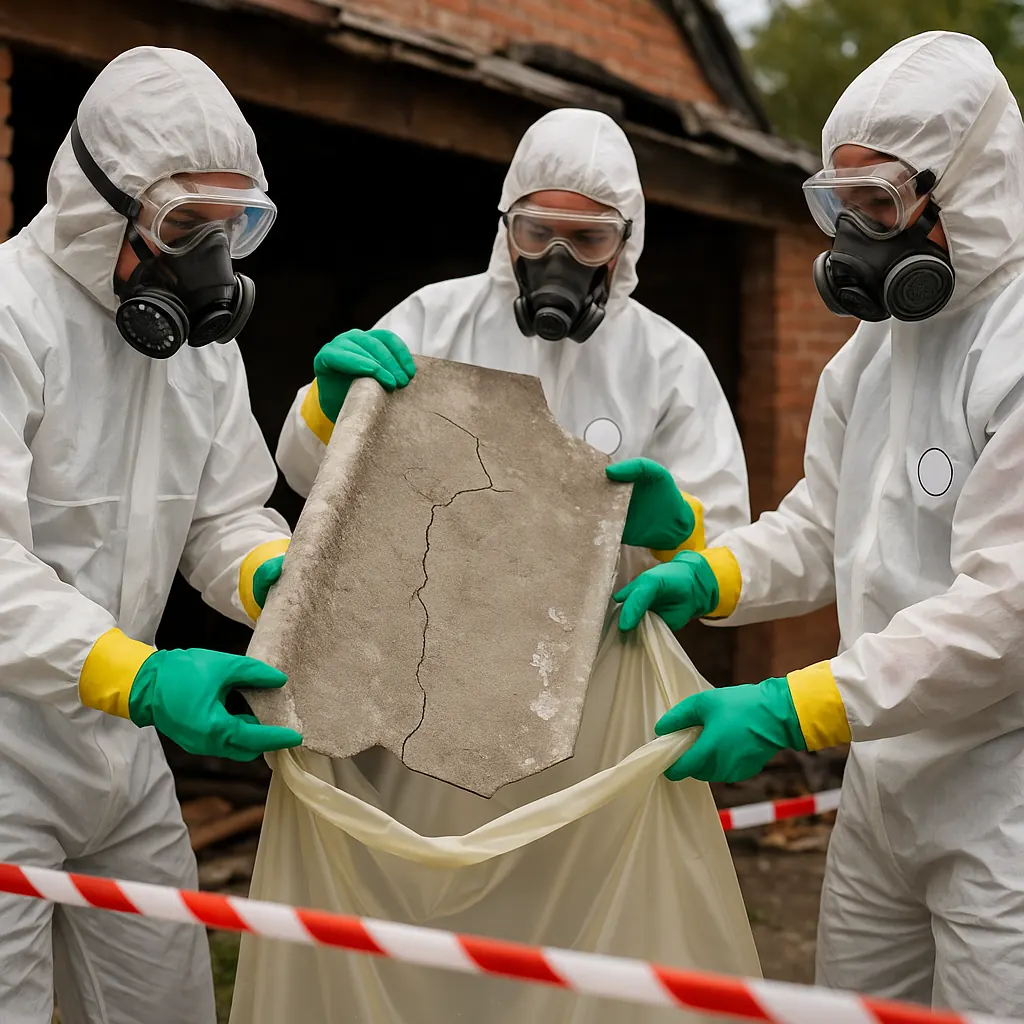
Asbestos removal starts with knowing what the material is. If nobody has tested it, we take a sample first, since the right method depends on what it is. Typical jobs include cement flues and gutters and Artex ceilings before renovation, including cement roof sheets, water tanks and cement soffits.
Properties in areas like Donnington with larger plots may have several outbuildings with cement roofs, which can often be dealt with together. Nothing is removed until it’s been identified, because the method depends on what the material is.
- Area
- Donnington (OX4, OX1)
- Area hub
- Oxfordshire
- Service
- Removal and disposal of asbestos materials
- Afterwards
- Waste paperwork
- Price
- Written quote for your job
- Phone
- 07833 053 749
- Updated
- 26 October 2026
Asbestos removal in Donnington: local notes
Donnington is about 1 mile south of Oxford, in Oxfordshire. Properties in Donnington range from older houses to newer estates and commercial buildings, and anything from before 2000 may contain asbestos. We cover 443 places in Oxfordshire, from the larger towns to small villages.
For properties on main roads such as the A4158, we plan parking and loading in advance. In a school like Larkrise Primary School, any removal is agreed with the duty holder and done while the area is out of use.
This part of Oxfordshire takes in OX4 and OX1. Streets in the area include Meadow Lane, Arnold Road and Iffley Road, and asbestos removal is available on all of them. Donnington sits on or near the A4158; tell us about parking if you’re on a main road. Close by, we cover Iffley (1 mile south-east), New Hinksey (1 mile west), Cowley (1 mile south-east), Oxford (1 mile north) and Redbridge (1 mile south-west). Larger places within reach include Didcot (9 miles south), Bicester (12 miles north), Abingdon-on-Thames (5 miles south-west), Witney (12 miles west), Thame (11 miles east) and Wantage (13 miles south-west).
A little further out are Warneford Hospital (1 mile north-east) and British Tattoo History Museum (0.5 miles north-east). Open spaces near Donnington include CS Lewis Nature Reserve and Headington Hill.
- Schools near Donnington include Greyfriars Catholic School (less than half a mile east) and Emmanuel Christian School (1.3 miles south)
- Local pubs include Magdalen Arms (less than half a mile north-west)
- Local facilities include Alexander Library of Ornithology (1.1 miles north-west)
Places near Donnington
What else we do in Donnington
Donnington: your questions answered
Do older homes in Donnington have asbestos?
Any home in Donnington built or refurbished before 2000 can contain asbestos, but you can’t tell by looking. Garage roofs, Artex, floor tiles, soffits and flues are typical examples.
Do you cover Donnington from London?
We cover Donnington, about 52 miles from central London.
Do you need to see it before quoting?
Often we can quote from clear photos and a description; otherwise we will arrange a visit.
Do you work in Donnington?
Yes, we do: Donnington is within the area we cover in Oxfordshire. Send the postcode and a few photos for a quote.
Can I put asbestos in a skip?
No. Asbestos is hazardous waste and must go to a site that accepts it. When we remove it, it’s taken to a permitted site with a consignment note.
What does removal cost?
Every job is priced individually: it depends on the material, quantity, condition, access and disposal.
Do you need a licence to remove asbestos?
Sometimes: licensed work covers lagging, sprayed coatings and most insulating board; cement and textured coatings typically aren’t licensed.
Can I stay at home during removal?
For outdoor jobs, you can normally stay put. Indoor work areas are kept closed off until finished.
The process
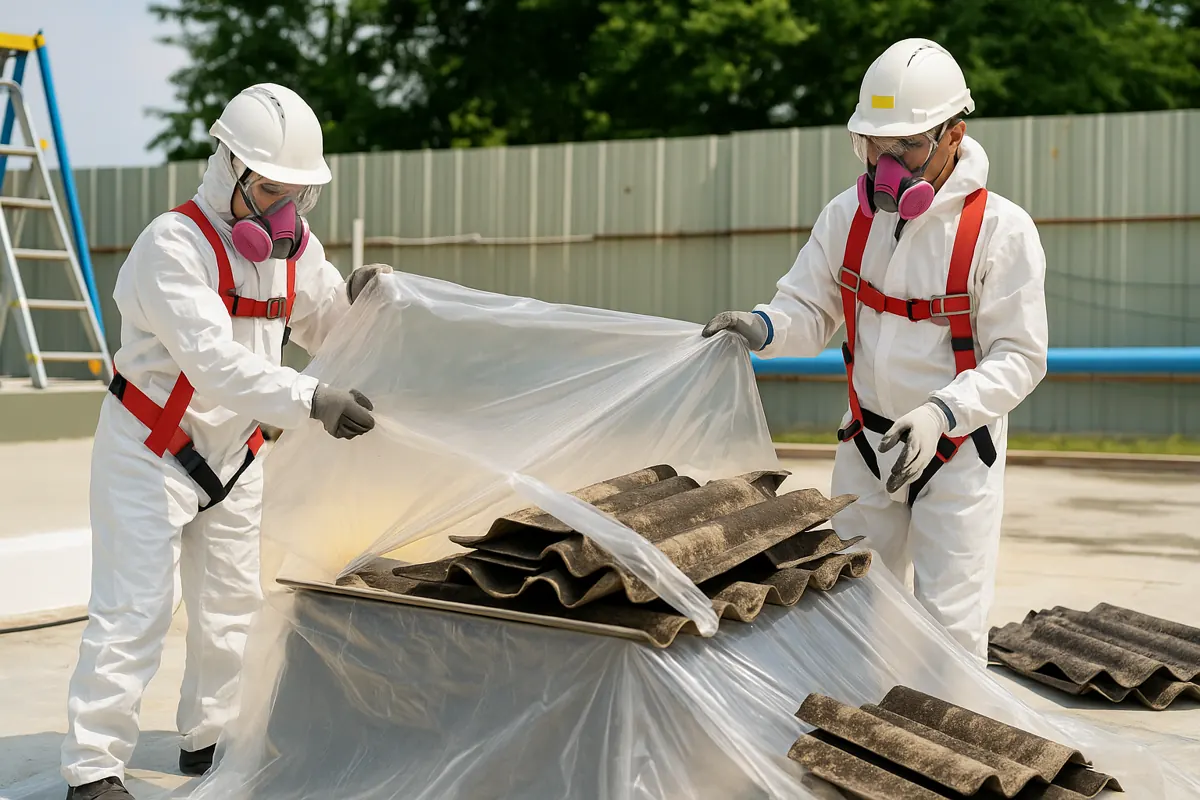
Materials are released carefully and removed whole where possible, never broken up, dropped or cut with power tools. Before we leave, we explain what we did and what comes next. Outdoor removal in Donnington is planned to finish in daylight: in late December it’s dark by about 3:55pm, while in June it stays light until about 9:25pm.
- Send us the postcode and photos
- We work out what category the work falls into
- We book the work and notify if required
- On the day we set up, remove and bag the material
- We dispose of the waste legally and send the paperwork
Preparing for the visit
- Dig out previous surveys
- Move things out of the way carefully
- Leave the suspect material alone until we arrive
Getting a price
Share the postcode, a short description and photos: call 07833 053 749 or use our quote form, and we’ll reply with a quote.
Read more
Responsibilities for owners
If you own a block of garages or outbuildings that you let should know what the roofs are made of, before repairs are arranged.
Void periods are a good time for asbestos work, while the property is empty.
Doing it yourself?
DIY sampling means disturbing the material yourself. HSE recommends a competent person takes samples.
A professional job comes with paperwork: a record that buyers, insurers and builders may want to see.
What it costs
These are the main things that affect the price of asbestos removal:
- How much waste there is
- The quantity or area
- Whether the work is non-licensed, notifiable or licensed
- How easy it is to reach
Our quotes are clear about VAT, so you can compare like with like.
Helping us quote
A few photos can save a site visit:
- The route in: gates, steps, stairs or the loft hatch
- A closer photo of the material, without touching it
- Any labels or markings, if you can see them safely
- A wide shot showing where the material is
Unsure whether you need a test, a survey or removal? Use our quote form or call 07833 053 749, and we’ll recommend the right option.
Materials, one by one
Textured coatings
We soften coatings and remove them wet, never sanding or dry scraping. Larger-scale steam or gel removal is notifiable non-licensed work.
Floor tiles
Black bitumen adhesive may need treating separately.
Typical removal jobs in Donnington
Materials deteriorate with age: roofs crack, coatings flake and tiles come loose, which is when removal comes up.
These are the materials and situations that most often lead to removal jobs:
- Artex before plastering
- Garage roof sheets
- Cement flues and gutters
- Finds during refurbishment
If you let property near Oxford station, void periods between tenants are a practical time for removal.
What to look for in a quote
- Suitable insurance for the work
- What you will receive afterwards: a report, results or waste paperwork
- What is not included
- Where the waste goes, with paperwork
Limits to be aware of
Some limits to bear in mind:
- Some jobs must be notified first, which affects the start date
- Unidentified materials are tested before removal is planned
- Removal in strong wind or heavy rain may need rescheduling
If you are unsure, describe the job and send photos, and we will advise before you book.
Materials in Donnington
- Panels and boards
- Gutters and downpipes
- Asbestos cement sheets
- Artex and textured coatings
- Floor tiles and adhesive
- Soffits (cement)
- Bitumen roof felt
- Flue pipes
- Water tanks
- Garage and shed roofs
Choosing the right option
Licensed, notifiable non-licensed or non-licensed? The material and the job decide. See our guide to the three categories. Compare what each quote includes, not just the total: scope, method, waste disposal and paperwork.
Why us?
- We identify first and remove only what needs removing
- Written quotes that say what’s included
- Accredited laboratory results
- London, Kent, Surrey, Sussex and beyond
See our prices page and the cost guide.
- Nothing removed blind: unknown materials are tested first
- Done to the regulations: HSE guidance and CAR 2012
- Written paperwork: reports, results and waste consignment notes
- Waste sealed and labelled, then taken to a permitted site