Greater London · England
Asbestos Removal for Grange Mills
Asbestos removal in Grange Mills, from older homes to workplaces. Every job is quoted in writing.
- Artex ceilings before renovation
- Finds during refurbishment
- Old waste on site
Asbestos help in Grange Mills
Asbestos removal near Grange Mills
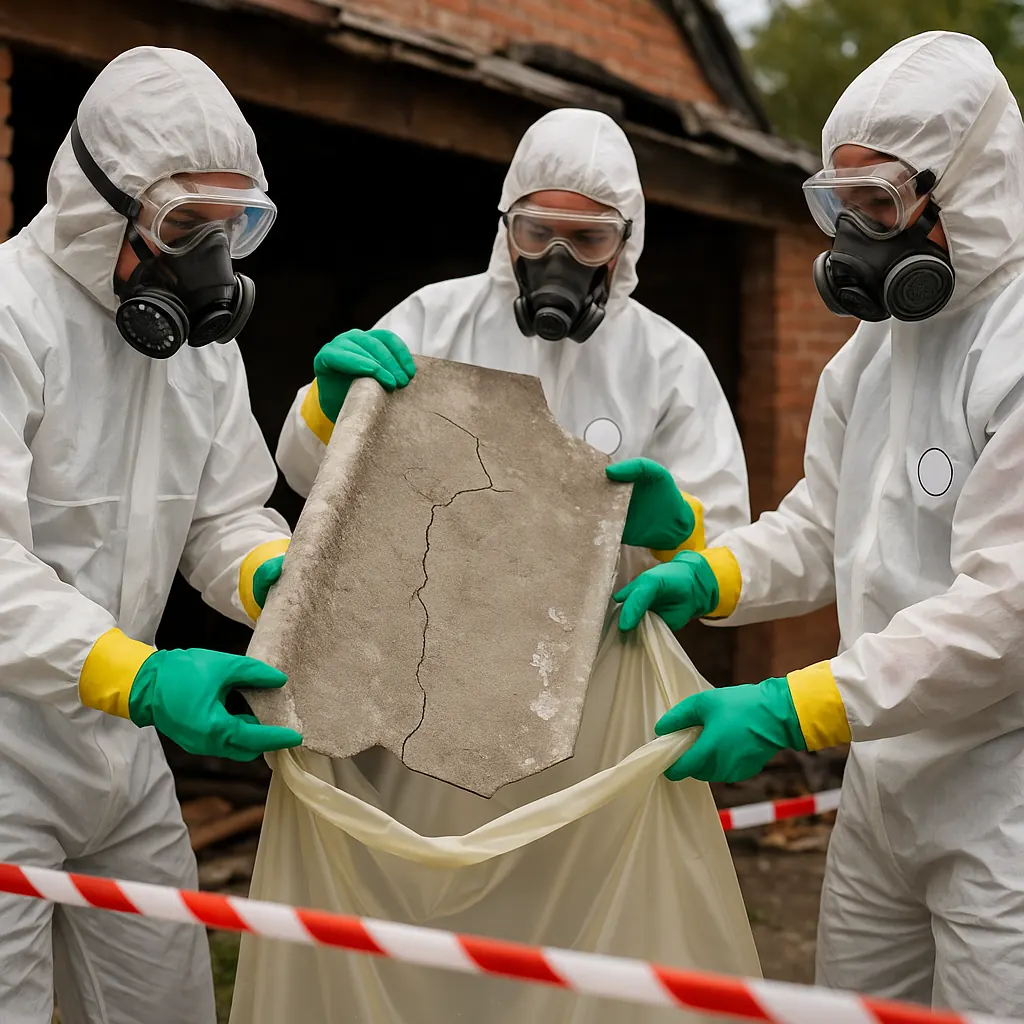
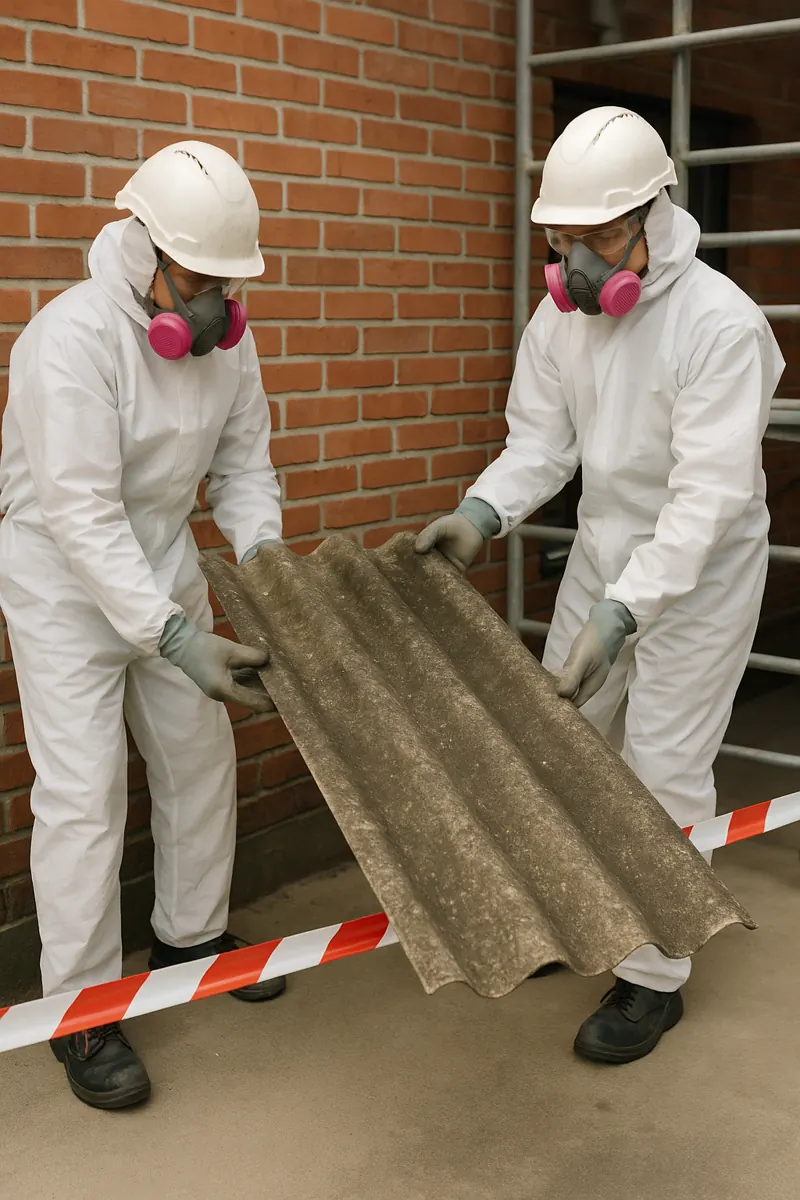
We remove asbestos from homes, rented property and commercial buildings across Grange Mills: cement sheets and roofs, flues, tanks, gutters, textured coatings and floor tiles. Each job follows HSE guidance, and the waste goes to a permitted site. People often contact us about old floor tiles and black adhesive and Artex before plastering, including textured coatings, floor tiles and cement roof sheets.
Removal jobs around Grange Mills often mean working in flats, back gardens and tight spaces, so we plan parking, access and the route for the waste. Every quote is in writing and spells out what’s covered, so you know where you stand.
- Area
- Grange Mills (SW12, SW4, SW2)
- Region
- Greater London
- Covers
- Removal of cement, coatings, tiles, flues and tanks
- Paperwork
- Waste paperwork
- Quotes
- Written quote for your job
- Telephone
- 07833 053 749
- Last updated
- 26 October 2026
Your questions about asbestos removal in Grange Mills
Is asbestos common in Grange Mills homes?
It depends on its age and history: asbestos products were used until 1999, so pre-2000 homes and extensions in Grange Mills may have it. Common places include garage roofs, textured ceilings, floor tiles, soffits and flues.
Can you work in Grange Mills with London’s parking rules?
Yes, we work across London. Tell us about parking, permits and access so we can plan; all of Greater London is inside the ULEZ.
What should I do if I’ve disturbed asbestos?
Stop, keep people away from the area and do not sweep or vacuum up debris. Then get advice; if you are worried about your health, speak to your GP.
What does licensed work mean?
Licensed work is work on the materials most likely to release fibres: lagging, sprayed coatings and most asbestos insulating board. It needs a contractor with an HSE licence.
What paperwork will I get?
Depending on the job, a report, results or a consignment note.
Can I stay at home during removal?
For outdoor jobs, you can normally stay put. Indoor work areas are kept closed off until finished.
What if the weather’s bad?
It depends on the job: indoor work carries on, while outdoor roof work may be postponed in strong wind or heavy rain.
How do I get a quote?
Just ring 07833 053 749, or send the details through our contact page. Tell us the postcode, what the material is and where, and send photos if you can.
Places near Grange Mills
More for properties in Grange Mills
For businesses and landlords in Grange Mills
If you manage or own a block in Grange Mills, the asbestos register for common parts should be kept up to date and shared with contractors, and condition checked regularly.
Between tenancies is a good time to deal with asbestos, when rooms are empty and work can be done without disruption.
Good to know
What’s in and what’s out:
- Unidentified materials are tested before removal is planned
- Notifiable work has to be notified before it starts, which affects the start date
- Lagging, sprayed coatings and most insulating board are licensed work
If in doubt, ask: we will recommend a test, a survey or removal.
Materials we see
- Flue pipes
- Bitumen roof felt
- Soffits (cement)
- Water tanks
- Garage and shed roofs
- Floor tiles and adhesive
- Panels and boards
- Gutters and downpipes
- Asbestos cement sheets
- Artex and textured coatings
What it might be made of
Bitumen and felt
Some old roof felts and bitumen products contain asbestos, usually tightly bound.
Textured coatings
We soften coatings and remove them wet, never sanding or dry scraping. Large-scale steam or gel removal must be notified.
Removing asbestos around Grange Mills
Grange Mills is about 2 miles south-west of Stockwell, in Greater London. We work across Grange Mills and the surrounding area, on everything from houses and flats to workplaces and garages. We work in 764 places across Greater London.
In older buildings across Grange Mills, asbestos may be in later additions, so we identify materials before planning removal. In a school like Henry Cavendish Primary School, any removal is agreed with the duty holder and done while the area is out of use.
We carry out removal jobs all over the SW12, SW4 and SW2 postcode area. That could mean a property on Lynn Road, Weir Road and Byrne Road or the roads around them. We also carry out removal jobs in Hyde farm estate (1 mile south-east), Balham (1 mile south-west), Clapham Park (1 mile north-east), Streatham Hill (1 mile east) and Streatham Park (1 mile south). We also cover nearby towns such as London (4 miles north-east), City of Westminster (5 miles north), Marylebone (5 miles north), Kensington (5 miles north-west), St Pancras (6 miles north) and Shoreditch (6 miles north-east).
Grange Mills is in London, inside the Ultra Low Emission Zone, where parking and loading can be restricted: tell us about parking, permits and access when you ask for a quote.
A little further out are St James' Hospital (0.9 miles west) and Southside Wandsworth (2.2 miles west). Open spaces near Grange Mills include Knight's Hill and Battersea Park Lake.
- Nearby schools include La Retraite Roman Catholic Girls' School (less than half a mile north) and Waldorf School of South West London (0.6 miles south-east)
- Pubs nearby include The Bedford pub (within half a mile south-west)
- Other local spots include Streatham Hill (1 mile east)
Common reasons for removal jobs in Grange Mills
Most removal happens because building work would disturb asbestos: anything the work would disturb should be dealt with first.
You cannot tell by looking, but these are common reasons people contact us:
- Old flues
- Materials found mid-project
- Artex before plastering
- Asbestos garages
For rentals close to Balham station, removal fits neatly between tenancies.
Comparing quotes
- Laboratory analysis by an accredited lab
- How the work will be done, and the controls used
- What paperwork you get
- Which areas and materials are covered
How it works
As each piece comes out, it’s bagged or wrapped and labelled, ready to go to a permitted site. We wear suitable protective equipment for the job, and use controls to keep dust down. We plan outdoor jobs in Grange Mills to finish before dark: that means by about 3:55pm in December, or about 9:20pm in June.
- Describe the material and send pictures
- We identify it if needed and plan the method
- We send a quote covering the work and the waste
- The material is removed safely
- The area is cleaned and you get the consignment note
Before we arrive
- Tell us about parking and access
- Dig out previous surveys
- Clear the way to the work area
Getting a price
Include any existing survey or test when you send photos through our quote form, or phone 07833 053 749; it helps us quote accurately.
Read more
How we price asbestos removal
Our quotes take into account:
- How many samples are needed
- Licensed or non-licensed
- Location, parking and any London charges
- How much waste there is
Identifying asbestos early is cheaper than stopping work later, when the whole project can be held up.
What to photograph
Photos often save us a visit:
- The access route
- An idea of size
- Visible markings
- Street parking nearby
Send us the address in Grange Mills, a description and some photos: use our quote form or call 07833 053 749.
After the job
After removal, the work area is cleaned, and you get the consignment note showing where the waste went.
A few practical points:
- Let neighbours know if work is near them
- Move belongings away, but leave the asbestos alone
- Photos of the material and the route in help
- Share any survey or test results
Things not to do
Never sweep or vacuum asbestos debris; keep people away and ask for advice.
Deal with asbestos before the builders start.
Can I do it myself?
Home testing kits exist, but you have to disturb the material to use one. HSE recommends a competent person takes samples.
With a professional job, you get a record: results, a report or a consignment note, which buyers and builders may ask for.
- Identify it first: we test or survey before planning removal
- Done to the regulations: HSE guidance and CAR 2012
- Paperwork for your records: reports, lab results and consignment notes
- Waste sealed and labelled, then taken to a permitted site