Isle of Wight · England
Asbestos Removal for Luccombe Village
Asbestos removal for properties in Luccombe Village and the Isle of Wight: safe asbestos removal and legal disposal.
- Materials found mid-project
- Artex before plastering
- Old flues
Get a quote for Luccombe Village
How asbestos removal works in Luccombe Village
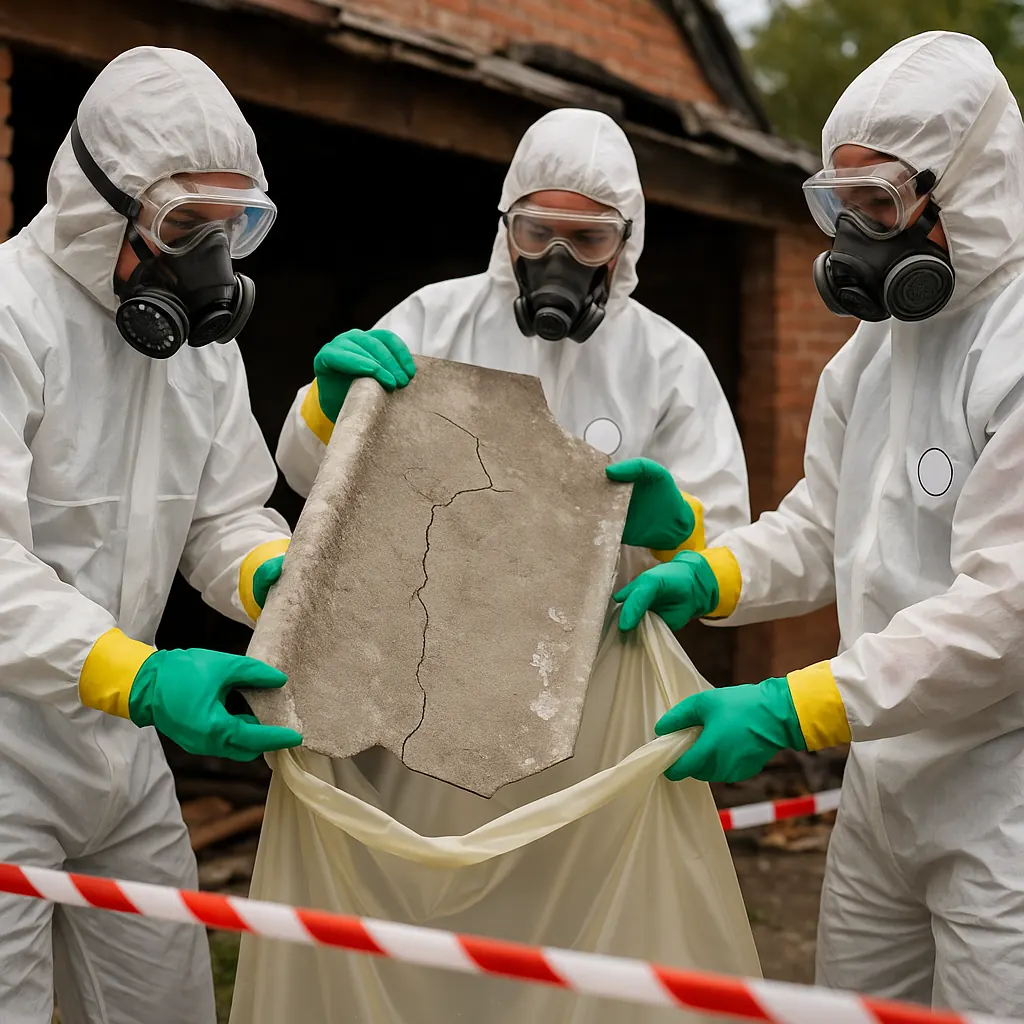
Before removal, the material has to be identified. If nobody has tested it, we take a sample first, because the method depends on the material. People often contact us about vinyl and thermoplastic tiles and broken sheets in gardens, involving flue pipes, water tanks and gutters and downpipes.
Rural removal near Luccombe Village can mean longer distances to carry waste, so the route is planned in advance. Everything is explained in plain English, including when leaving a material alone is the sensible choice.
- Location
- Luccombe Village (PO37)
- County
- Isle of Wight
- Covers
- Asbestos removal to HSE guidance
- You receive
- Waste consignment note
- Price
- Written quote for your job
- Call
- 07833 053 749
- Updated
- 26 October 2026
FAQs for Luccombe Village
Could my house in Luccombe Village contain asbestos?
It depends on its age and history: asbestos was used until the 1999 ban, so older homes and older alterations in Luccombe Village can contain it. Garage roofs, Artex, floor tiles, soffits and flues are typical examples.
Do you work near Shanklin station?
Yes, we cover Luccombe Village and the area towards Shanklin station, about 1.2 miles north.
Is damaged asbestos an emergency?
Make the area safe first: close it off and don’t clean it up yourself. Then contact us for advice on the next step.
Can I stay at home during removal?
For outdoor jobs, you can generally stay put. Indoor work areas are kept closed off until finished.
What’s the difference between a test and a survey?
Testing covers particular materials, while a survey covers everything in scope. Before building work, you normally need a survey.
Can I remove asbestos myself?
HSE’s advice is not to do it yourself, and higher-risk materials are strictly for licensed contractors.
Can you help with a flat?
Yes. For shared areas, ask the managing agent about the asbestos register.
Should all asbestos be removed?
Not necessarily. Sound material that will not be touched can often stay, as long as it’s recorded.
For businesses and landlords in Luccombe Village
Contractors working for you need asbestos information before they start. HSE’s campaigns stress this point to building owners and trades alike.
Landlords of garage blocks and outbuildings should know what the roofs are made of, before anyone carries out repairs.
Towns and villages near Luccombe Village
Other services in Luccombe Village
What happens
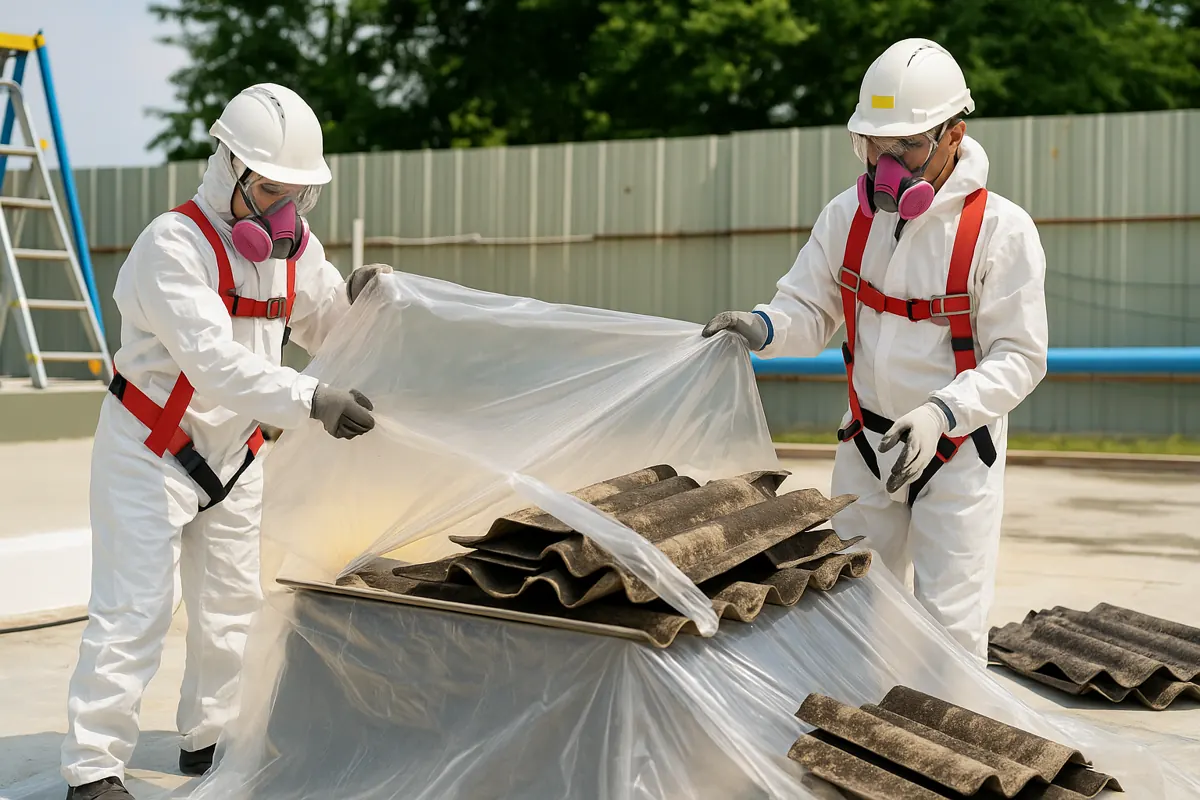
Waste is double-bagged or wrapped in heavy polythene and labelled as we go, ready to go to a permitted site. Parking close by makes the day easier, so let us know about any restrictions. Outdoor removal in Luccombe Village is planned to finish in daylight: in late December it’s dark by about 4:00pm, while in June it stays light until about 9:20pm.
- Tell us what needs removing and send photos
- If it hasn’t been identified, we sample it first
- We plan the method, controls, waste and any notification, and send a quote
- On the day we set up, keep the material damp and remove it whole where we can
- We clean up, dispose of the waste legally and send the consignment note
Before we arrive
- Leave the suspect material alone until we arrive
- Keep the area clear of children and pets
- Tell us about anything that is already damaged
What’s included, and what is not
Worth knowing before booking:
- Notifiable work has to be notified before it starts, which affects the start date
- Bad weather can affect outdoor removal
- Lagging, sprayed coatings and most insulating board are licensed work
If you’re unsure, describe the job and send photos, and we will advise before booking.
Common materials
- Asbestos cement sheets
- Flue pipes
- Panels and boards
- Soffits (cement)
- Artex and textured coatings
- Garage and shed roofs
- Floor tiles and adhesive
- Water tanks
- Gutters and downpipes
- Bitumen roof felt
What happens next
If licensed work is needed, a UKAS-accredited analyst carries out a four-stage clearance before the area is reoccupied.
Going forward:
- Clear the area around the work, without disturbing the asbestos
- Book the replacement before removal
- Keep the waste paperwork safe afterwards
- Send photos of the material and the access
Things not to do
Deal with asbestos before the builders start.
Do not let anyone remove asbestos without asking how the waste will be disposed of, and ask for the consignment note.
Doing it yourself?
Sanding, drilling, cutting and jet-washing are the worst things you can do to asbestos materials.
With a professional job, you get a record: results, a report or a consignment note, which buyers and builders may ask for.
Common reasons for removal jobs in Luccombe Village
Selling or letting a property can prompt removal of obvious materials, although sound material can often stay.
Buildings from before 2000 can hide asbestos in many places. Typical situations are:
- Sheds, outbuildings and lean-tos
- Loft water tanks
- Textured coatings
- Asbestos found during building work
Landlords near Shanklin station often time removal for when a property is empty.
Comparing quotes
- What exactly is included: the areas, materials or samples
- For licensed work, a valid HSE licence
- What paperwork you get
- What’s excluded, such as making good or a new roof
A closer look at the materials
Insulating board and lagging
That work must be done by a contractor holding an HSE licence, with notification 14 days ahead.
Asbestos cement
Asbestos cement releases fibres when broken or cut, so it’s unbolted and lowered, not smashed.
Asbestos removal in Luccombe Village: local notes
Luccombe Village is about 7 miles south of Ryde, in the Isle of Wight. Luccombe Village has a mix of older and newer buildings, and anything from before 2000 may contain asbestos. We work in 125 places in the Isle of Wight. We work right across the region, from Luccombe Village to Southampton (23 miles away).
For non-domestic buildings like St Blasius Shanklin CofE Primary Academy, removal is planned with the duty holder and timed for when the area is empty. In older buildings across Luccombe Village, asbestos may be in later additions, so we identify materials before planning removal. Luccombe Village is within about 2 miles of the coast; on exposed coastal sites, wind affects when outdoor removal can go ahead.
Here we cover the PO37 postcode area. Local streets include The Highway, Maythorne Way and Ash Grove; we cover every one. Nearby, we also cover Shanklin (1 mile north), Lake (2 miles north), Sandown (3 miles north), Queen's Bower (3 miles north) and Skinner's Hill (3 miles north). Further out, we also cover Newport (8 miles north-west), Ryde (7 miles north), Cowes (11 miles north-west), East Cowes (11 miles north-west), Oakfield (7 miles north) and Barton (8 miles north-west). Remote sites take a little more planning, so contact us in good time.
Luccombe Village is a more remote spot, so tell us early and we will plan the journey.
Other landmarks nearby include Sandown Castle (3.1 miles north-east) and Rylstone Manor (0.7 miles north). Open spaces near Luccombe Village include Alverstone Mead and St Boniface Down.
- Local schools include The Island Free School (2.1 miles south-west)
- Nearby, you’ll find King Harry's Bar (0.6 miles north)
- Other local spots include South Wight (1.5 miles south-west)
Which option is right?
Dealing with asbestos before work starts keeps the project on track, when everything has to wait for it to be dealt with. Identifying asbestos early is cheaper than stopping work later, when everything has to stop.
Why people choose us
- Honest advice, even when the answer is to leave it
- Paperwork you can show your buyer, landlord or builder
- Covering London and the South East
- Work done to the regulations
Take a look at how we price jobs or the cost guide.
- Survey or test first when it isn’t clear what a material is
- Work planned to the Control of Asbestos Regulations 2012 and HSE guidance
- Paperwork for your records: reports, lab results and consignment notes
- Waste sealed and labelled, then taken to a permitted site