Kent · England
Asbestos Removal Services in Sandling, Kent
Asbestos removal for Sandling: safe asbestos removal and legal disposal. Tell us what you’ve found and we will explain your options.
- Debris left from a previous job
- Old floor tiles and black adhesive
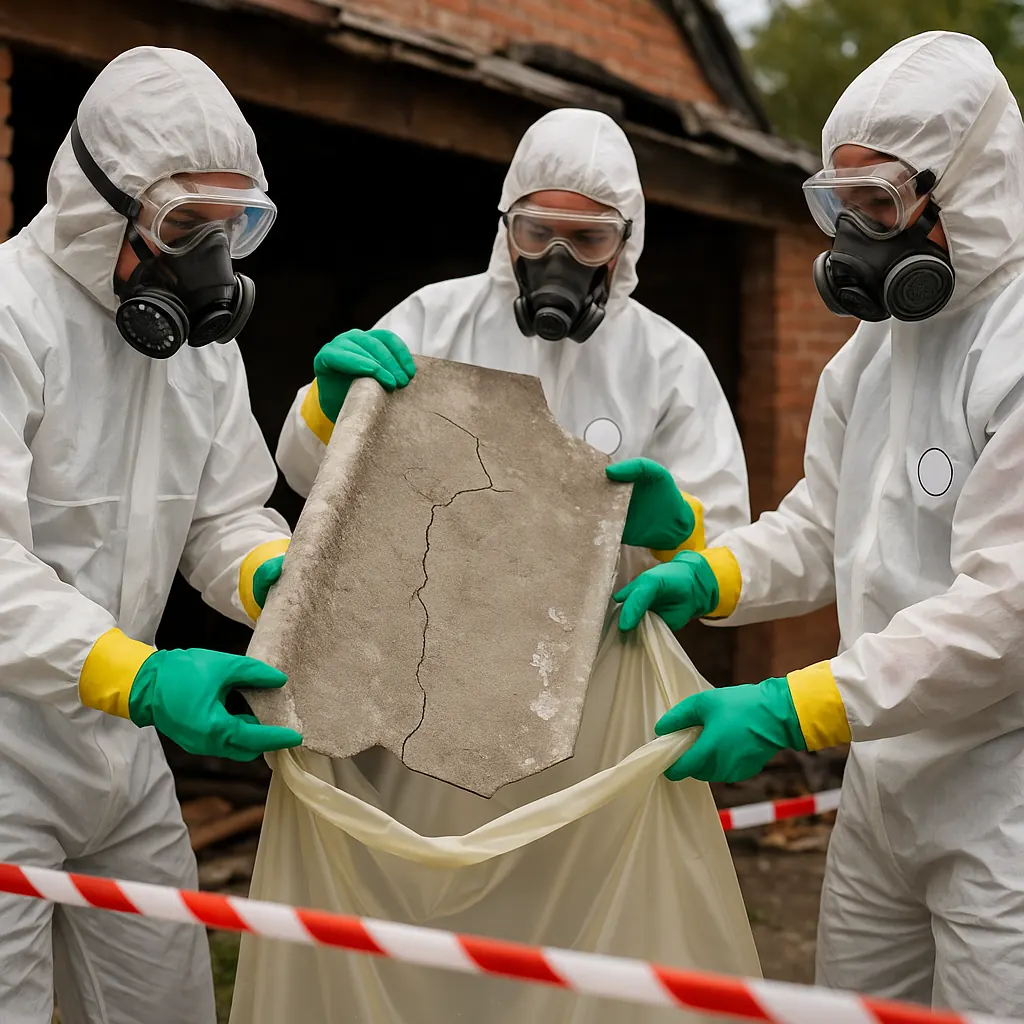
- Garage roof sheets
Asbestos help in Sandling
About our asbestos removal in Sandling
Much of the asbestos found in homes is asbestos cement, textured coating or floor tiles. HSE treats work on these as non-licensed or notifiable non-licensed in most cases, which still means proper controls. From garage roofs and whole garages and Artex ceilings before renovation, we cover floor tiles, textured coatings and cement soffits.
In a village like Sandling, removal often involves barns, stables, outbuildings and farm buildings, where access across fields or yards needs planning. You get written paperwork for every job: a report, laboratory results or a waste consignment note, for your records.
- Where
- Sandling (ME14, ME16, ME20)
- Area hub
- Kent
- What we do
- Removal of cement, coatings, tiles, flues and tanks
- You receive
- Waste consignment note
- Price
- Quoted individually, in writing
- Telephone
- 07833 053 749
- Updated
- 26 October 2026
Where asbestos turns up
Some asbestos is higher risk than other kinds: lagging and board release fibres far more readily than cement, so their removal is licensed.
Typical jobs in Sandling include:
- Sheds, outbuildings and lean-tos
- Debris left from a previous job
- Cement water tanks in lofts
- Asbestos garages
In older buildings across Sandling, asbestos may be in later additions, so we identify materials before planning removal.
What your quote should include
- Whether the work is licensed, notifiable non-licensed or non-licensed
- The documents you will receive
- How the work will be done, and the controls used
- Which areas and materials are covered
The process
Waste is double-bagged or wrapped in heavy polythene and labelled as we go, ready to go to a permitted site. On the day, we check the area and talk you through the plan first. Late-December sunset in Sandling is about 3:50pm, so outdoor jobs start early.
- Tell us what needs removing and send photos
- If it hasn’t been identified, we sample it first
- We plan the job and send a written quote
- We remove the material with controls to keep fibres down
- The area is cleaned and the waste goes to a permitted site, with paperwork
Before we arrive
- Tell us about parking and access
- Dig out previous surveys
- Mention any damage before we arrive
Ask for a quote
Include any existing survey or test when you send photos through our quote form, or phone 07833 053 749.
Helpful guides
Also near Sandling
Questions from Sandling
Do you work on properties in the Kent Downs National Landscape?
Yes, the same rules apply there, but access to farm and rural buildings can take planning.
Is asbestos common in Sandling homes?
If your home in Sandling was built or refurbished before 2000, it may, but only a test can confirm it. Garage roofs, Artex, floor tiles, soffits and flues are typical examples.
Can I remove asbestos myself?
HSE advises against removing asbestos yourself. Higher-risk materials need a licensed contractor.
Do I need to move out?
Outdoor work rarely affects you indoors. Indoor work areas are sealed off and kept clear while the work is done.
What happens to the waste?
It’s double-bagged or wrapped, labelled and taken to a permitted site by a registered waste carrier, and you get the consignment note.
What does removal cost?
There’s no fixed price: it depends on the material, quantity, condition, access and disposal.
How do I get a quote?
Use our quote form or call 07833 053 749. Tell us the postcode, what the material is and where, and send photos if you can.
Do I get anything in writing afterwards?
It depends on what we do: a survey report, a laboratory result, or a consignment note for removed waste.
For landlords, agents and businesses
If you’re responsible for a non-domestic building or the common parts of flats in Sandling, you have a duty to manage asbestos under regulation 4 of the Control of Asbestos Regulations 2012. That means finding it, assessing it, recording it and planning how to manage it.
Before maintenance in a rented home, agents may ask about asbestos. A test or survey gives a definite answer.
Which option is right?
Covering or sealing asbestos is sometimes an alternative to removal, but it remains in place and has to be recorded. Every quote says whether VAT is included.
What you get
- Waste paperwork for every removal
- Covering London and the South East
- Work done to the regulations
- Houses, flats and business premises
See how we quote and our cost guide.
Limits to be aware of
We are upfront about what’s included:
- We do not remove anything until it’s been identified
- Making good is normally a separate job
- Licensed materials such as lagging, sprayed coatings and most insulating board must be removed by an HSE-licensed contractor
If in doubt, ask: we’ll recommend a test, a survey or removal before booking.
Common materials
- Bitumen roof felt
- Artex and textured coatings
- Flue pipes
- Panels and boards
- Asbestos cement sheets
- Floor tiles and adhesive
- Water tanks
- Garage and shed roofs
- Soffits (cement)
- Gutters and downpipes
Doing it yourself?
Sanding, drilling, cutting and jet-washing are the worst things you can do to asbestos materials, so avoid them completely.
A professional job comes with paperwork: a record that buyers, insurers and builders may want to see.
What it might be made of
Asbestos cement
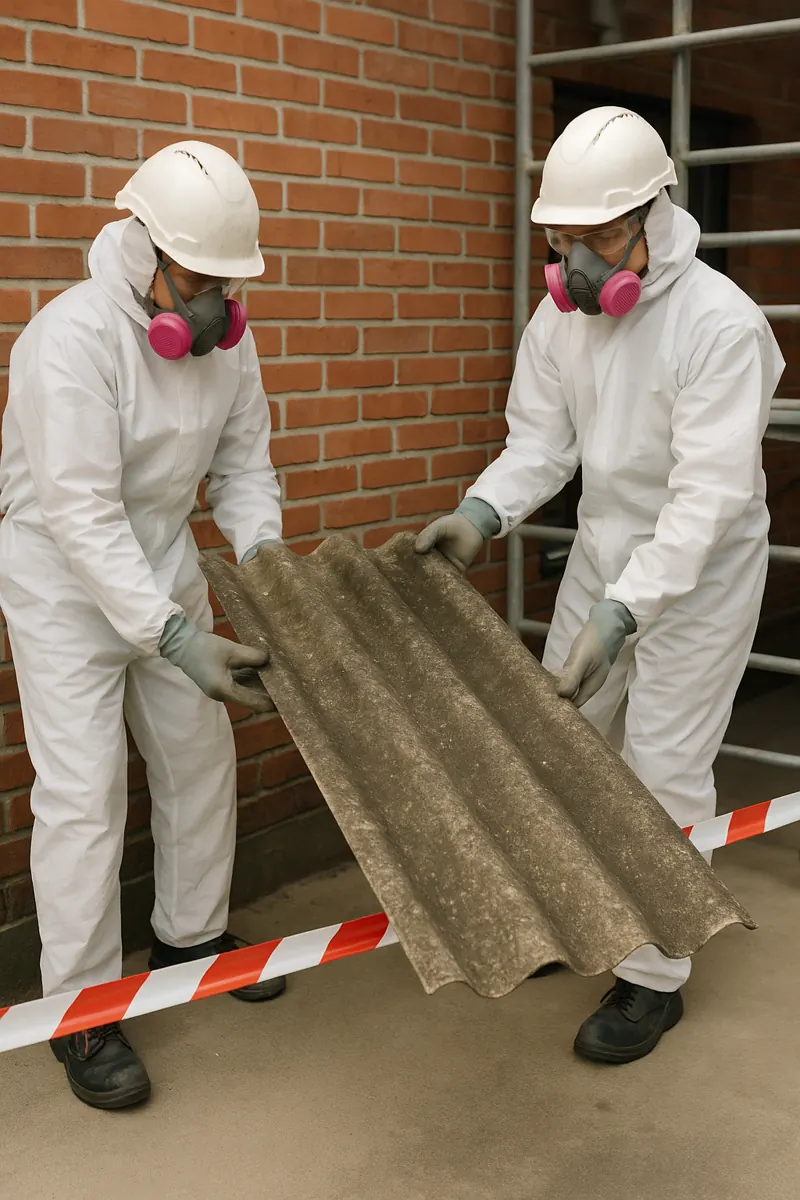
Asbestos cement is the most common material we remove: roof sheets, gutters, downpipes, flues, soffits and water tanks. It’s kept damp and removed whole where possible.
Textured coatings
Sometimes it’s simpler to take the ceiling boards down whole.
After the job
If other asbestos remains in the building, it should still be recorded and managed, so future trades know about it.
Looking after any asbestos that remains:
- Make sure pets and children are elsewhere
- Tell us about parking and access
- Clear the area around the work, without disturbing the asbestos
- Photos of the material and the route in help
Avoid these
Never sweep or vacuum asbestos debris; keep people away and ask for advice.
Do not jet-wash, sand, drill or cut asbestos materials.
Removing asbestos around Sandling
Sandling is about 1 mile north-west of Foley Park, in Kent. Sandling has a mix of older and newer buildings, and anything built or refurbished before 2000 can contain asbestos. We cover 922 places across Kent, from the larger towns to small villages. Our area stretches from Sandling to Canterbury (about 24 miles away).
In a school like Sandling Primary School, any removal is agreed with the duty holder and done while the area is out of use. On busy roads like the M20, loading the waste needs planning, so mention it. Parts of the Kent Downs National Landscape are within about 6 miles of Sandling; removing asbestos from rural buildings there follows the same rules, with access across yards and fields to plan.
This part of Kent takes in ME14, ME16 and ME20, and your removal job can be anywhere in it. Your property could be on Lock Lane, Grange Lane and Tyland Lane or the roads around them, wherever it is in Sandling. With the M20 close by, Sandling is simple for us to get to. Close by, we cover Abbey Gate (1 mile north), Ringlestone (1 mile south), Harbourland (1 mile east), Penenden Heath (1 mile south-east) and Foley Park (1 mile south-east). Within a short drive, we also work in Sittingbourne (10 miles east), Sevenoaks (14 miles west), Gravesend (11 miles north-west), Tonbridge (12 miles south-west), Northfleet (12 miles north-west) and Minster (15 miles north-east).
A little further out are KIMS hospital (2 miles south-east) and Allington Castle (under half a mile south-west). Open spaces near Sandling include Burham Down and Boxley Hills.
- Local schools include The Maplesden Noakes School (1.3 miles south)
- Local pubs include The Yew Tree pub (under half a mile east)
- Nothing removed blind: unknown materials are tested first
- Done to the regulations: HSE guidance and CAR 2012
- Paperwork for your records: reports, lab results and consignment notes
- Waste sealed and labelled, then taken to a permitted site