Oxfordshire · England
Asbestos Survey for Catslip
Looking for an asbestos survey in Catslip? We work across Catslip and the towns around it, with plain-English advice and a written quote.
- Kitchen, bathroom and rewiring projects
- Common parts of flats and HMOs
- Demolition projects
Asbestos survey in Catslip
Options to consider in Catslip
An existing survey might not cover your plans. A management survey doesn’t open up walls, floors or ceilings, so planned refurbishment typically needs a refurbishment and demolition survey of those areas. How easy the material is to reach affects the price, so photos of the area and the way in help us quote accurately.
Why choose us
- Clear notes on any areas not reached
- Clear advice on your options
- Across London and the South East
- Paperwork you can show your buyer, landlord or builder
Read how we quote or published price ranges.
Asbestos survey in Catslip
The type of survey you need in Catslip depends on what happens next: normal use and maintenance, refurbishment, demolition or a purchase. We’ll match the survey to the plan. People often contact us about managing asbestos in workplaces and non-domestic premises and checks on rental property, including soffits, water tanks and textured ceilings.
Village houses like those in Catslip have often been extended and altered over time, so a refurbishment survey before work checks every part being touched. Clear answers come first: what the material is, and what that means for your plans.
- Where
- Catslip (RG9)
- Region
- Oxfordshire
- Covers
- Surveys for homes, landlords and businesses
- Paperwork
- Written survey report
- Quotes
- Written quote for your job
- Phone
- 07833 053 749
- Updated
- 26 October 2026
Why people call us in Catslip
Older buildings have often been altered many times, so asbestos can turn up in later additions as well as original features, which is why surveys look everywhere in scope, not just at the obvious places.
If any of these sound familiar, it’s worth getting advice:
- Shops, offices and industrial units
- Community buildings and halls
- Shared halls, stairs and plant rooms
- Contractors’ requests for an asbestos report
For rented homes close to Henley-On-Thames station, a survey gives contractors the information they need.
Before booking anyone
- That the survey follows HSE’s guide HSG264
- The scope, in writing
- What the report or result will contain
- Whether VAT is included
For businesses and landlords in Catslip
Landlords of single homes don’t have the same duty to manage as non-domestic duty holders, but contractors still need to know about asbestos before they work.
If you own a block of garages or outbuildings that you let should find out whether the roofs are asbestos cement, before repairs are arranged.
Catslip: your questions answered
Is asbestos common in Catslip homes?
Any home in Catslip built or refurbished before 2000 can contain asbestos, but you cannot tell by looking. Common places include garage roofs, textured ceilings, floor tiles, soffits and flues.
Do you cover Catslip from London?
We cover Catslip, about 38 miles from central London.
What’s the difference between a test and a survey?
A test checks specific materials; a survey checks a whole building or work area. Before building work, you normally need a survey.
Do you need to see it before quoting?
Clear photos and measurements are often enough; if not, we’ll arrange to see it.
Do you work on commercial premises?
Yes: shops, offices, industrial units and community buildings as well as homes. Non-domestic premises have a duty holder who should hold an asbestos register.
Do you work in flats?
Yes. For shared areas, the managing agent or freeholder holds the asbestos information.
What does licensed work mean?
Licensed work is work on the materials most likely to release fibres: pipe lagging, sprayed coatings and most insulating board. Only a contractor holding an HSE licence can do it.
Does a survey leave holes?
Sampling leaves small, sealed sample points. A refurbishment survey opens up the areas being worked on, which is why they need to be empty.
Catslip buildings and asbestos surveys
Catslip is about 7 miles north of Caversham, in Oxfordshire. In Catslip, we hear from homeowners, landlords and businesses about all kinds of jobs. Catslip is one of 443 places in Oxfordshire where we work. We work right across the region, from Catslip to Reading (about 9 miles away).
If you have an older property in Catslip, near Church of St Bartholomew or anywhere else, get the work areas surveyed before anything is opened up. For a school like Nettlebed Community School, the duty holder must manage asbestos and keep an asbestos register; we survey non-domestic buildings by arrangement with the duty holder. Catslip is within about 5 miles of the Chilterns National Landscape, and rural properties there often have outbuildings worth including in a survey.
Anywhere in RG9, we can help with an asbestos survey, from busy streets to quiet lanes. We also carry out surveys in Nettlebed (1 mile north-west), Highmoor (1 mile south-west), Highmoor Cross (1 mile south), Bix (2 miles south-east) and Middle Assendon (2 miles east). Within a short drive, we also work in Didcot (12 miles west), Abingdon-on-Thames (15 miles north-west), Thame (12 miles north), Henley-on-Thames (4 miles south-east), Benson (6 miles north-west) and Chinnor (9 miles north).
The countryside around Catslip includes Warburg Nature Reserve.
- Pubs nearby include The Sun Inn Public House (0.5 miles west)
Towns and villages near Catslip
Doing it yourself?
If you do find something during DIY, stop: keep people away, don’t sweep or vacuum it up, and get advice.
Never put asbestos in a bin or skip. It must go to a permitted site; check with your council about small amounts.
What happens
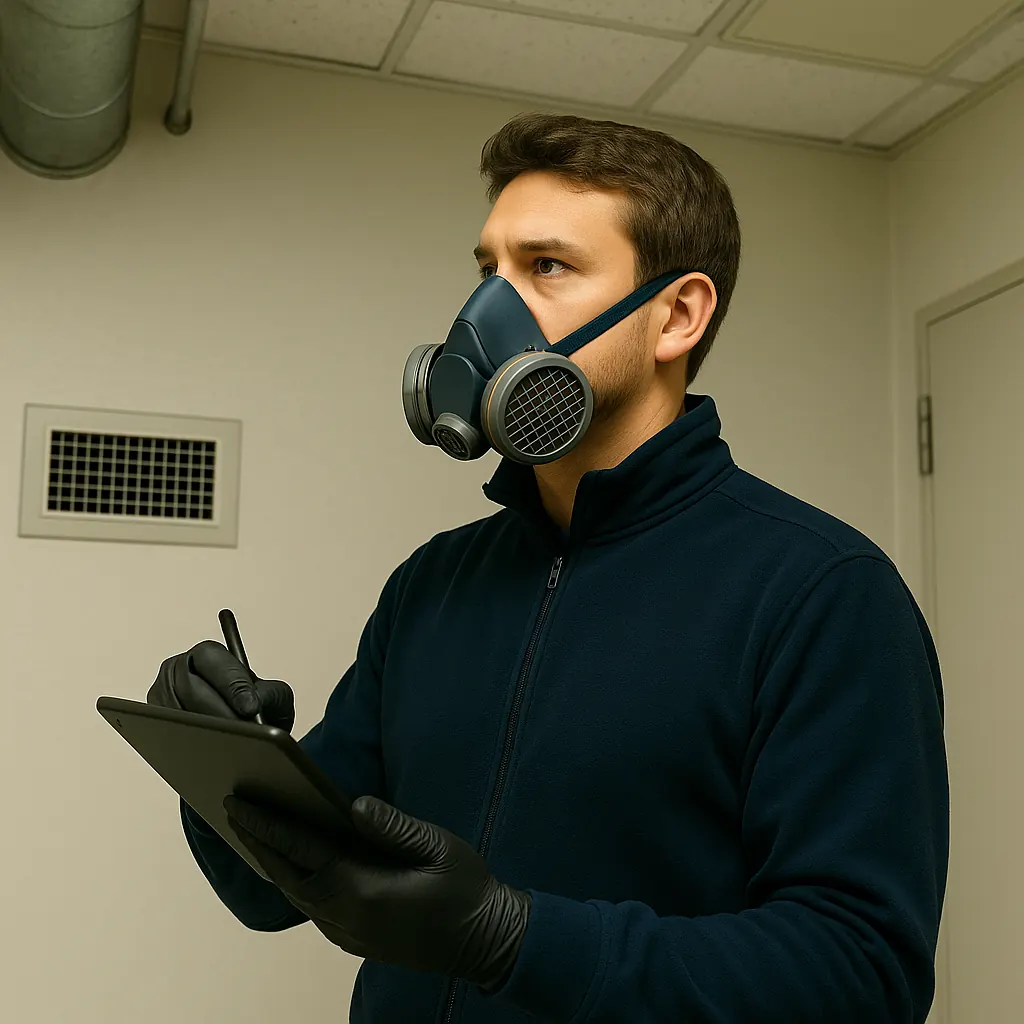
In a refurbishment and demolition survey, we open up the fabric of the building: we look behind panels, under floors and above ceilings in the areas being worked on, so the rooms must be cleared. Before we start, we walk through the job with you and answer any questions.
- Tell us about the building, its age and what you’re planning
- We agree the survey type and scope, and send a quote
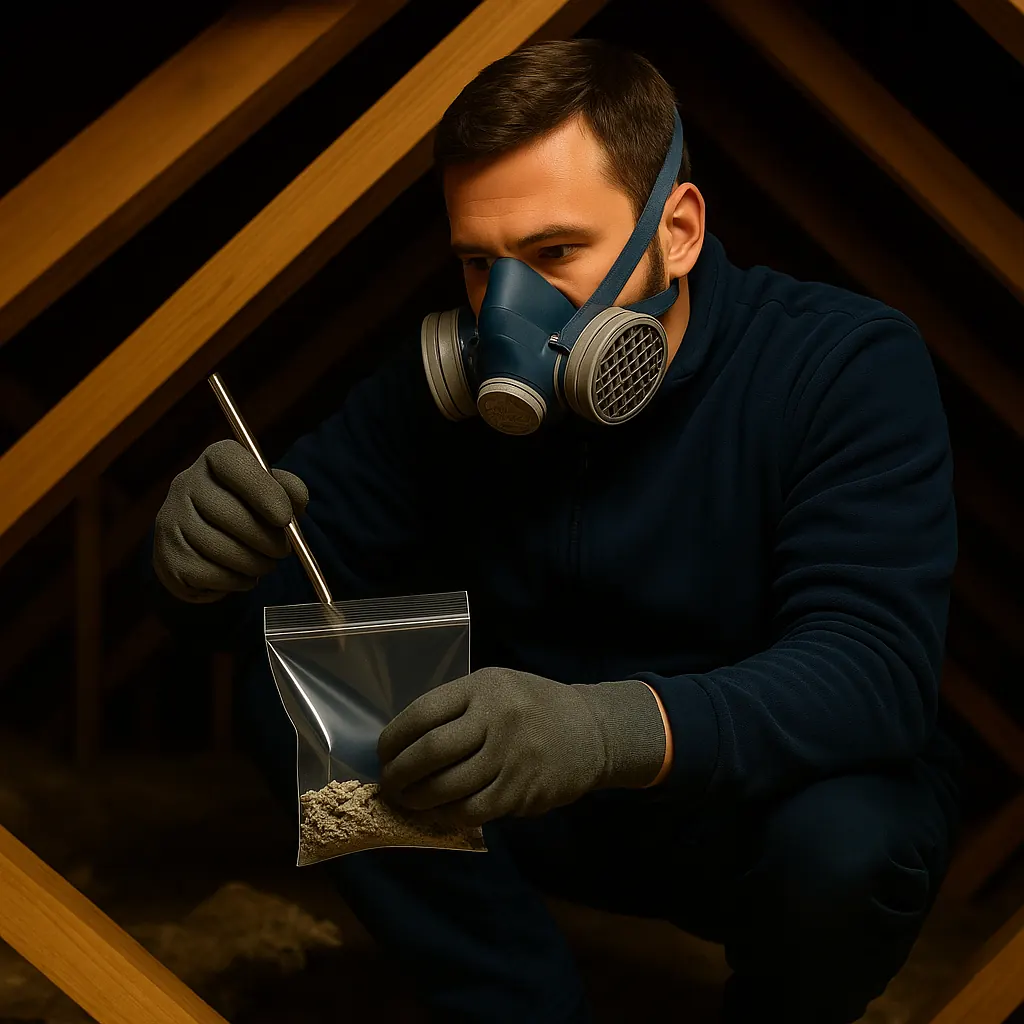
- We inspect and sample the areas in scope
- An accredited laboratory analyses the samples
- You get the report, and we talk you through it
Before we arrive
- Let us know where we can park
- Find any old asbestos reports
- Move belongings away from the area, without touching the material
Ask for a quote
Photos from a safe distance help: do not touch the material, just send them through our quote form.
Helpful guides
Afterwards
The survey ends with a written report: what was found, where, the laboratory results, the condition of each material and our recommendations.
If asbestos stays in the building:
- Keep children and pets away from the areas being surveyed
- Share any previous surveys or drawings
- In a block of flats, ask for the register of the shared areas
- Clear access to lofts, garages, cupboards and outbuildings
Things not to do
Be clear about the work you are planning, so the survey covers every area that will be disturbed.
If a material is damaged before the survey, keep people away from it and tell us, rather than cleaning it up.
A closer look at the materials
Roofing felt and bitumen
Felt on flat roofs and outbuildings is sampled where it’s in scope.
Insulating board
Insulating board turns up in panels, ceilings, soffits and boiler cupboards. Most work on insulating board is licensed, so identifying it matters.
What we do and do not cover
Some limits to bear in mind:
- Areas we can’t safely reach are listed in the report, and must be treated as containing asbestos until checked
- A survey reflects the building on the day; materials can deteriorate, so condition should be checked again over time
- A management survey is only minimally intrusive, so it isn’t enough before refurbishment
Not sure what you need? Send us photos and we will tell you honestly.
What we deal with
- Water tanks and flues
- Soffits and porch canopies
- Roofing felt and bitumen
- Ceiling tiles
- Cement sheets and cladding
- Garage and shed roofs
- Boiler cupboards and panels
- Floor tiles and adhesive
- Pipe lagging
- Artex and textured coatings
- Identify it first: we test or survey before planning removal
- Done to the regulations: HSE guidance and CAR 2012
- Written paperwork: reports, results and waste consignment notes
- Waste sealed and labelled, then taken to a permitted site