Oxfordshire · England
Asbestos Survey for Stonor
Asbestos survey in Stonor and across Oxfordshire: management, refurbishment and demolition, and pre-purchase asbestos surveys, with written paperwork.
- Demolition projects
- Buying a property built before 2000
- Workplaces built before 2000
Asbestos help in Stonor
Afterwards
If it finds asbestos that work would disturb, the report explains what needs removing before work starts, and whether that work is licensed, notifiable non-licensed or non-licensed.
Some practical advice:
- Keep pets and children out of the way on the day
- Let us know about locked rooms or unsafe areas
- Survey first, then book the trades
- In a block of flats, ask for the register of the shared areas
Don’ts
If a material is damaged before the survey, keep people away from it and tell us, rather than cleaning it up.
Be clear about the work you’re planning, so nothing in the work area is left out of scope.
About our asbestos survey in Stonor
Not every older building in Stonor contains asbestos, and not all asbestos needs removing. A survey tells you which situation you are in. Typical materials include boiler cupboard panels, textured ceilings and garage roofs, and typical jobs are surveys requested by builders before work and shops, offices and industrial units.
Rural homes near Stonor have often been extended over generations, so a refurbishment survey before work checks every part being touched. We start with a clear answer: is it asbestos, and what should you do about it.
- Where
- Stonor (RG9)
- County
- Oxfordshire
- Covers
- Asbestos surveys with lab-analysed samples
- Paperwork
- Survey report and lab results
- Price
- Quoted individually, in writing
- Call
- 07833 053 749
- Page updated
- 26 October 2026
Landlords, managing agents and employers
Void periods are a good time for asbestos work, when rooms are empty and work can be done without disruption.
Landlords of single homes don’t have the same duty to manage as non-domestic duty holders, but anyone working on the property still needs to know about asbestos.
What we do and don’t cover
A few things to be aware of:
- The rooms in a refurbishment survey need to be cleared, so timing needs planning
- A survey reflects the building on the day; condition can change, so recheck it
- A survey identifies asbestos; it doesn’t remove it
If in doubt, ask: we will recommend a test, a survey or removal.
Materials we see
- Boiler cupboards and panels
- Artex and textured coatings
- Garage and shed roofs
- Pipe lagging
- Ceiling tiles
- Floor tiles and adhesive
- Soffits and porch canopies
- Roofing felt and bitumen
- Cement sheets and cladding
- Water tanks and flues
Surveying buildings in Stonor
Stonor is about 5 miles north of Henley-on-Thames, in Oxfordshire. Properties in Stonor range from older houses to newer estates and commercial buildings, and anything from before 2000 may contain asbestos. Stonor is one of 443 towns and villages in Oxfordshire where we work. Our area stretches from Stonor to Reading (11 miles away).
Stonor is within about 3 miles of the Chilterns National Landscape, where farm buildings, barns and stables with cement roofs are common.
We handle surveys in every part of the RG9 postcode area. For properties just outside Stonor, we cover Turville Heath (1 mile north-east), Northend (2 miles north), Christmas Common (2 miles north-west), Cookley Green (3 miles west) and Howe Hill (3 miles north-west). Larger places within reach include Didcot (13 miles west), Thame (10 miles north), Henley-on-Thames (5 miles south), Benson (7 miles west), Chinnor (7 miles north) and Tilehurst (11 miles south-west).
Green spaces nearby include Warburg Nature Reserve and Bald Hill.
- Pubs nearby include The Crown Inn Public House (0.7 miles west)
What it costs
The cost depends on:
- How big the building is
- Travel and parking
- How many samples are needed
- Access to the area
Identifying asbestos early is cheaper than stopping work later, when the whole project can be held up.
Photos that help
Photos often save us a visit:
- Visible markings
- Cracks or breaks
- Approximate dimensions
- The access route
Photos from a safe distance help: send them through our contact page.
What happens
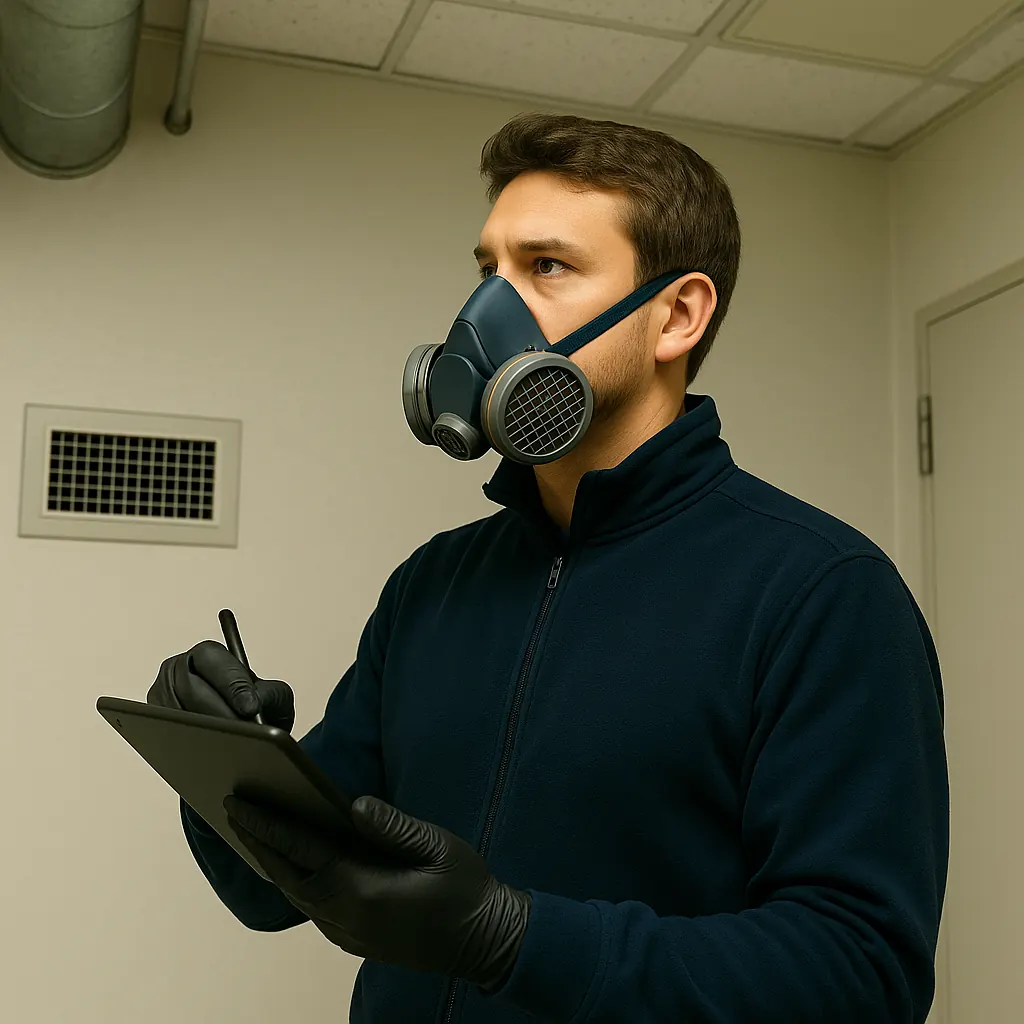
Our surveyor inspects each area in scope and samples suspect materials, wetting and sealing each sample point to keep dust down. While we work, the area stays out of bounds.
- Describe the property, its age and the work you have in mind
- We confirm the survey type and which rooms and outbuildings it covers
- The surveyor visits, inspects and takes small samples with controls
- Each sample is analysed by an accredited laboratory
- You receive the report, with results and what to do next
Preparing for the visit
- Keep away from the material in the meantime
- Tell us about anything that is already damaged
- Find any old asbestos reports
Getting a price
The quickest way to a quote is to send photos and the postcode: use our quote form or call 07833 053 749.
Related guides
Where asbestos turns up
Asbestos-containing materials were made for decades in many forms, so they can turn up almost anywhere in an older building.
Buildings from before 2000 can hide asbestos in many places. Common situations include:
- Contractors’ requests for an asbestos report
- Schools, halls and community buildings
- Managing asbestos in workplaces and non-domestic premises
- Demolition projects
Altering an older house in Stonor, wherever it is? Survey the areas you are working on before work starts.
Before booking anyone
- The number of samples
- That samples are analysed by an accredited laboratory
- Suitable insurance for the work
- Which areas and materials are covered
Questions from Stonor
Do you work on properties in the Chilterns National Landscape?
Yes. The asbestos rules are the same in protected landscapes, though access to rural buildings may need planning.
Is asbestos common in Stonor homes?
That depends on when it was built and altered: asbestos was used until the 1999 ban, so older homes and older alterations in Stonor can contain it. Look at garage roofs, textured ceilings, old floor tiles, soffits and flues.
Do I need a test or a survey?
A test checks specific materials; a survey checks a whole building or work area. For building work, a survey is typically needed.
Do you need to see it before quoting?
Many jobs can be quoted from photos, though some need a visit first.
Will my homebuyer report check for asbestos?
No, they’re different: a homebuyer or building survey may note possible asbestos, but it doesn’t usually sample anything. A pre-purchase asbestos survey gives you that answer.
Is a home built after 2000 likely to contain asbestos?
Asbestos was banned in 1999, so a home built after 2000 shouldn’t contain it.
Do you give written quotes?
Yes, always.
What paperwork will I get?
Depending on the job, a report, results or a consignment note.
Materials we deal with
Asbestos cement
Cement roofs, flues, gutters and tanks are among the most common finds. The fibres are bound in cement, and breaking or cutting it releases them.
Roofing felt and bitumen
Some older roofing felts, bitumen products and mastics contain asbestos, normally bound in the bitumen.
Choosing the right option
It can be tempting to start work without a survey. Finding asbestos halfway through a job means stopping work, extra cost and possible exposure, so surveying first is usually cheaper in the end. We do not publish a price list, because jobs vary so much. Our cost guides show published ranges, with dates and sources.
What you get
- Domestic and commercial work
- Reports and results you can share
- Each material’s condition recorded
- Across London and the South East
Take a look at how we price jobs and our cost guide.
Nearby places to Stonor
What else we do in Stonor
- Identify it first: we test or survey before planning removal
- Done to the regulations: HSE guidance and CAR 2012
- Written paperwork: reports, results and waste consignment notes
- Waste sealed and labelled, then taken to a permitted site